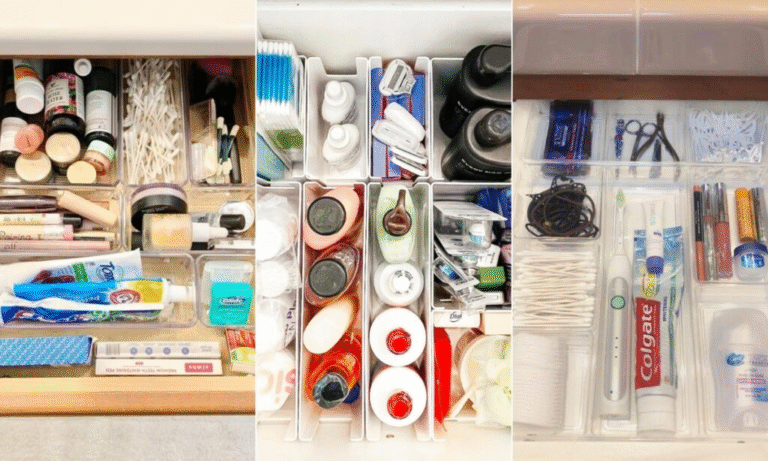
21 Smart Medicine Cabinet Organization Ideas for 2025

Why Your Medicine Cabinet Isn’t Working?
Open your medicine cabinet. If it looks like a junk drawer full of half-empty bottles and old prescriptions, it is not working right.
The bathroom itself makes things worse. Steam from showers can make medicines lose their power faster. This means pills that look fine might not help you when you need them.
When everything is a jumbled mess, you waste time searching during an emergency. It is also a safety risk if kids can reach them. Adults can grab the wrong medicine if prescriptions are mixed together. To make your cabinet reliable, you need to organize it like an important health tool.

Rotate with Lazy Susans
A lazy Susan helps you manage deep shelves where bottles get lost in the back. This is great for medium or large cabinets.
Use clear turntables so you can read every label. Add simple labels for groups like “Pain Relief” or “Allergies.” This lets you spin and find what you need without moving other bottles.

Use Tiered Risers for Small Bottles
Small bottles like vitamins or oils get lost on a flat shelf. A tiered riser makes every bottle visible.
This is perfect for shallow cabinets. Place a clear riser on the shelf. Arrange your bottles by type, like daily vitamins in one row and oils in another, so you can see them all.

Label Clear Bins by Category
Stop stacking messy boxes. Sort items into clear bins with bold labels like “First Aid” or “Pain Relief.”
This works well in larger cabinets with several shelves. Use stackable bins with handles. You can pull out one bin and see everything inside it at a quick glance.

Sort Pills into Labeled Cases
If you hate bulky pill bottles, use thin, labeled pill cases instead. This saves a lot of space inside baskets or drawers.
Move your pills into secure, airtight cases. Label each case clearly with the medicine’s name. This makes it easy to find the right one fast.

Line Up with Shelf Organizers
If you have many supplement bottles, a tiered shelf organizer helps you see them all. This stops bottles from hiding behind each other.
This idea is great for wide cabinets. Use expanding tiered risers. Put items you use daily in the front row and move extra supplies to the back.
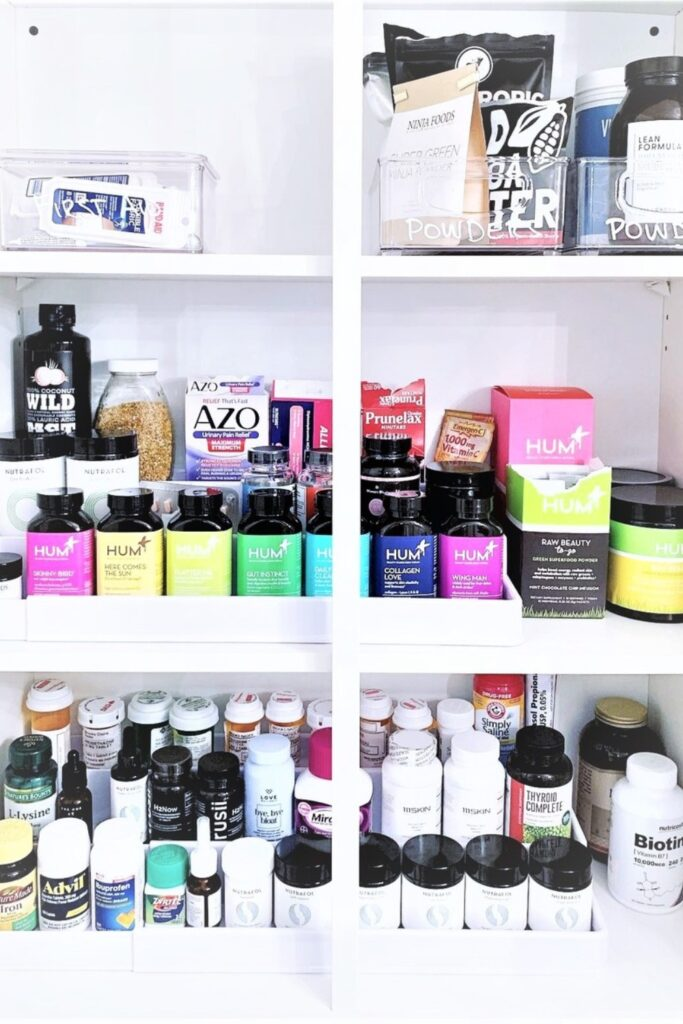
Divide Supplies with Sectioned Bins
When you have a mix of bottles, creams, and first-aid items, sectioned bins keep everything tidy. This works on deep shelves where things get lost.
Pick clear bins that have dividers inside. Group items by use. Put cold medicine in one section, bandages in another, and vitamins in a third.

Separate Kids’ and Adults’ Medicine
Storing kids’ and adults’ medicine together can cause dangerous mistakes. Use separate bins for each to prevent this.
This system works best on open shelves. Use clear bins with bold, easy-to-read labels like “Child Cold” and “Adult Cold.” This keeps dosages safe and separate.

Dedicate Shelves by Health Need
Your cabinet is most useful when each shelf has a specific job. This works very well in tall cabinets with several shelves.
Place clear bins on each shelf. Label them by health need, such as “Respiratory,” “Children’s Fever,” or “Bandages.” You will know exactly where to look.

Create Zones with Mixed Storage
For a tall cabinet or closet, divide it into zones. This gives every item its own place and works in larger spaces.
Use clear bins for small items like prescriptions and supplements. For larger medical supplies, use woven baskets. This creates a system for the whole family.
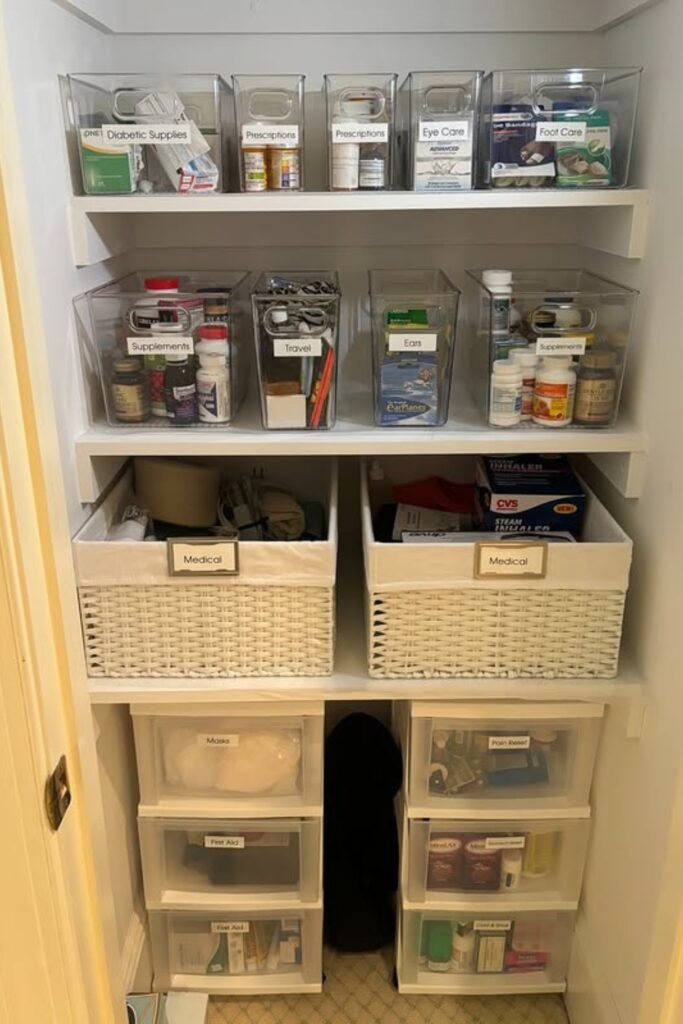
Use Family-Specific Bins
Avoid mix-ups by separating medicine by age group. This is helpful for families with children who need different dosages.
Use clear bins with bold labels like “Adult Cold” and “Child Fever.” Keep items like thermometers in their own bin for quick access when someone is sick.

Label Every Category Clearly
If different medicines share one cabinet, clear labels keep them organized. This is great for busy homes where many people use the space.
Get narrow, clear bins. Add bold labels like “Cold & Flu,” “Allergies,” or “Pain & Fever.” You can put items like kids’ vitamins on a lazy Susan on the bottom shelf.

Stack Lidded Boxes for Categories
For deep cabinets, stack boxes with lids to keep items dust-free. This is perfect for closets where you store extras you don’t use often.
Use light plastic boxes with lids that snap shut. Print simple labels like “Cold & Allergy” or “First Aid.” Stack them neatly to save space.

Add a Lockable Box for Safety
If you have prescriptions or strong medicines, a lockable box adds an important safety layer. This is crucial in homes with children or shared living spaces.
It balances security with convenience. This ensures no one can access these medicines in an unsafe way, giving you peace of mind.

Keep Everything in Lidded Bins
Bins with lids stop clutter and let you sort supplies by purpose. This is great for keeping cabinets dust-free and looking clean.
Get lightweight plastic bins with snap-on lids. Write or print labels for categories like “Throat,” “Digestive,” or “First Aid.” Everything stays contained.
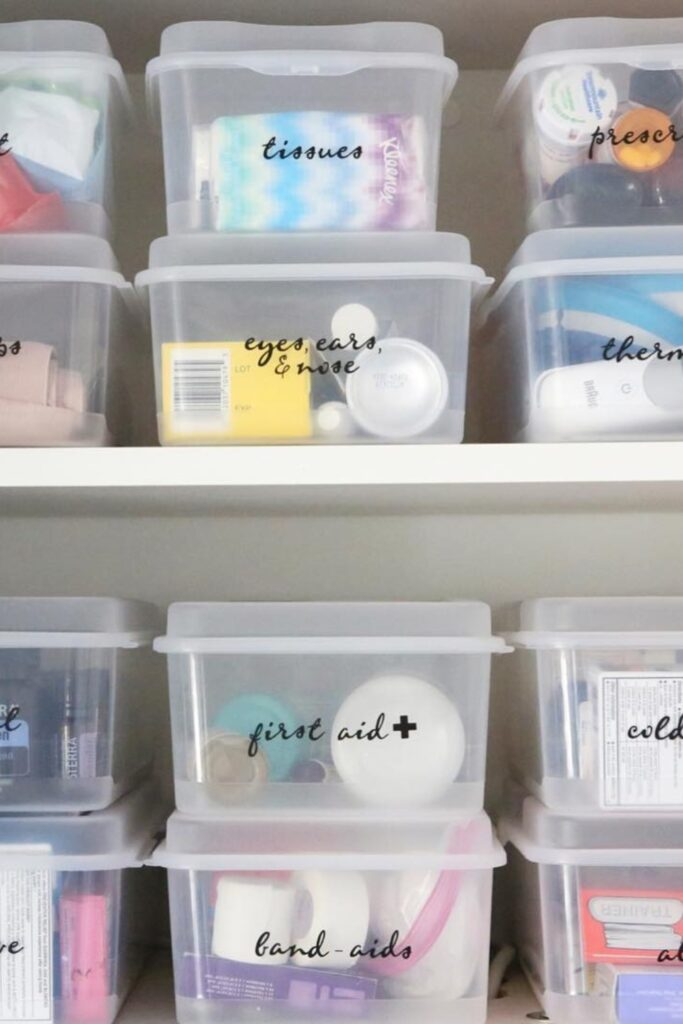
Use Small Bins for Tall Bottles
Tall medicine bottles and sprays tip over easily on a shelf. Small clear bins keep them upright and organized.
This method works well in narrow cabinets. It prevents items from sliding around and falling over every time you open the door.

Use Uniform Bins for a Clean Look
For a neat and organized look, use the same type of bin for every category. This works best on large shelves.
The uniform containers keep the cabinet looking tidy. The clear fronts and labels make it easy to find what you need in a hurry.

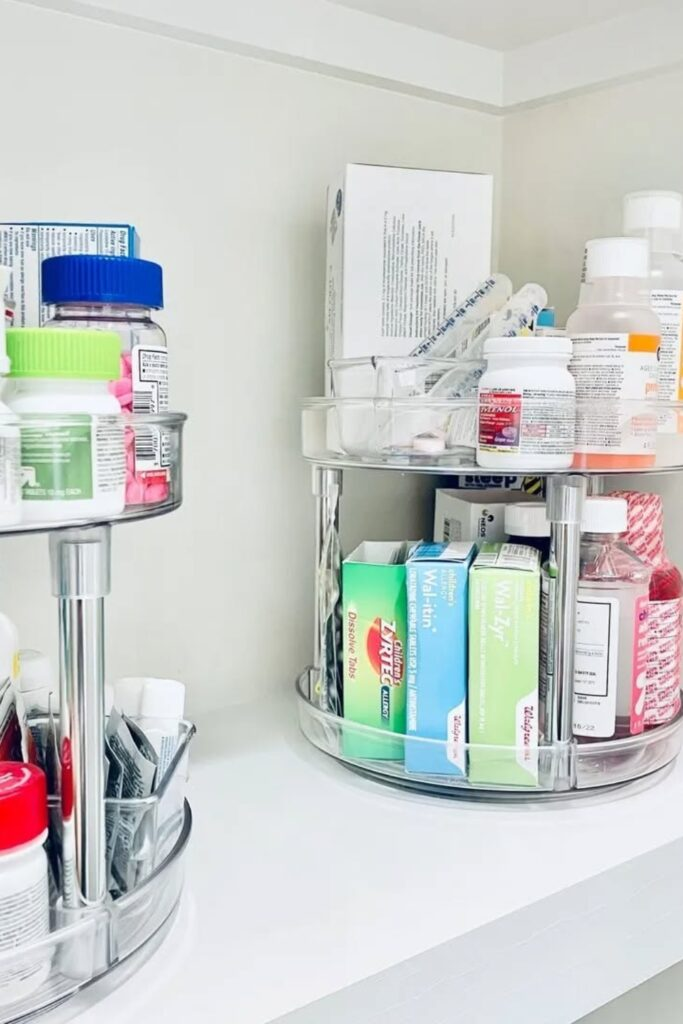
Maximize Space with Tiered Turntables
In a small, packed cabinet, tiered turntables use vertical space well. They are great for deep cabinets or corner shelves.
Use double-layer lazy Susans. Organize by size. Put small items like eye drops on top and larger boxes on the bottom.
Use Chalkboard Labels for Flexibility
If you reorganize often, chalkboard labels let you update your system easily. This helps families whose needs change with the seasons.
Attach small chalkboard tags to clear bins. Group items by purpose, like “Stomach” or “Pain Relief.” You can change the labels anytime.

Stack Drawers for Tight Spaces
For under a sink or a narrow cabinet, stackable drawers use vertical space well. They fit around plumbing pipes where bins will not.
Use clear drawers and label each one by category. Labels like “Pain,” “Cold and Flu,” or “First Aid” keep everything sorted in a tight spot.

Group by Health Category
A wide cabinet can get cluttered fast. Assign each bin to a specific health category to keep it clean.
This works on broad shelves. Use matching bins with front labels like “First Aid,” “Stomach,” or “Cold and Flu.” Line them up side by side.

Store Bottles Flat in Drawers
If you have extra drawer space, use it for medicine bottles. Lay them flat so you can read every label at a glance.
This is perfect for daily supplements or vitamins. Line the drawer with bottles side by side. You can label the tops for even quicker identification.

FAQs of Smart Medicine Cabinet Organization Ideas
You might have common questions about keeping your medicine cabinet in order. Here are answers to two important ones.
How often should I clean out my medicine cabinet?
You should check your medicine cabinet every three to four months. This lets you find expired pills, half-used bottles, or empty boxes.
If you store everything in bins, the cleanup is fast. Think of it as a seasonal reset. You will have fresh supplies, no clutter, and know exactly what you have before you need it.
What medicines should never be stored in the bathroom?
Most medicines should not be kept in the bathroom. The heat and steam can make them expire much faster.
Pills, capsules, and chewable tablets lose their strength in humid conditions. Store them in a cool, dry place instead, like a hallway closet or a bedroom drawer.