45 Team Building Games for Kids in 2026
45 Team Building Games for Kids
Team-building games are a great way to bring kids together. They help build friendships and teach important skills. Here are 45 exciting games that keep kids engaged and working as a team.
Picture Pieces
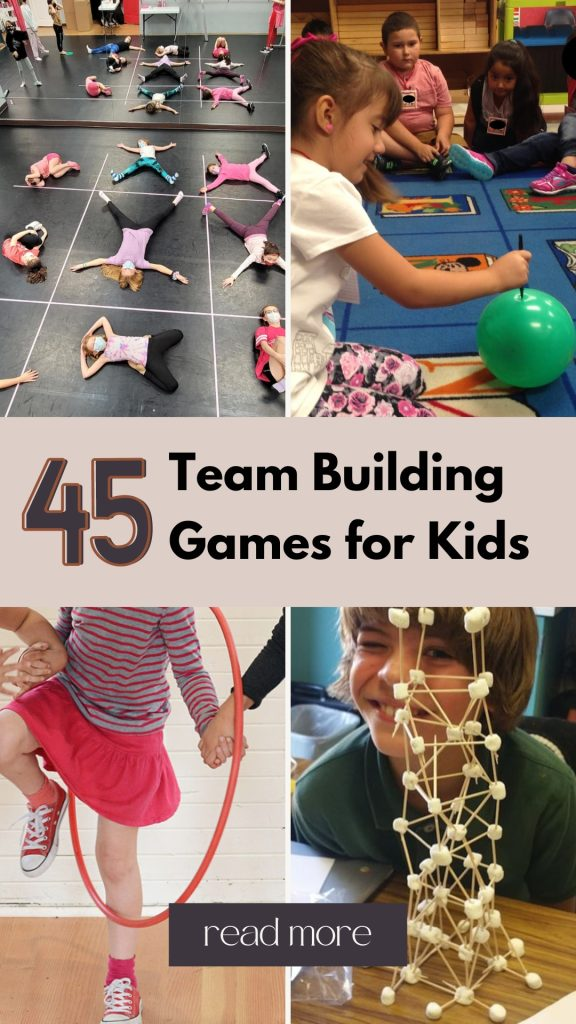
In this game, a large picture is cut into pieces. Each child draws one piece on their own paper. When everyone is done, the group puts all the drawings together to see the full picture. This game encourages creativity and teamwork.
Get To Know You Balloons
Each child writes a question on a slip of paper and puts it inside a balloon. They blow up the balloon and tie it. Kids toss the balloons around in a circle. When the music stops, each child pops a balloon, reads the question inside, and answers it to share about themselves.
Hot and Cold
One child leaves the room. The other kids hide an object. The child comes back and tries to find it. The group helps by saying “hot” when the seeker is close and “cold” when they are far away. This game teaches kids to give and listen to verbal cues.
Marshmallow-and-Toothpick Challenge
Teams get marshmallows and toothpicks. They have a set time to build the tallest or most creative structure. Each team member takes turns adding pieces. At the end, each team shows their structure and explains how they worked together.
Hula-Hoop Pass
Kids stand in a circle holding hands. A hula hoop is placed on one child’s arm. The goal is to pass the hula hoop all the way around the circle without letting go of hands. Kids must move their bodies through the hoop. This game builds coordination and communication.
Bumpity-ump-bump-bump
Kids form a circle with one child in the middle. The middle child walks inside the circle, stops in front of someone, and says a direction like “left” or “self.” The chosen child must quickly say the correct name before the leader finishes saying “bumpity-ump-bump-bump.” If they fail, they become the new leader.
Snakes
Kids are divided into teams. All but one member of each team are blindfolded. Soft objects are scattered around. The sighted member stands at the back and taps shoulders to guide the blindfolded team, who hold each other’s shoulders like a snake, to collect the objects. This game builds trust and non-verbal communication.
Human Tic-Tac-Toe
A large tic-tac-toe grid is made on the ground with tape. Two teams take turns having a player stand in a square. The goal is to get three team members in a row. Teams must strategize and communicate to block the other team and make their own line.
Relay Races
A course is set up with different tasks like dribbling a ball or running through cones. Teams line up. The first player does the first task, then tags the next player who does the next task. The first team to finish wins. This game promotes cooperation and speed.
Group Juggle
Kids stand in a circle. One child throws a ball to another, saying the receiver’s name. That child throws it to someone else, saying their name. More balls are added over time. This game helps kids learn names and improves hand-eye coordination.
Trust Walk
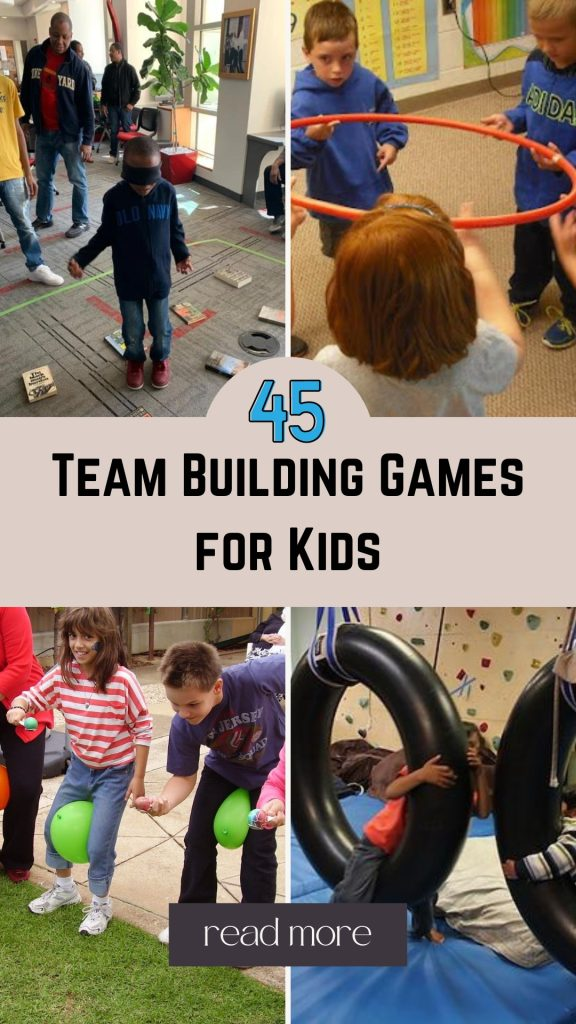
An obstacle course is made with cones or chairs. Kids work in pairs. One is blindfolded. The other gives only verbal instructions to guide their partner through the course without touching anything. This activity builds trust and clear communication.
Circle Sit
Kids stand in a tight circle, then turn to their left so they face the back of the person in front. On a signal, everyone slowly sits down onto the lap of the person behind them. If done right, the whole group is sitting in a circle supported by each other. This game shows the power of working together.
Cross the River
Two lines are drawn to make riverbanks. Teams get a few cardboard “rafts.” The whole team must cross the river by stepping only on the rafts. If anyone touches the ground, the team starts over. Teams must plan and work together to move the rafts.
Floating Hula Hoop
Kids stand in a circle, each touching a hula hoop with their fingertips. The goal is to lower the hoop to the ground together without dropping it. Kids must communicate and move slowly as a team to keep the hoop level.
Scavenger Hunt
A list of items is hidden in an area. Teams get the list and work together to find all the items within a time limit. Clues can make it harder. This game encourages teamwork and problem-solving.
Stranded
Some kids are “stranded” on a deserted island in a corner. The rest are on a “ship” 10-15 feet away. The rescuers must use items like shoelaces and jackets to make a line long enough to reach the island and pull their teammates to safety.
Do Not Wake the Dragon
One child is the sleeping dragon. The other kids are villagers who must complete a quiet task, like lining up by height. If they make noise, the dragon wakes up and tries to tag them before they reach a safe zone.
Leaps and Bounds
A pretend river is made with stepping stones like cardboard. Kids take turns jumping from stone to stone to cross. If they fall off, they are out. The stones can be spaced farther apart to make it harder. This game builds confidence and coordination.
Magnetic Fishing Game
A kiddie pool is filled with water and magnetic fish. Kids use magnetic fishing rods to catch fish. They can play individually or in teams. The person or team that catches the most fish in a set time wins.
Balloon Pop Relay
Balloons are placed in a line. Teams line up at checkpoints. The first player runs to a balloon, sits on it to pop it, then runs back to tag the next player. The first team to pop all their balloons wins.
Wheelbarrow Race
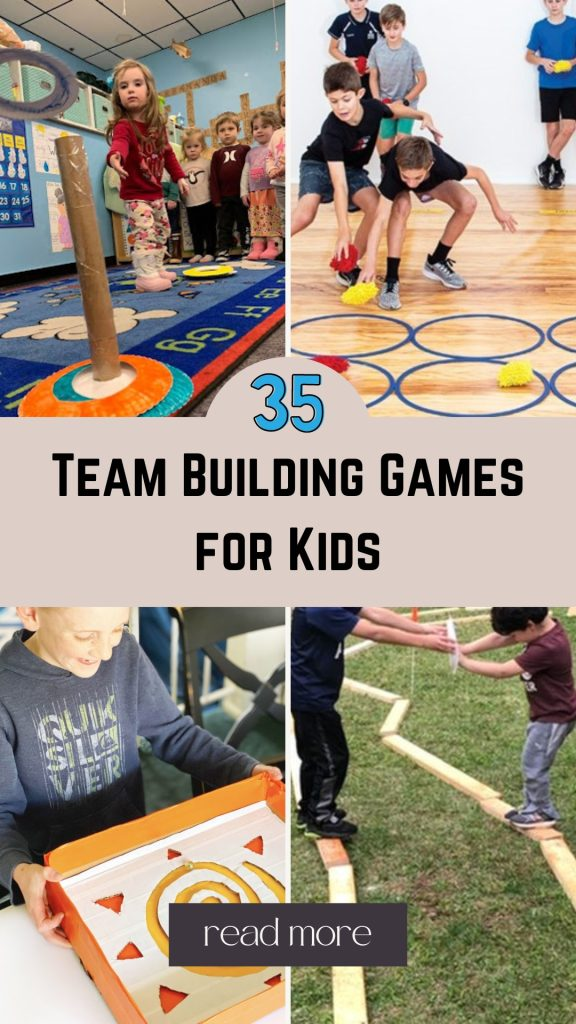
Kids pair up. One walks on their hands as the “wheelbarrow.” The other holds their legs as the “pusher.” Pairs race to a finish line. This game needs coordination and communication between partners.
Triangle Tag
Groups of four form, with three players holding hands in a triangle. One player is the tagger outside the triangle. The tagger tries to tag a specific player inside. The triangle players move to protect that person. This requires quick thinking and teamwork.
Group Juggle
Kids stand in a circle and throw a ball to each other, saying the receiver’s name first. More balls are added to make it challenging. This activity improves memory and cooperative skills.
Snakes
Teams have one guide and several blindfolded members who hold each other’s shoulders to form a snake. The guide taps shoulders to give non-verbal directions to collect scattered objects. This builds trust and silent communication.
Human Tic-Tac-Toe
A large grid is taped on the ground. Two teams take turns placing a team member in a square to be an X or an O. The goal is to get three in a row. Teams must plan their moves together to win.
Relay Races
A course with different stations is set up. Teams race, with each member completing one part of the course before tagging the next teammate. The first team to finish wins. This encourages teamwork and physical activity.
River Crossing
Two lines mark a river. Teams get a few “rafts” (cardboard). All team members must cross the river using only the rafts. If a raft is left alone, it floats away. Teams must plan how to move rafts and people.
Race to the Middle
Objects are placed in a central spot. Two teams stand equal distances away. One player from each team races to the middle, grabs an object, and runs back to tag the next player. The team with the most objects at the end wins.
Eye of the Tiger
Two teams wear different colors. They complete physical challenges like balancing or jumping while trying not to get tagged by the other team. Teams must work together to stay in formation and complete the tasks.
Human Caterpillar Challenge
Team members stand in a line, each holding the waist of the person in front. The whole line must move together like a caterpillar through a course with obstacles. If the line breaks, they start over. This requires moving in sync and good communication.
15 Seconds
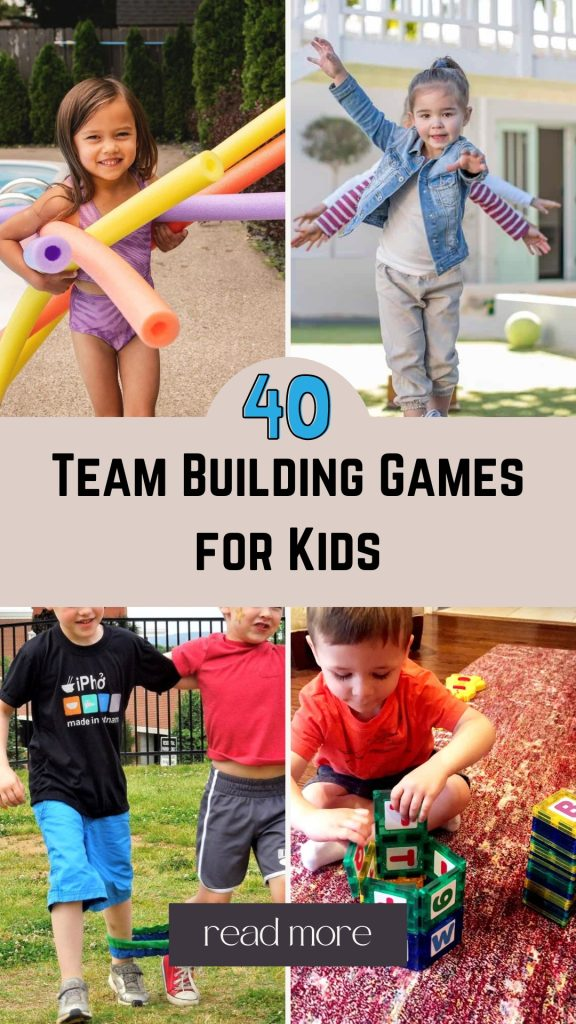
Kids sit in a circle with a leader. The leader picks a topic. Each child has 15 seconds to answer a question about the topic when their turn comes. This game helps with quick thinking and speaking skills.
Race to the Galaxy
Teams get three hula-hoops. Bean bags of different colors are scattered as “power sources.” Teams must move across the area using only the hula-hoops to step in, collecting their colored bean bags. They cannot touch the ground outside the hoops.
Roller Coaster
Kids sit in a straight line on the ground, legs straight and heels touching the person in front. A leader gives commands like “climb up” or “turn left.” The whole line moves together like a roller coaster car. This improves listening and coordination.
Tower Building
Teams get building blocks and a die. Teams take turns rolling the die and adding that many blocks to their tower. The goal is to build the tallest tower in a set time. This encourages cooperation and planning.
Pool Noodle Fun
Teams of two get two pool noodles and a ball. They must balance the ball on the noodles while following leader instructions like walking or turning. This game improves balance and teamwork.
Balance Game for Littles
Pairs of kids get a piece of paper and a lightweight ball. They hold the paper taut between them with the ball on top. They must walk together to put the ball in a basket without dropping it. This builds coordination and patience.
Three-Legged Race
Pairs of kids have their inside legs tied together. They race to a finish line, coordinating their steps. This classic game promotes teamwork and physical coordination.
Triangle Tag
A group of three forms a triangle around a center player by holding hands. A tagger tries to tag the center player. The triangle moves to block the tagger. This needs agility and teamwork.
Human Caterpillar Challenge
Team members link arms to form a long line, or caterpillar. The whole team must race to a finish line without breaking the chain. This emphasizes moving together and communication.
Sneak A Peek
A structure is built with blocks in a separate area. Teams take turns sending one member to look at it for ten seconds. That person returns and describes it so their team can build a copy. If it’s wrong, another member takes a peek. This game focuses on communication and memory.
Cup Stacking Challenge
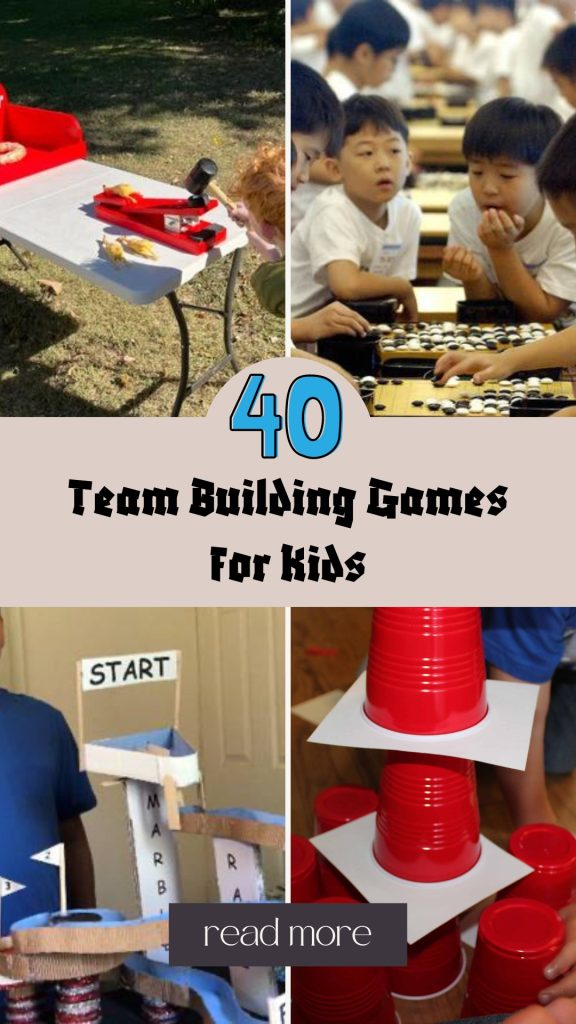
Teams of five get six cups, a rubber band, and five strings. Each team member ties their string to the rubber band. Together, they use this tool to pick up and stack the cups into a pyramid without touching the cups with their hands. This requires precise teamwork.
Classification
Kids get into groups and share facts about themselves. Then, without using negative labels, they classify themselves into smaller groups based on things they have in common, like favorite color or pet. This activity celebrates similarities and differences.
Marble Run Challenge
Teams get materials like cardboard tubes and tape. They must build a track for a marble to travel from start to finish. After a building time, each team tests their run. This encourages creative problem-solving and engineering as a team.
Go!
Kids stand in a circle. They must use only eye contact to decide when to move or complete a task after the leader says “Go!” No talking is allowed. This teaches the importance of non-verbal communication and focus.
Chuck the Chicken
Two teams take turns throwing a rubber chicken. The throwing team runs in circles around a point while the other team retrieves the chicken and forms a line. The throwing team counts how many laps they run before the chicken is caught. The team with the most laps wins. This game promotes quick action and teamwork.