23 Memory Box Ideas DIY Paint Ideas for 2026
Before choosing colors or picking up a paintbrush, most people face the same problem. They want their memory box to feel meaningful, but they are unsure where to start. Many ideas online look too complicated or fail to explain why they work.
A memory box should feel personal, not forced. Every choice, from color to layout, should have a clear reason behind it. When the process feels simple and guided, the box turns into something special instead of stressful.
In this guide, you’ll find 23 memory box DIY paint ideas that work in 2026. Each idea is designed to feel thoughtful, clear, and easy to create without overthinking every step.
How to Design a Memory Box?
Designing a memory box starts with understanding its purpose. Before choosing paint or patterns, decide who the box is for and what memories it will hold. This helps every design choice feel natural.
If the items inside are emotional or private, keep the outside simple. Too much decoration can distract from what truly matters inside the box.
Choose one main color and one small detail instead of decorating every surface. When the goal is clear, painting feels confident instead of uncertain.
Soft Safari Theme
This theme works well for baby memory boxes, especially for newborn or first-year keepsakes. Start with a light wood base and soft watercolor-style animals.
Use gentle greens and browns with hand-painted outlines or printed transfers. The colors should feel calm and warm.
Adding tiny fairy lights inside creates a soft glow that feels comforting and gentle.
Pull-Out Photo Strip
This idea is perfect when the memories are mostly photos that follow a timeline. It works well for trips, friendships, or long-distance relationships.
Print photos and attach them in a vertical accordion fold. Secure the strip inside a small wooden box.
A warm LED or fairy light inside helps the photos stand out without overpowering them.
Patterned Inner Lining
This design works best for small keepsakes like notes, cards, or jewelry. Paint the outside of the box in one calm color.
Line the inside with hand-painted floral or simple patterns. This creates a surprise when the box opens.
A small LED strip under the lid highlights the interior without being too bright.
Soft Striped Finish
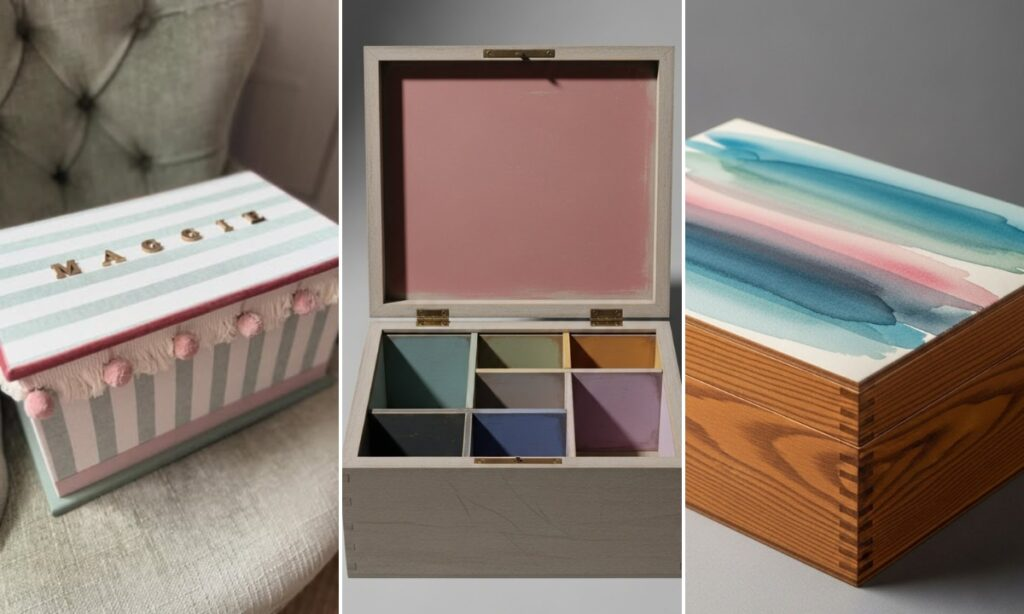
If you want the box to be decorative and visible, this style works well. Use painter’s tape to create neat vertical stripes.
Choose soft pastel colors so the design stays gentle. Let the name or lettering stand out instead of adding extra detail.
Natural light or a warm bulb nearby keeps the texture and colors balanced.
Mini Shadow Scene
This idea is great when the box tells a full story instead of just holding items. Use a shallow box as the base.
Paint the background in warm tones and layer small cutouts or props inside. Each layer adds depth.
Soft LED strip lights along the top help separate layers without harsh shadows.
Framed Memory Display
This works when you want the box to feel more like art than storage. Use a deep shadow-frame box.
Lay objects flat instead of stacking them. Keep the background neutral so each piece stands out.
Warm fairy lights around the inner frame corners gently highlight the memories.
Handwritten Quote Lid
This design works when one quote captures the entire memory. Paint the box in a solid neutral shade.
Use a contrasting color to handwrite or stencil the quote on the lid. Seal it well so it lasts.
The simplicity keeps the focus on the words and their meaning.
Travel Map Cover
If the memory is tied to a place, let the location guide the design. Paint the box in a muted color.
Add a simple map outline or country shape on the lid. Use small dots or initials to mark cities.
Keep the inside plain so tickets, notes, and photos remain the focus.
Birth Timeline Box
This design works well for baby keepsakes where dates matter. Paint the box in one soft color.
Divide the lid into small sections using thin lines. Each section can hold a milestone detail.
Clear, readable text keeps the design clean and personal.
Layered Color Wash
For emotional or abstract memories, use layered paint washes instead of details. Dilute two or three colors.
Let them overlap naturally without controlling every stroke. The result feels handmade and honest.
Once dry, seal the box and leave it undecorated so texture becomes the focus.
Minimal Name Stamp
Sometimes, a single name is enough. Paint the box with a matte finish in one calm color.
Stamp or stencil the name in the center of the lid. Avoid extra decoration.
This works best when the outside stays simple and the inside holds detailed memories.
Memory Color Coding
If the box holds memories from different periods, paint interior sections in different colors.
Each color can represent a stage or event. Keep the outside plain for contrast.
This helps organize memories without adding labels or clutter.
Floral Border Frame
Instead of filling the lid, frame it. Leave the center blank or lightly textured.
Paint a thin floral or leaf border around the edges. This works well for anniversaries or weddings.
The design stays elegant and leaves room for names or dates later.
Chalkboard Message Lid
This design is great when you want flexibility. Paint the lid with chalkboard paint.
Keep the rest of the box neutral. Messages can be changed over time.
It works well for ongoing memory boxes where notes are added often.
Childhood Doodle Style
This style fits school or childhood memory boxes. Paint the box in a light base color.
Add simple doodles like stars, hearts, or books. Keep lines loose and playful.
The uneven style makes the box feel warm and personal.
Monochrome Emotion Box
When memories feel heavy or emotional, limit the design to one color family.
Use lighter and darker shades of the same color. Avoid trendy patterns.
This creates a calm, grounded feeling that keeps attention on the contents.
Date-Centered Design
If one day matters more than images, center the design around a date.
Paint the box plain and write the date clearly on the lid. Keep everything else minimal.
This works well for important life moments with deep meaning.
Inside Lid Collage
Focus on the inside instead of the exterior. Keep the outside simple and plain.
Use the inside lid for small photos, notes, or symbols. Paint a soft background.
The box looks modest outside but becomes deeply personal when opened.
Texture Over Detail
If details feel overwhelming, use texture instead. Apply paint with a sponge or dry brush.
This adds depth without images or words. It works well for emotional memories.
The design feels expressive without explaining everything.
Seasonal Memory Theme
Design the box around a season rather than an event. Use seasonal colors and symbols.
This works well for memories collected over time instead of one moment.
The theme keeps the box unified without being specific.
Gold Accent Edges
Keep the box simple and add metallic or gold paint only to the edges.
This adds a soft sense of importance without being flashy.
It works well for adult memory boxes and milestone moments.
Inside Quote Reveal
Leave the outside unpainted or simple. Place a short note or date inside the lid.
The message is only visible when the box opens. This creates a quiet emotional pause.
It works best when intimacy matters more than decoration.
Soft Gradient Fade
Blend two similar colors across the lid from light to dark. Avoid text or shapes.
This design works well for calm, reflective memories.
Once sealed, the box looks polished without distracting from what’s inside.
FAQs
What paint is best for a wooden box?
Acrylic paint works well because it dries fast and sticks to wood easily. Light sanding helps prevent peeling.
Chalk paint is good for a softer look but always needs sealing. A clear sealant protects the finish.
No matter the paint type, sealing helps the design last longer.
What are some creative memory box themes?
Creative themes often come from the memory itself. Baby milestones, relationships, or travel experiences work well.
Seasonal, color-based, quote-focused, or place-inspired themes are also effective.
Once the theme is clear, choosing colors and details becomes much easier.