26 Dresser Organization Ideas for 2026
A dresser top often looks neat in the morning but slowly fills with bottles, jewelry, keys, and random items. This happens because there is no clear plan for what should stay there.
Cleaning it again and again does not fix the problem. When a space has no purpose, everything ends up there by default.
With a simple system, a dresser can stay clean and useful. These ideas help you organize your dresser in a way that feels easy and works every day.
How to Organize a Dresser Without Losing Space?
Space is wasted when clothes are stacked loosely or pushed into drawers without order. A clear system helps every inch work better.
Group similar items together and store clothes upright instead of piling them. This lets you see everything at once.
Avoid overfilling drawers. When items have room, drawers feel lighter, hold more, and stay organized longer.
Drawer Zoning
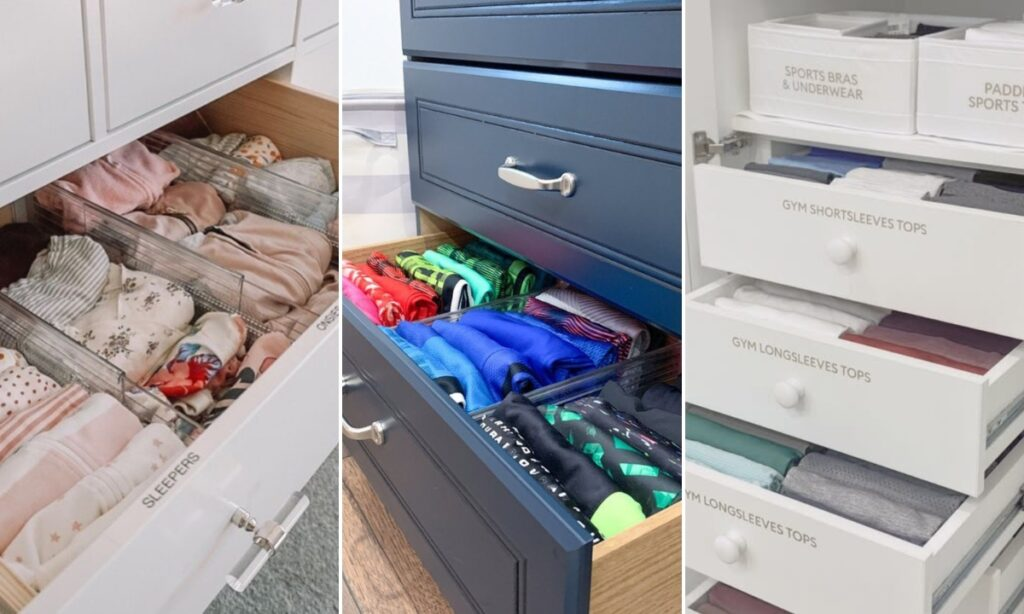
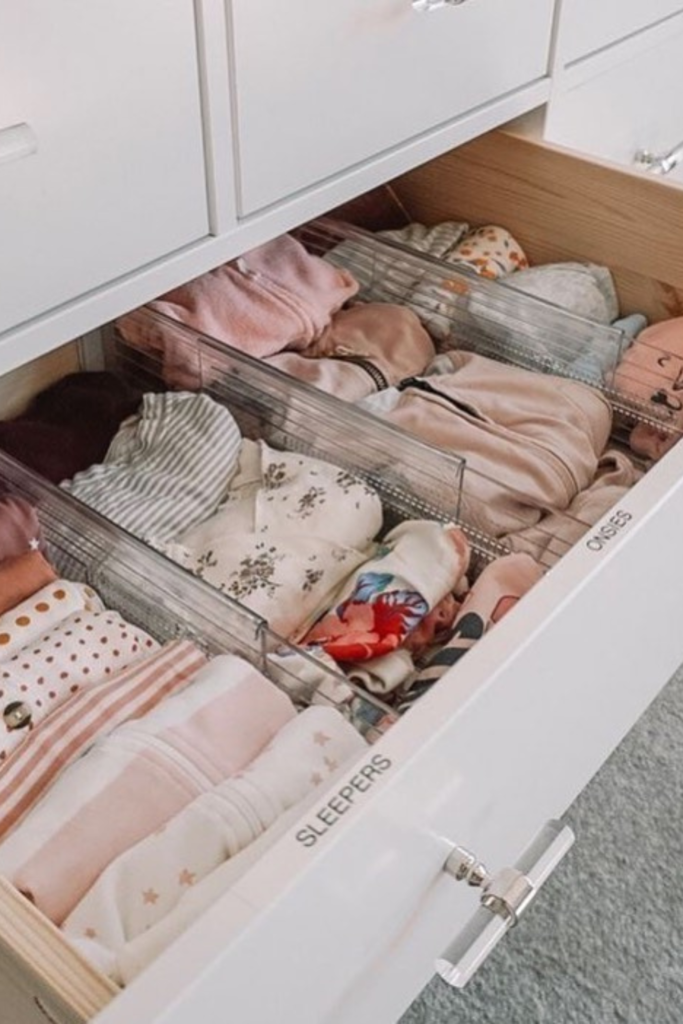
Drawers get messy fast when everything mixes together. Dividing one drawer into sections fixes this problem.
Each section holds one type of item, so nothing shifts around. This works well for small clothes and sleepwear.
Clear dividers help keep everything in place and make daily use simple.
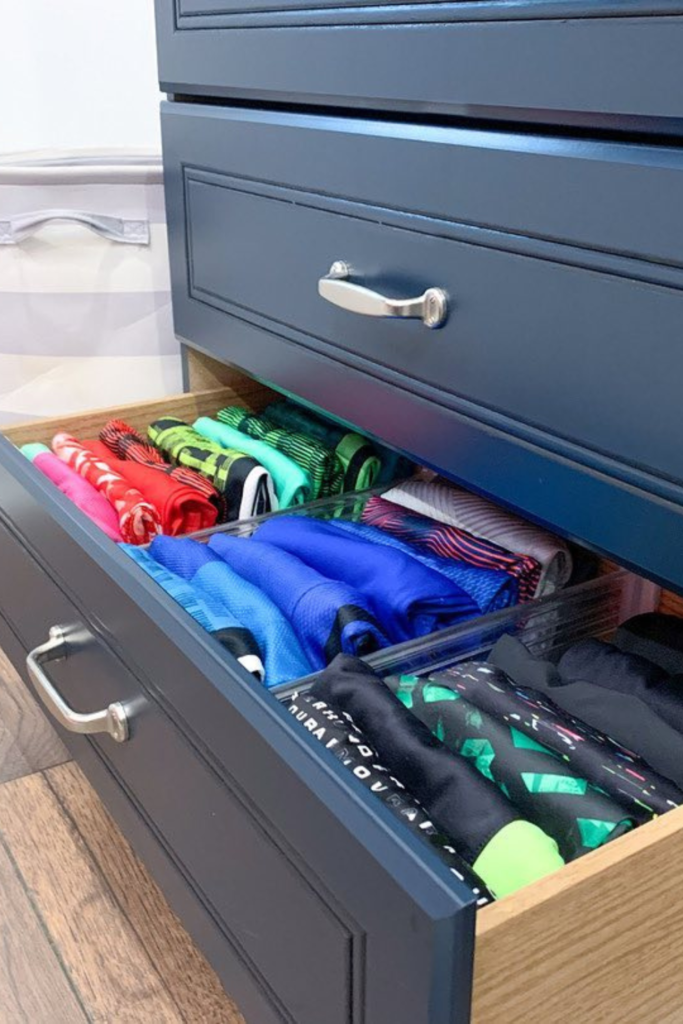
Vertical Rolling
Stacks hide clothes and waste drawer depth. Rolling clothes upright turns the drawer into neat rows.
Everything stays visible, so nothing gets forgotten. This works best for t-shirts and activewear.
Slim bins help keep rolls from falling over and keep the drawer tidy.
Clear Labeling
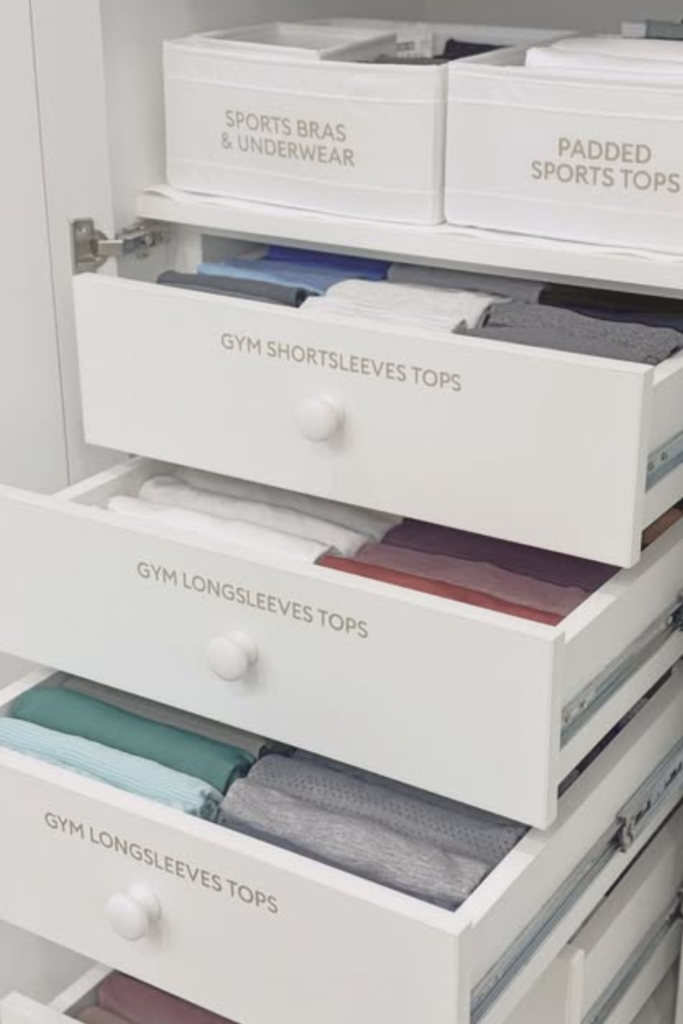
Digging through drawers often breaks your system. Labels remove that confusion right away.
When each drawer or bin is clearly marked, items always go back to the right place.
Simple text labels save time and make routines easier, especially on busy days.
Controlled Styling
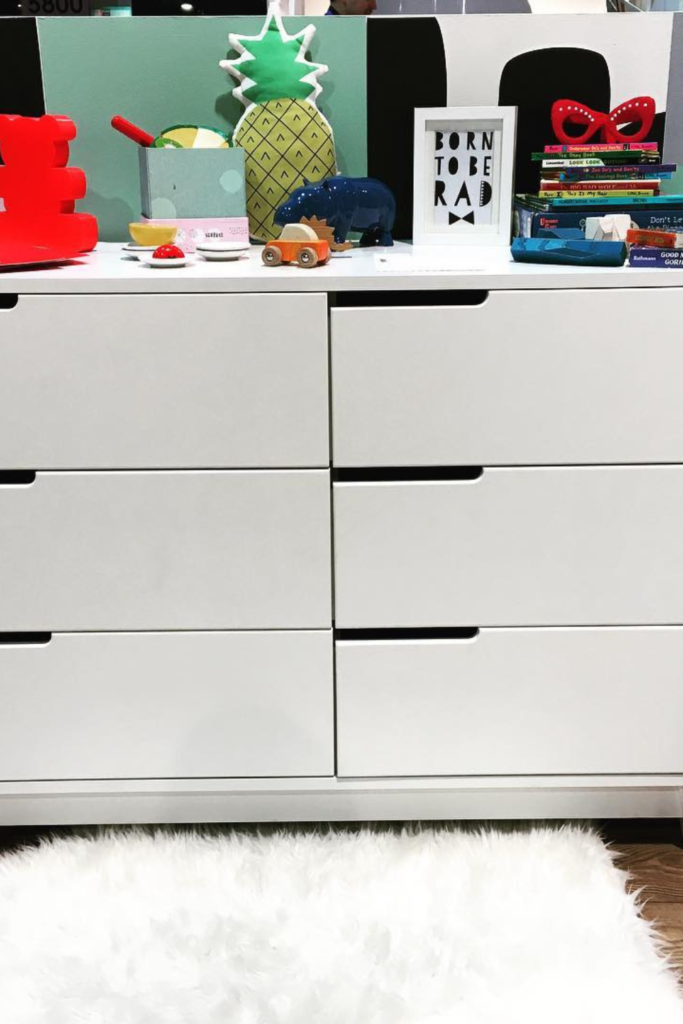
Too many decorations make a dresser feel crowded. Limiting decor brings balance.
Choose one or two items and leave space around them. This keeps the surface calm.
A clean surface makes the whole room feel more organized.
Soft Categorization
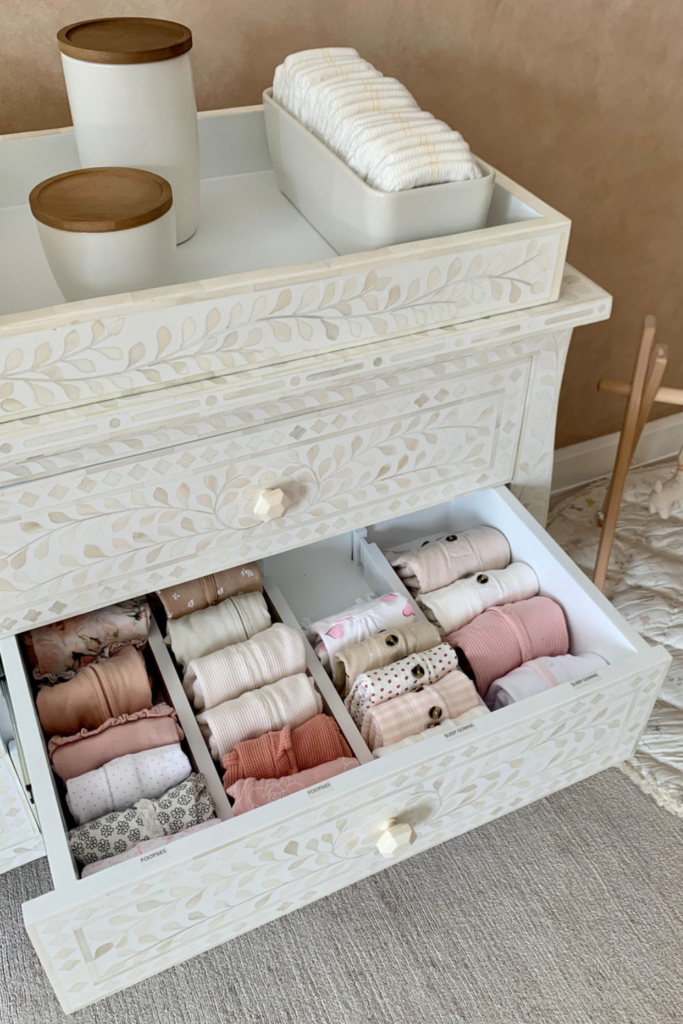
Even folded clothes can feel messy when mixed. Separating items by type brings order.
Shallow dividers keep clothes upright without squeezing them.
This creates a calm drawer that is easy to maintain.
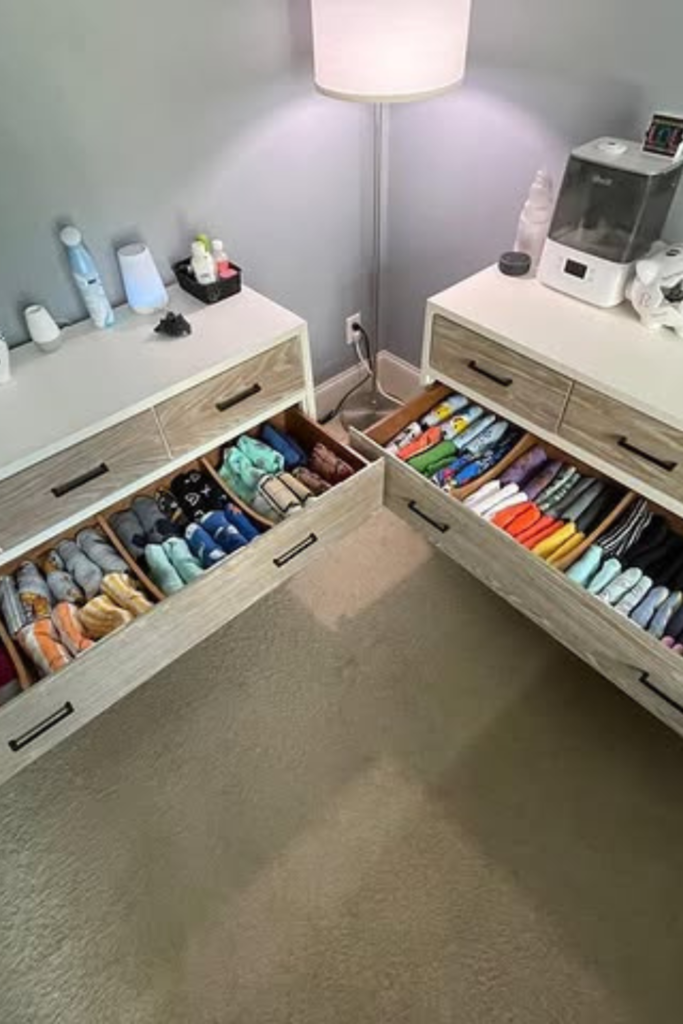
Color Grouping
Sorting clothes by color makes finding items quicker. Light to dark works best.
This method is helpful for socks, baby clothes, or similar items.
Color order also makes gaps easy to spot when something is missing.
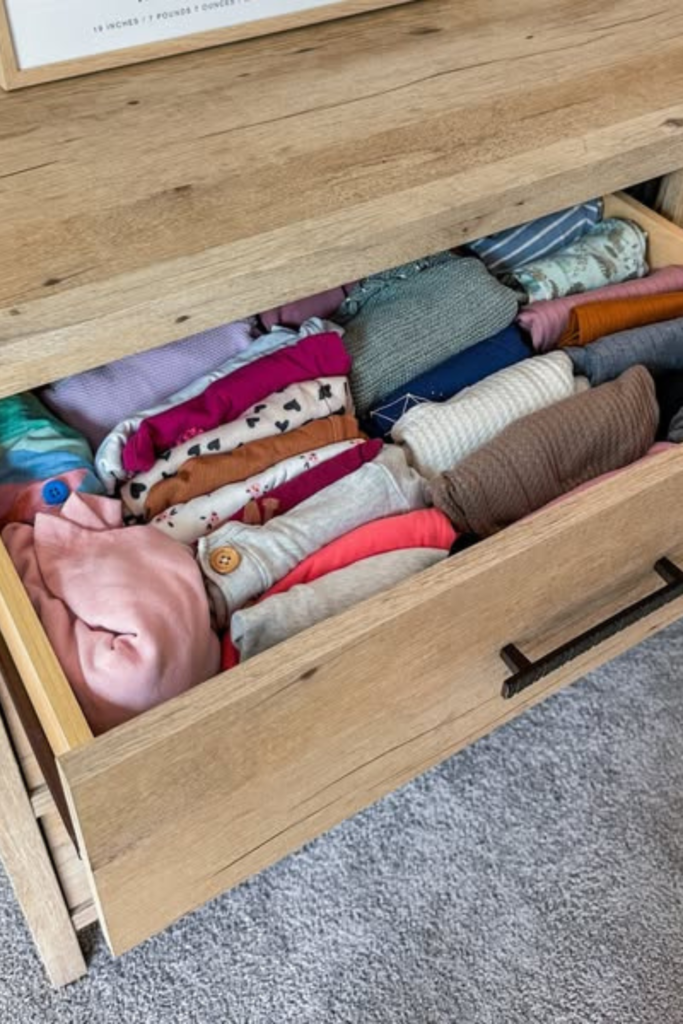
File Folding
Flat stacks hide clothes underneath. Folding items upright solves this.
Everything becomes visible from the front of the drawer.
This method works well for daily tops and basics.
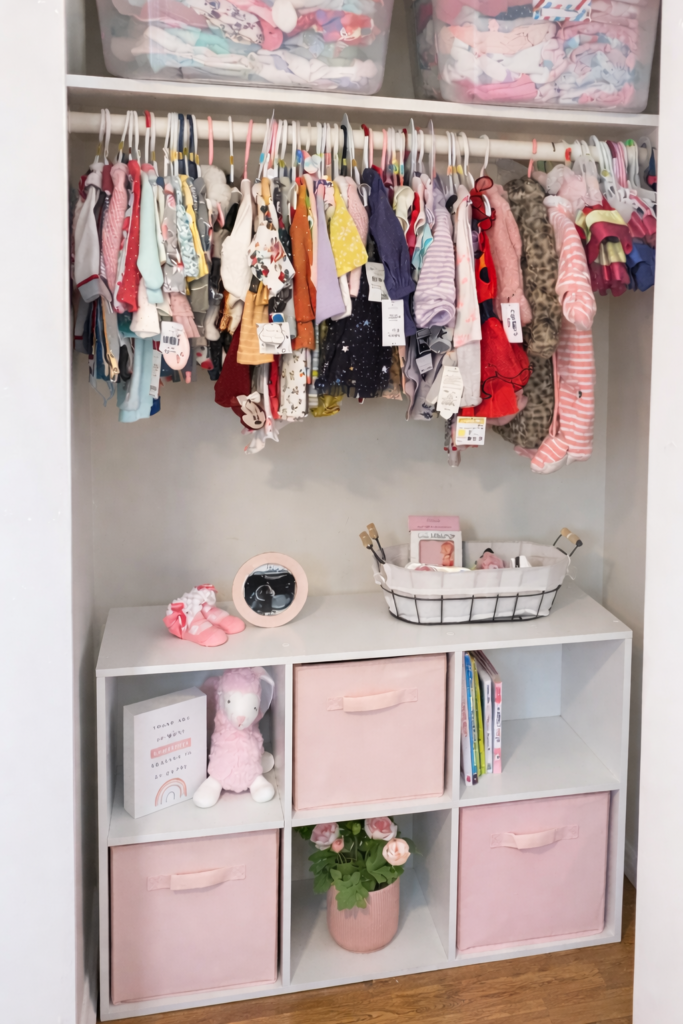
Hybrid Storage
Relying on only drawers can limit space. Mixing drawers with hanging storage helps.
Small items go in drawers, while daily outfits hang above.
This works well for children’s clothes and growing wardrobes.
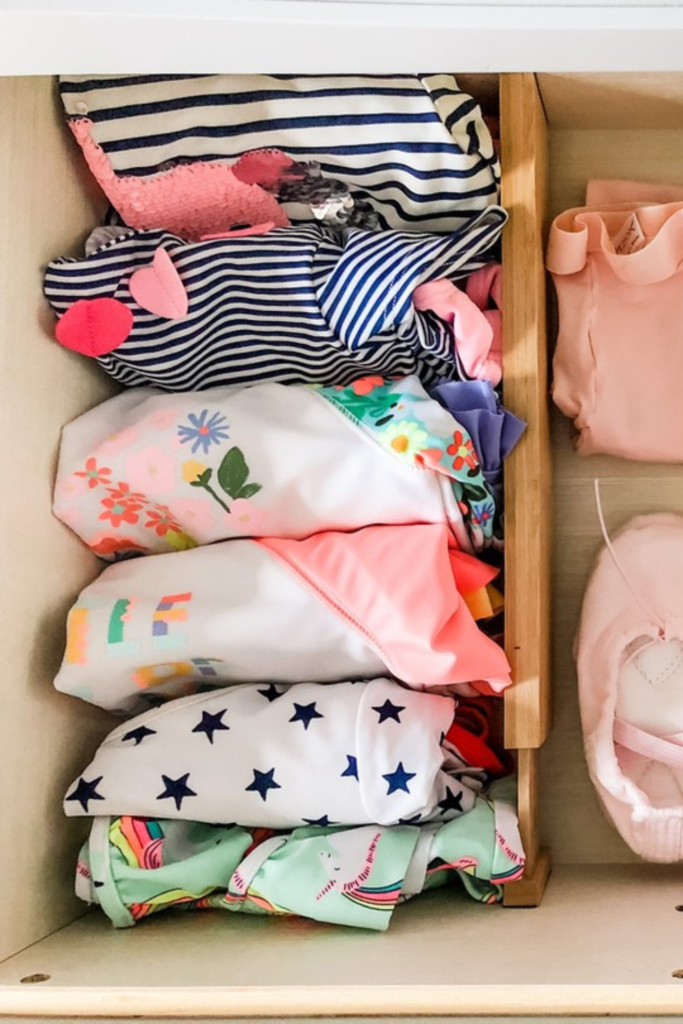
Outfit Sections
Special clothes lose shape when mixed with daily wear. Separate them by use.
Sections help protect delicate items and make dressing easier.
This keeps outfits ready without searching.
Bin Containment
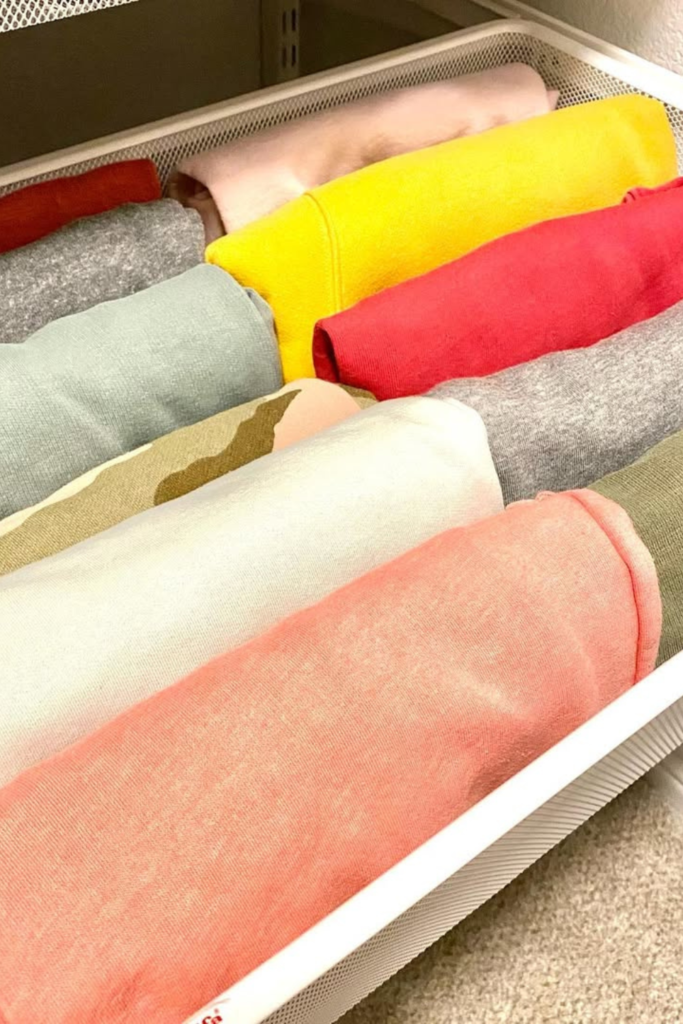
Soft clothes shift every time a drawer opens. Bins stop this movement.
Fabric or mesh bins keep clothes fresh and easy to reset.
This is ideal for sweaters, loungewear, or seasonal items.
Compartment Control
Small items cause big messes when they mix. Compartments solve that.
Socks and accessories stay separated and easy to grab.
Adjustable inserts allow changes as needs grow.
Drawer Expansion
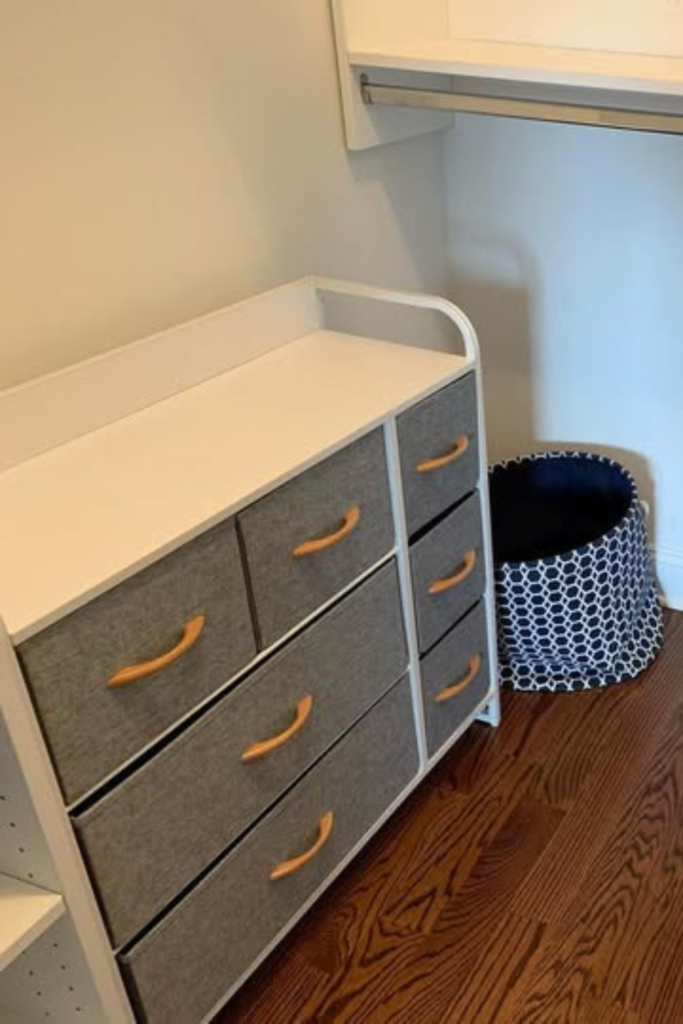
Lack of space does not always mean too many clothes. Extra drawer units help.
Small drawer units inside closets add storage without clutter.
They are useful for overflow or items not used daily.
Tray Anchoring
Loose items spread without boundaries. A tray creates a clear spot.
Daily essentials stay together and easy to find.
Low trays keep items visible but controlled.
Deep Drawer Planning
Deep drawers turn messy when items sink into piles. Side-by-side rolling helps.
This uses the full depth and keeps items visible.
Heavier clothes should go toward the back for smooth use.
Category Mapping
Random placement wastes time every day. Assign each section a purpose.
Clear categories reduce stress and keep drawers neat.
Once set, the system is easy to follow.
Uniform Folding
Different fold sizes create visual clutter. One folding style fixes this.
Uniform size keeps rows tidy and calm.
Shallow drawers work best for this method.
Minimal Surface
Too many items on top make a room feel busy. Less is better.
One or two statement pieces keep the surface clean.
Different heights add interest without crowding.
Sectioned Storage
Wide drawers lose order quickly. Sections bring control.
Each type of clothing stays in its place.
Fitted dividers keep rows upright and neat.
Layered Drawers
Using every drawer the same way wastes space. Give each level a role.
Top drawers hold daily items, lower ones hold extras.
This makes the system easy to remember.
Product Grouping
Daily products create clutter when scattered. Group them by use.
Bins or baskets keep items visible and contained.
This works well for self-care or grooming items.
Tiered Inserts
Flat drawers waste vertical space. Tiered inserts add levels.
Heavier items go on the bottom for balance.
This is useful for small garments used often.
Color Blocking
Mixed colors feel chaotic. Color blocks bring instant calm.
Each color group stays together and upright.
This makes daily choices faster.
Monochrome Sorting
Similar shades feel calmer together. Grouping tones creates order.
This works well for neutral or winter wardrobes.
Tight rolling keeps rows clean.
Balanced Sections
Overfilled sections cause mess. Even balance keeps order.
Each section should hold equal space, not equal items.
This works especially well for baby clothes.
Shallow Sorting
Small items get lost in deep drawers. Shallow drawers solve this.
Frequently used items stay visible and easy to reach.
Defined sections keep everything in place.
Mixed Zoning
One system does not fit all items. Mixed zoning gives flexibility.
Open areas hold folded clothes, divided zones hold small pieces.
This prevents clutter without forcing one method.
FAQs
How many items should go in one dresser drawer?
A drawer should never feel tight. If items must be pushed down, there are too many.
Clothes should stand easily and stay visible.
This keeps drawers organized for longer.
What should not be stored in a dresser?
Avoid bulky or rarely used items. These take up useful space fast.
Heavy seasonal clothes and random clutter do not belong here.
Keep drawers for everyday essentials only.