25 Book Craft DIY Ideas for 2026
Creating book crafts often looks easy when you see them online, but starting can feel confusing. Many people struggle because they don’t know where to begin or why their projects don’t turn out as expected.
The problem is usually not creativity. It is the lack of clear steps and practice. Book crafts help you understand how skills grow slowly through repeated actions like folding, cutting, and shaping pages.
This article shares 25 book craft DIY ideas that work well in 2026. Each idea is practical, creative, and easy to understand, making it simple to turn old books into meaningful decor.
How can craft books improve skills?
Craft books help you improve because they focus on learning the process, not just copying an idea. Clear steps guide you so you understand what you are doing instead of guessing.
When you repeat simple actions like folding or binding, your hands become more controlled. Mistakes become easier to spot and fix, which builds problem-solving skills over time.
This steady structure also teaches patience and planning. With practice, you gain confidence and start creating cleaner work and original ideas of your own.
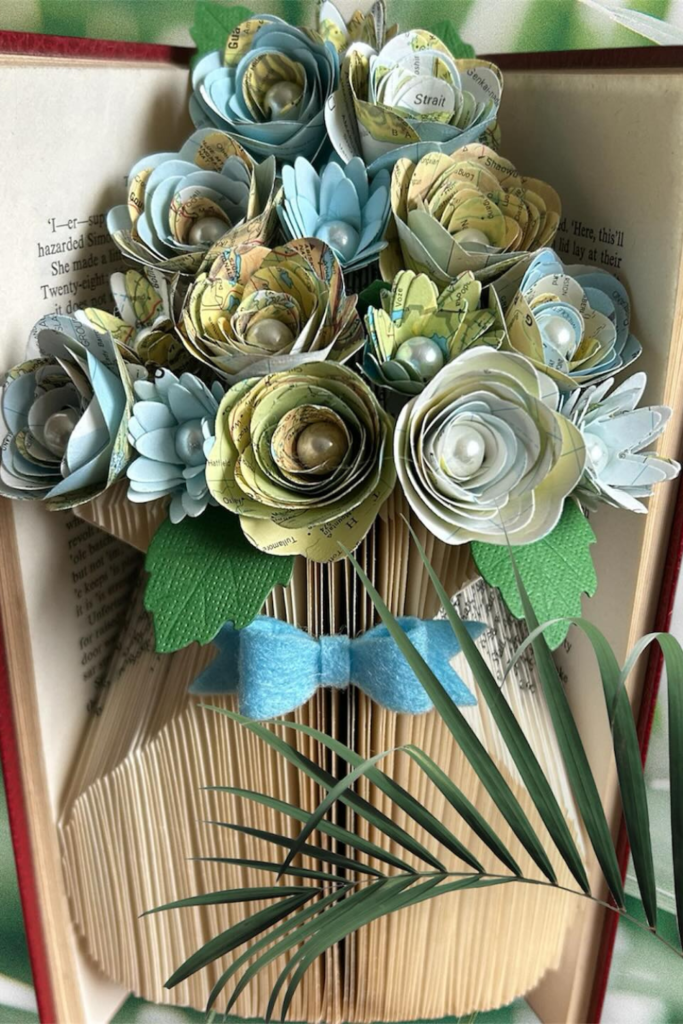
Book Flower Bouquet
This idea works well when you want a thoughtful centerpiece for coffee tables, book clubs, or small gatherings. Fold book pages into layered flower shapes and secure them into the book spine.
You can add pearls, beads, or soft paper leaves to finish the look. Keep the flowers balanced so the book stays stable.
Soft daylight or warm table lighting shows the page texture best. Strong lighting can flatten the folds and reduce the depth.
Folded Name Art
Choose a thick paperback and lightly draw your word or symbol before folding. Work slowly and fold each page carefully to keep the design clean.
Sharp folds help the letters stand out clearly. Place the book near a window or under soft side lighting.
The shadows define the shape without extra decoration, making it a personal gift or simple shelf decor.
Color-Edge Binding
This craft is bold and modern, making it ideal for display shelves or creative spaces. Paint or wrap page edges in thin layers before binding.
Keeping the spine tight helps the colors stack evenly. Avoid rushing so gaps don’t form between pages.
Bright room lighting or a desk lamp makes the layered edges stand out and look polished.
Folded Book Scene
This idea works well as a conversation piece for reading corners or themed tables. Fold pages into a solid base before adding cut-out shapes.
Layer illustrations gently to create depth while keeping pages flexible. Use light adhesive to avoid stiffness.
Soft lighting adds shadows that bring the scene to life without overpowering the paper.
Open Book Florals
Fan the pages gently and secure the base so the book does not sag. Attach faux or paper flowers directly into the folds.
Balance is important so the book stays open and upright. Keep flowers light to avoid strain.
Warm lamp light blends the flowers with the pages and makes the display feel natural.
Sculpted Page Forms
This is perfect when you want a clean, artistic piece without color. Use a firm book and fold pages evenly from the spine.
The repeated folds create geometric shapes that hold their form. Precision matters for symmetry.
Soft side lighting highlights shadows and adds depth without distracting from the structure.
Shelf Bloom Accent
Open a hardcover slightly and secure the base before adding dried or faux flowers. Keep the arrangement vertical.
This helps the piece blend naturally with nearby books. Avoid overcrowding the pages.
Warm shelf lighting with a small side light adds height and prevents the shelf from looking flat.
Cozy Book Vignette
Use an open book as a base and place rolled or folded pages upright. Add small faux flowers for detail.
Keep items close together so the display feels intentional. Avoid too many elements.
A warm accent light adds glow, while room lighting keeps the scene calm and balanced.
Textured Page Fold
Mix sharp and soft folds to create layered texture. A lighter book allows pages to move easily.
Avoid forcing stiff pages, as this can tear them. Gentle folding works best.
Angled natural light highlights ridges and makes the texture look planned.
Book Page Wreath
This is a creative option for seasonal decor on doors or backdrops. Curve pages evenly around a sturdy base.
Add ribbon or greenery last to frame the shape without hiding the pages.
Soft overhead light with a warm accent keeps the wreath bright and festive.
Book Page Pumpkins
Stack and fan pages into a round shape, then secure the center tightly. Add a real or faux stem.
Keep the shape firm so it holds over time. Avoid heavy decorations.
Soft daylight or warm indoor light keeps the texture cozy and natural.
Book Wall Grid
Mount books in a loose grid to create a wall feature. Vary page folds so each book feels unique.
Neutral colors help the display feel cohesive instead of busy.
Even wall lighting or gentle spotlights add depth across the surface.
Holiday Book Accent
Fold pages evenly so the book stands on its own. Add small greenery or a bow for a festive touch.
Keep decorations light so the pages don’t collapse.
Soft ambient light or a nearby lamp keeps the folds crisp and clean.
Storybook Light Box
Cut and layer pages to build depth, then hide a small LED behind the scene.
Keep colors neutral so the light becomes the focus. Avoid harsh bulbs.
Soft, diffused lighting preserves paper texture and creates a glowing effect.
Floating Fold Form
Fold pages evenly from the center so the book stays balanced when open.
Precision is important to keep the illusion intact. Uneven folds break symmetry.
Neutral lighting or a soft spotlight makes the form appear to float.
Heart Fold Gift
Mark pages lightly before folding to keep the heart shape even. Use a thicker book.
Clean edges make the design feel intentional and polished.
Soft natural or warm side lighting highlights the curves nicely.
Stacked Book Snowmen
Fold pages into rounded shapes and stack from small to large.
Add simple details like ribbon or buttons. Keep decorations minimal.
Warm lighting and fairy lights soften the paper and add charm.
Decorated Book Cover
Wrap or paint the cover to turn a plain book into a keepsake.
Use pressed florals or metallic accents for focus, keeping details flat.
Natural light highlights texture without washing out the design.
Book Page Tree
Fold pages toward the center to form a cone shape and secure the base.
Lightweight charms can be added without collapsing the pages.
Soft overhead lighting brings out the folds evenly.
Book Page Mobile
Cut pages into light shapes and hang them at different lengths.
Keep spacing loose so the mobile moves naturally.
Natural daylight works best, with soft evening light adding shadows.
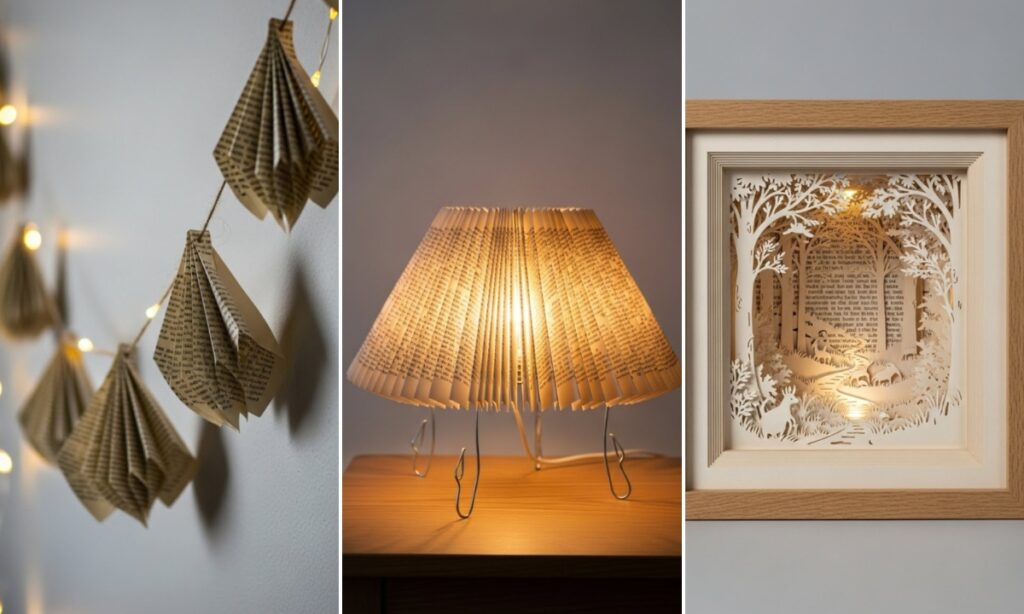
Book Page Garland
Cut pages into simple shapes and string them loosely.
Uneven spacing gives a relaxed look. Avoid overcrowding.
Fairy lights behind the garland add warmth without overpowering it.
Rolled Page Vase
Roll pages tightly and glue them around a glass insert.
The glass protects the paper from moisture.
Natural daylight highlights texture and keeps the vase looking clean.
Book Spine Art
Remove pages and mount decorated spines in a straight line or pattern.
Keep colors intentional for a curated look.
Even wall lighting helps each spine stand out clearly.
Page Cut Silhouettes
Cut simple shapes from stacked pages and layer them carefully.
Clean cuts and consistent spacing create depth.
A small LED behind the layers adds soft shadows.
Book Page Lampshade
Wrap folded pages around a wire frame, leaving space for airflow.
Use only low-heat LED bulbs to protect the paper.
Warm light creates a soft glow perfect for reading spaces.
FAQs
What kind of paper is best for DIY books?
Old paperback pages work best because they are thin and flexible. Slightly yellowed paper holds shape well and folds easily.
Avoid glossy pages since they crack and don’t absorb glue properly. Consistent paper weight gives cleaner results.
Which book craft is trending now?
Functional decor and folded book art are very popular. Items like book page lights and sculptural folds stand out.
Seasonal pieces and simple neutral designs are trending because they suit modern spaces without feeling cluttered.