16 DIY Cat Tower Ideas For 2026
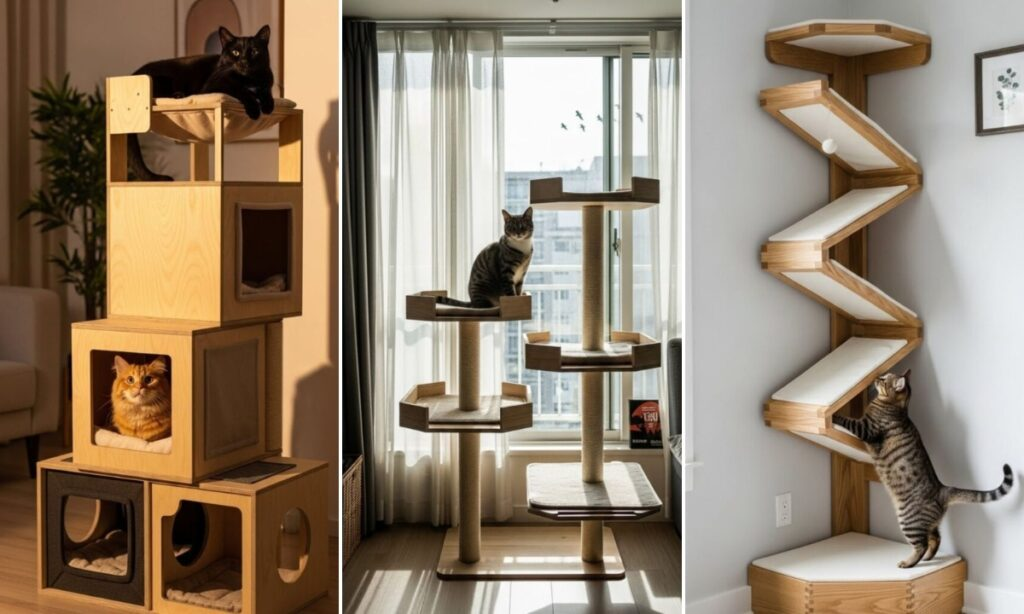
What Materials Do You Need for a DIY Cat Tower?
You do not need to spend a lot of money to build a great cat tower. Start with good, sturdy materials that will keep your cat safe. You will need things like wooden boards or plywood for the platforms and strong posts for support. Cover these posts with sisal rope, which is a favorite material for cats to scratch. For the platforms, use old carpet, a soft rug, or fabric that your cat likes to knead.
Other important items include strong screws and metal brackets to hold everything together securely. With these simple materials, you are ready to create something special for your pet.

Can Cats Sleep in a Cat Tower?
Yes, cats love to sleep in cat towers. High places make them feel safe and let them watch their territory. A good cat tower gives them a perfect spot for a nap. The platform needs to be wide enough, very sturdy, and soft. If the spot is cozy and stable, your cat will choose it over the floor or a regular bed.
16 DIY Cat Tower Ideas for 2026
Here are 16 popular ideas for building your own cat tower. They range from simple designs to more stylish pieces that look like regular furniture.
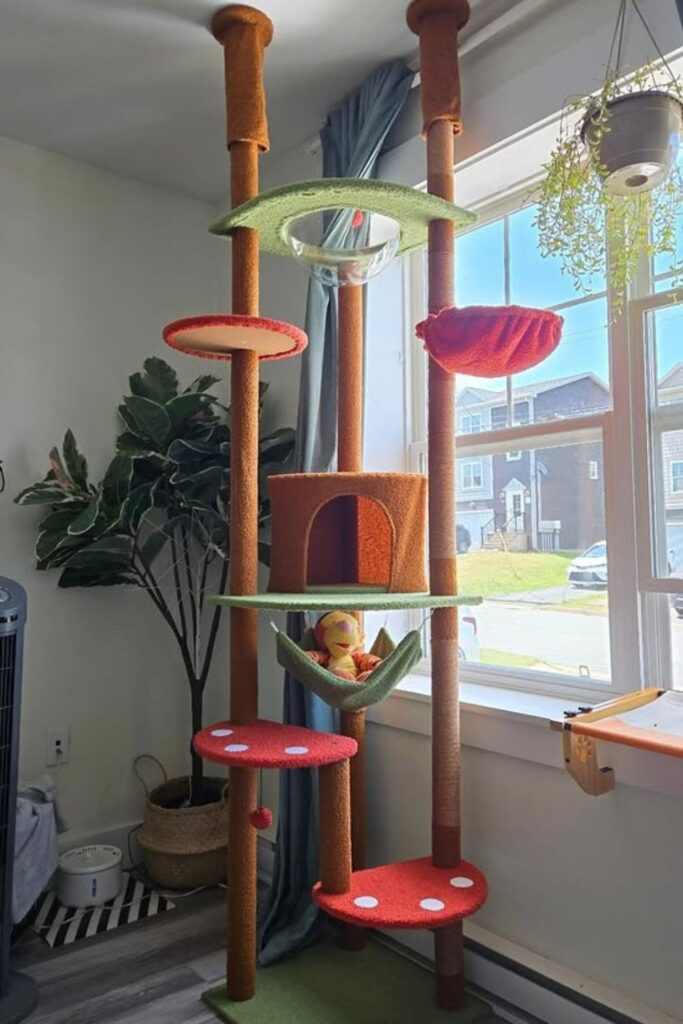
Vertical Playground
This design is perfect for small spaces. It uses tall poles that go from the floor to the ceiling, making the most of your room’s height. You attach platforms at different levels so your cat can jump and climb. Make sure the poles are very sturdy so the whole tower feels safe and does not wobble when your cat leaps.
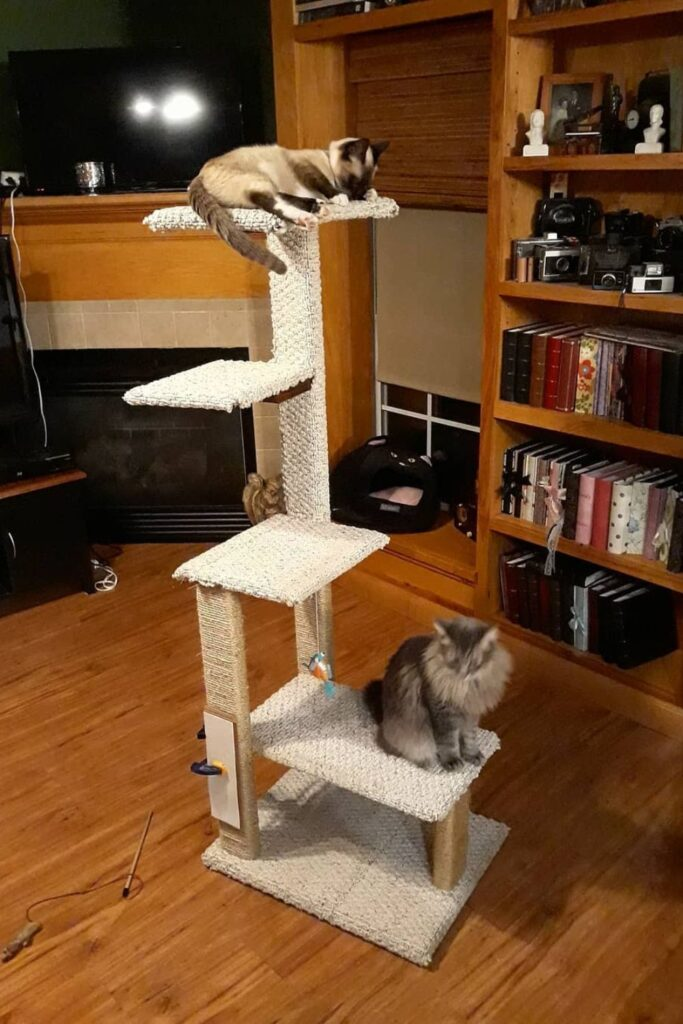
Staggered Steps
Not all cats want to climb straight up. A design with staggered steps is easier, especially for older cats or homes with more than one pet. It has large platforms at different heights, connected by short jumps or small stairs. This gives your cat plenty of resting spots on the way to the top and lots of room to lounge.
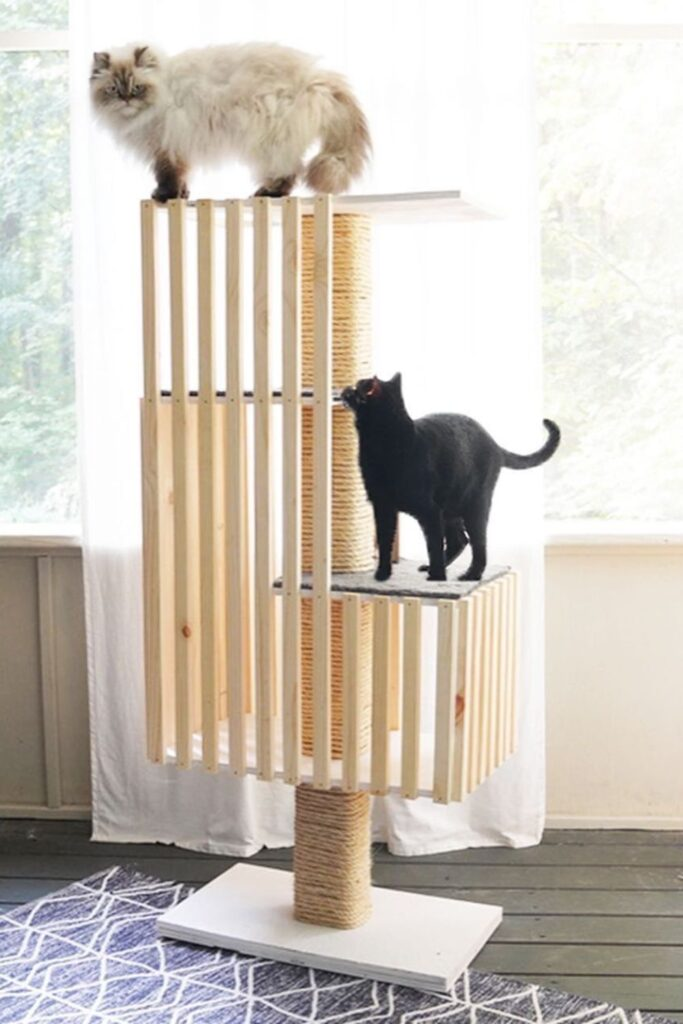
Modern Column
If you like clean, simple home decor, this idea is for you. It turns a cat tower into a modern column that looks like a piece of sculpture. The design uses clean lines and might have a single wrapped scratching post with a simple perch on top. It works hard for your cat but doesn’t look messy in your living room.
Basket Tower
This is a clever and cozy idea. It uses sturdy shelves attached to the wall, with baskets fixed to them at different heights. Each basket becomes a little hiding spot or bed for your cat. It is great for saving floor space and gives your cat a choice of several comfy nooks to curl up in.

Design Statement
Why hide your cat’s furniture? Some builds are so beautiful they become part of your room’s design. You can use curved wood, different textures, and soft cushions to create a cat tower that looks like a modern shelf or art piece. It shows that pet furniture can be both useful and stylish.
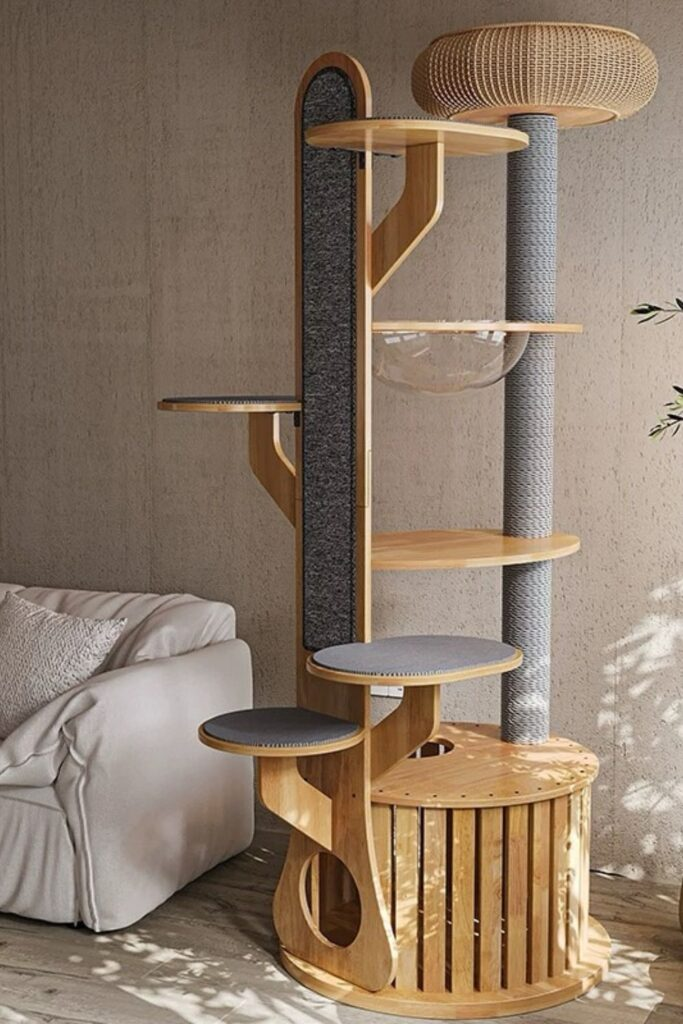
Comfort Stack
This tower focuses on giving your cat options. It mixes different types of resting areas in one structure. You might include a fully enclosed box for hiding, an open platform for lounging, and even a soft fabric hammock for sleeping. It is like a mini apartment complex for your cat, all stacked together.
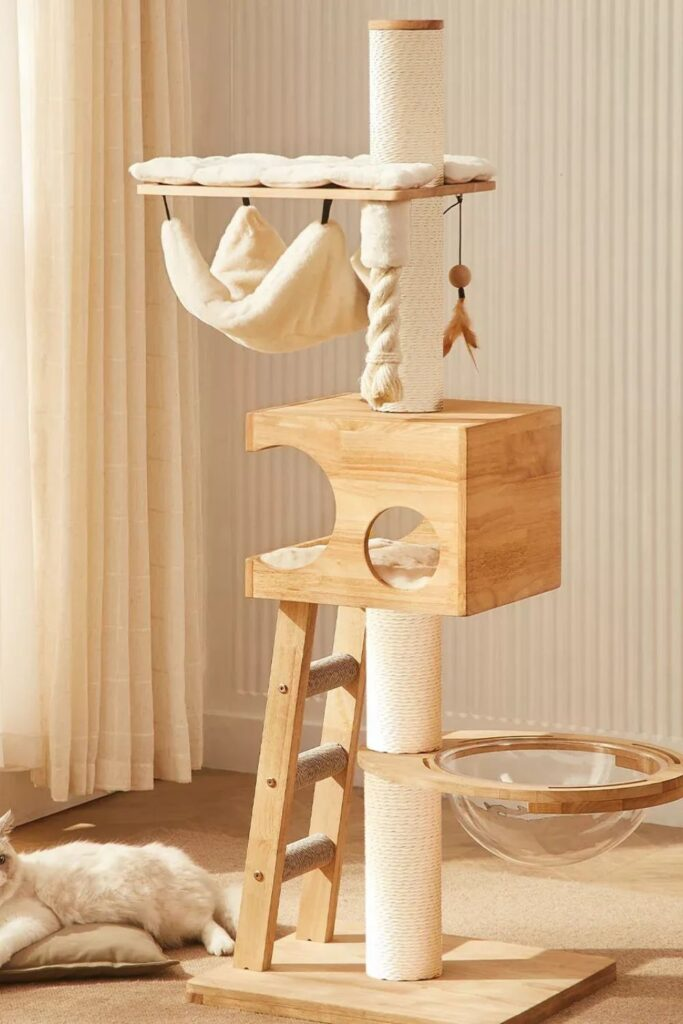
Sculpted Steps
For a natural and artistic look, you can build a tower with platforms shaped like spheres or other soft forms. The platforms are placed at gentle, rising heights to make climbing easy. This design fits well in rooms with a calm, simple style and gives your cat unique perches to enjoy.

Play Zones
Young, energetic cats need more than just a place to sleep. A “play zone” tower is packed with fun. Think of it as an adventure gym with multiple levels, holes to peek through, dangling toys, and tunnels. It keeps your cat busy and happy, which is perfect for burning off extra energy.

Branch Climber
Bring the outdoors inside by using real tree branches. A branch climber has a sturdy wooden base with strong, dried branches secured to it as posts. You then attach platforms to these branches. The different textures and angles of the wood make climbing feel more natural and fun for your cat
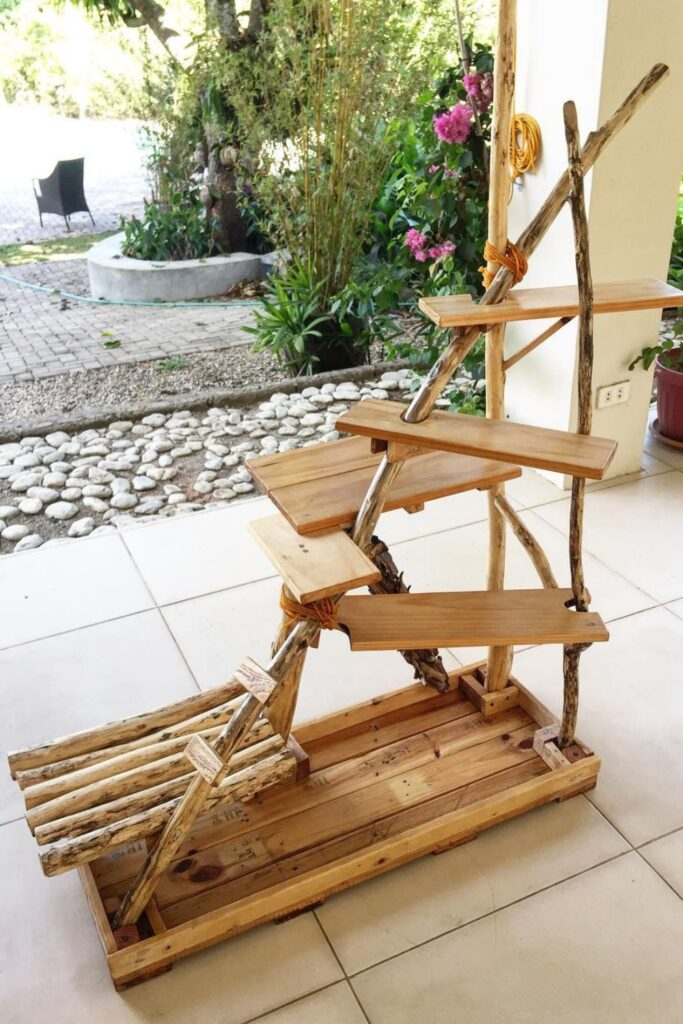
Cozy Crochet
Softness is key in this design. Instead of rough carpet, platforms are wrapped in soft yarn or have padded edges made from crocheted or knitted fabric. This encourages long, comfortable naps. It is ideal for cats that love extra-soft beds and might not like the feel of traditional scratching posts.
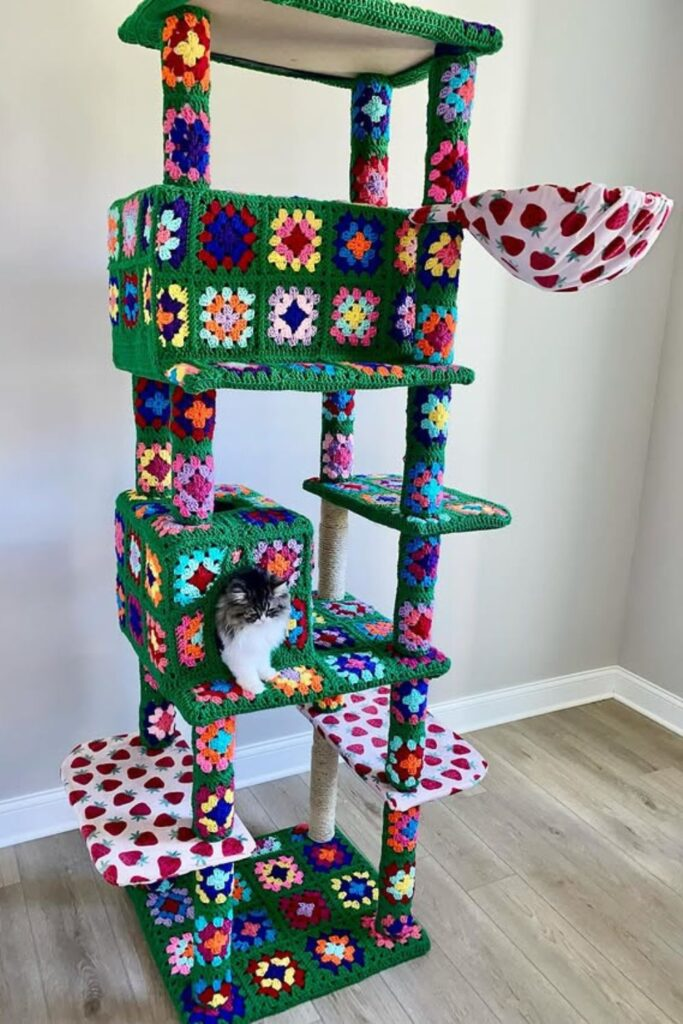
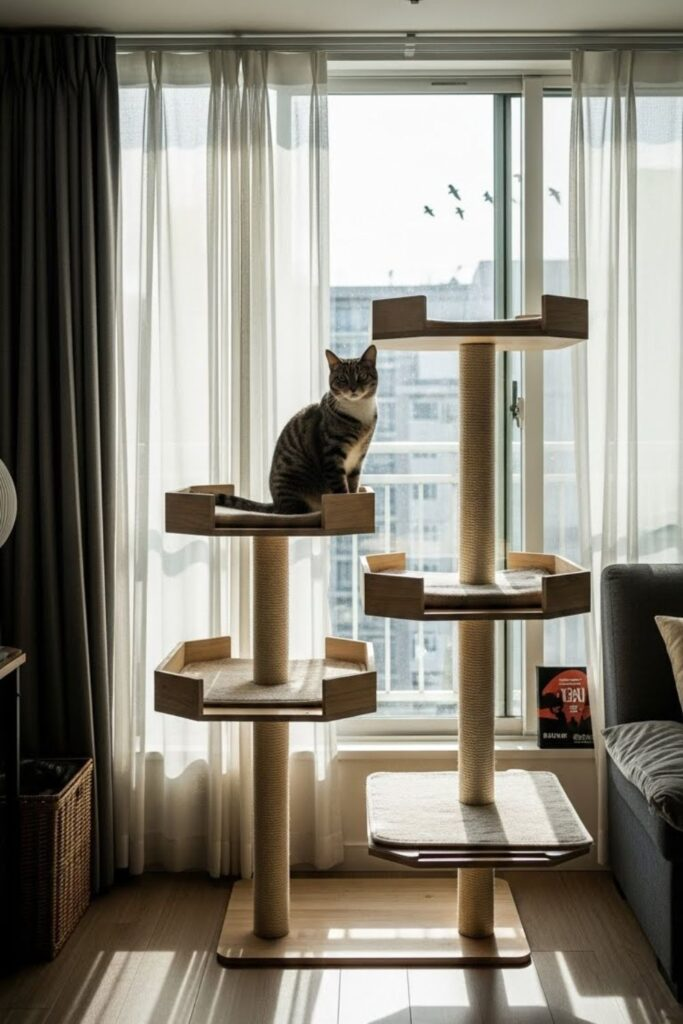
Window Watch
Cats love to look outside. Placing a cat tower right next to a window is a sure way to make it their favorite spot. A medium-height tower with wide platforms here gives your cat a front-row seat to watch birds, cars, and people. The sunlight and view provide hours of entertainment.
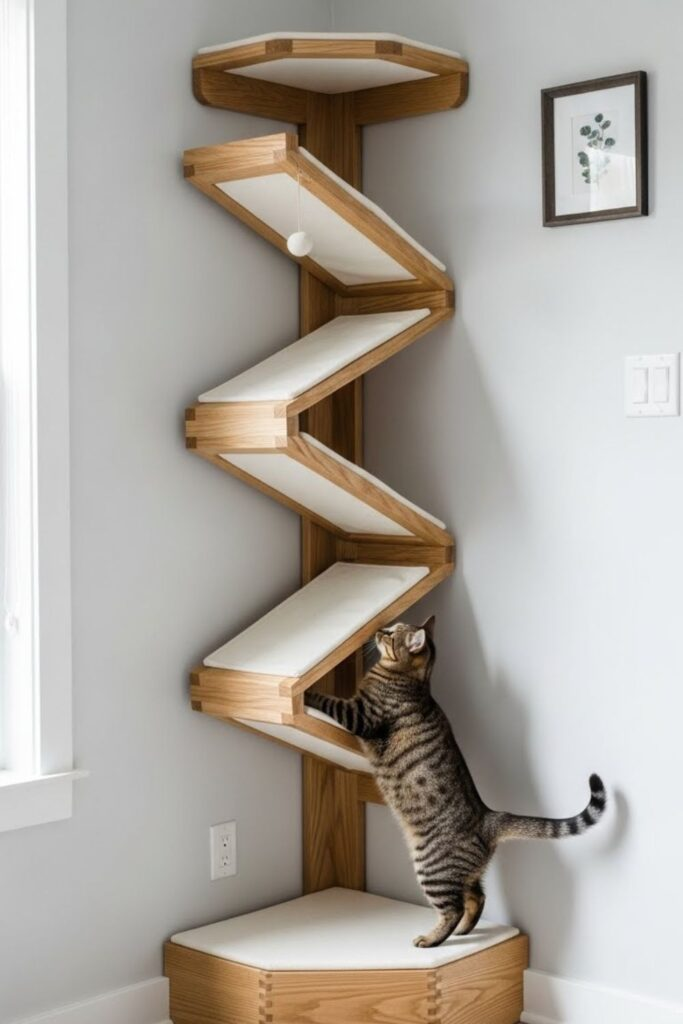
Corner Climb
Do not waste that empty corner in your room. A corner cat tower fits perfectly into this often-unused space. It has a triangular base and platforms that are arranged in a zigzag pattern up the wall. This design is a smart solution for smaller homes where floor space is limited.
Ladder Route
Some cats prefer climbing to jumping. A ladder-style tower is excellent for older cats, kittens, or pets with less mobility. It has wide, flat rungs set at a gentle slope, making it very easy to climb. Cover the rungs with carpet or rope so your cat’s paws do not slip.

Hidden Den
Cats sometimes want to be alone. A tower with “hidden den” boxes gives them that privacy. You can build cube-shaped boxes with entrance holes and stack them within the tower. Mix these enclosed boxes with open platforms above and below so your cat can choose to be seen or disappear completely.
Minimal Pole
Not every home needs a huge cat structure. A minimal pole is just a single, sturdy post with a comfortable perch on top. It takes up very little space and can be placed next to a sofa or desk. The post is wrapped in sisal rope for scratching, and the perch gives your cat a nice high spot to survey the room.
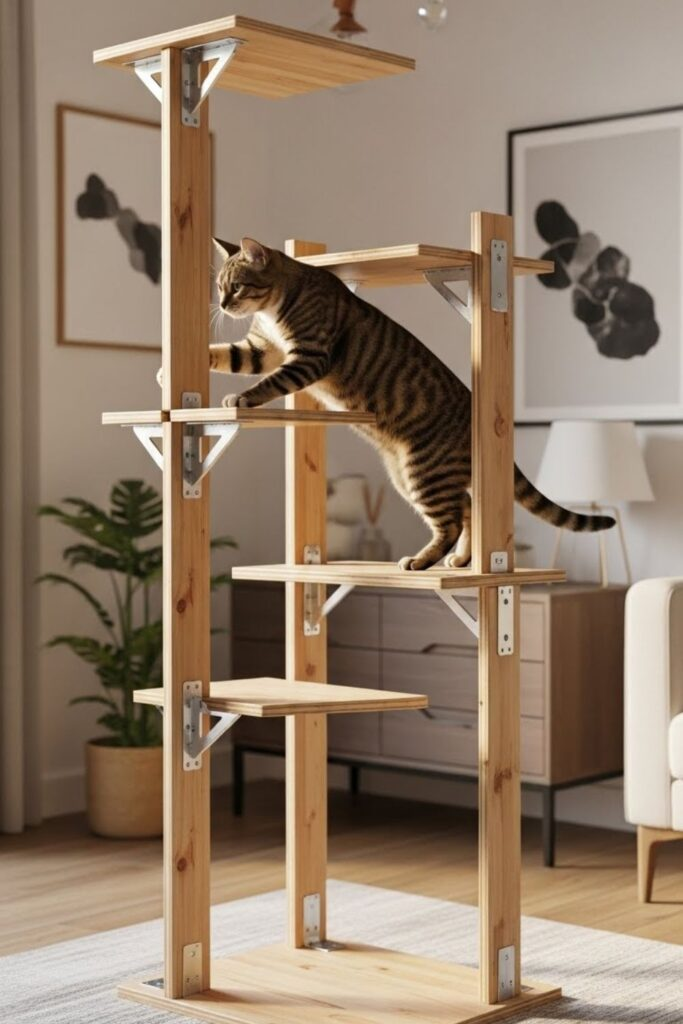
Modular Build
This is the most flexible design. A modular cat tower is made from separate pieces—like platforms and posts—that you can connect in different ways. You can start small and add more pieces later, or rearrange them if you move furniture. It grows and changes with your cat’s needs and your living space.
FAQs
Is a DIY Cat Tower Safe for Large or Heavy Cats?
Yes, but you must build it with their size in mind. For large or heavy cats, use wider platforms and thicker, stronger support posts. The most important part is a very wide and heavy base. A big, solid base will keep the tower from tipping over, no matter how tall it is. You can also secure the top of the tower to a wall for extra safety.
How Tall Should a DIY Cat Tower Actually Be?
Taller is not always better. For most cats, a tower between four and six feet tall is ideal. The key is not the total height, but how the tower is designed. Platforms should be spaced so your cat can climb easily without having to make scary, big jumps. A tower with well-spaced platforms will be used much more than one that is just very tall.