17 DIY Sensory Bin Ideas for 2026
If you are looking for simple sensory activities, it is often because your child feels bored, restless, or stuck on a screen. Many ideas sound good at first but become messy, expensive, or hard to manage once you try them at home.
This guide focuses on sensory bins that are easy to set up and easy to use. These ideas do not need special supplies or long preparation time. Each activity is made to keep kids busy, focused, and happy using simple materials you may already have.
You will learn what easy sensory activities really are and explore seventeen DIY sensory bin ideas that work well for calm play, learning time, and independent fun.
What are Easy DIY Sensory Activities?
Easy DIY sensory activities are simple hands-on setups that help children explore through touch, movement, sight, and sound. These activities are designed to keep kids engaged without stress for parents.
The most important part is keeping things simple. Activities that need special tools, long prep time, or constant help usually do not last. Easy setups help kids play on their own for longer periods.
Good sensory activities use everyday items like rice, water, paper, or basic kitchen tools. When children use their hands while thinking and exploring, they stay focused and enjoy the activity more.
These activities work best when they are open-ended. This freedom allows a simple bin or tray to become something children want to return to again and again.
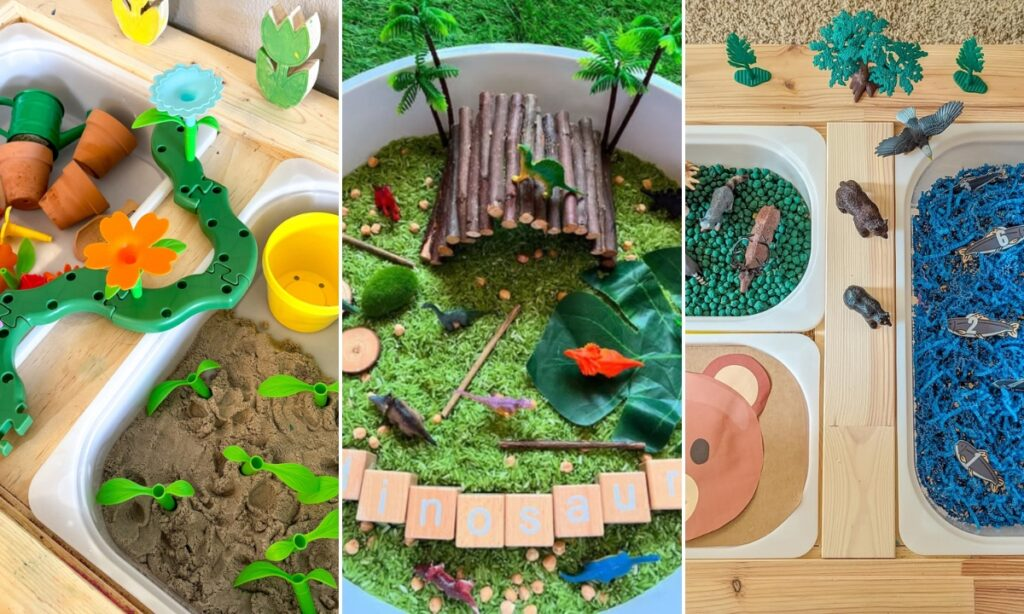
Dinosaur World Play
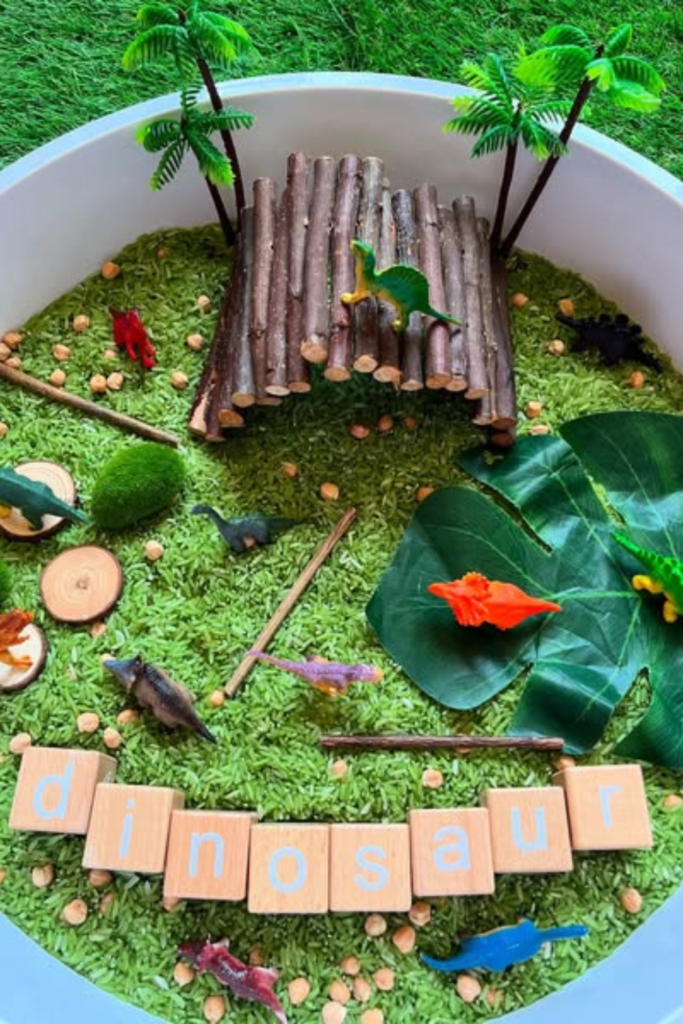
Dinosaur-themed sensory play keeps kids interested and active. Adding dinosaur figures with loose parts helps children stay busy as they move and explore.
Green rice or dyed grains work well as a ground base. Sticks, leaves, and toy trees help create a simple dinosaur habitat.
This setup combines texture, visual contrast, and pretend play. It works well for independent play and quiet afternoon activities.
Land Water Sorting
This activity is great for learning time or calm indoor play. Two bins are used, each with a different texture to represent land and water.
Green pellets or peas can represent land, while blue paper shreds work well for water. Mixed animal figures are placed nearby for sorting.
Texture contrast and visual clues help children focus while building early sorting and thinking skills.
Garden Plant Play
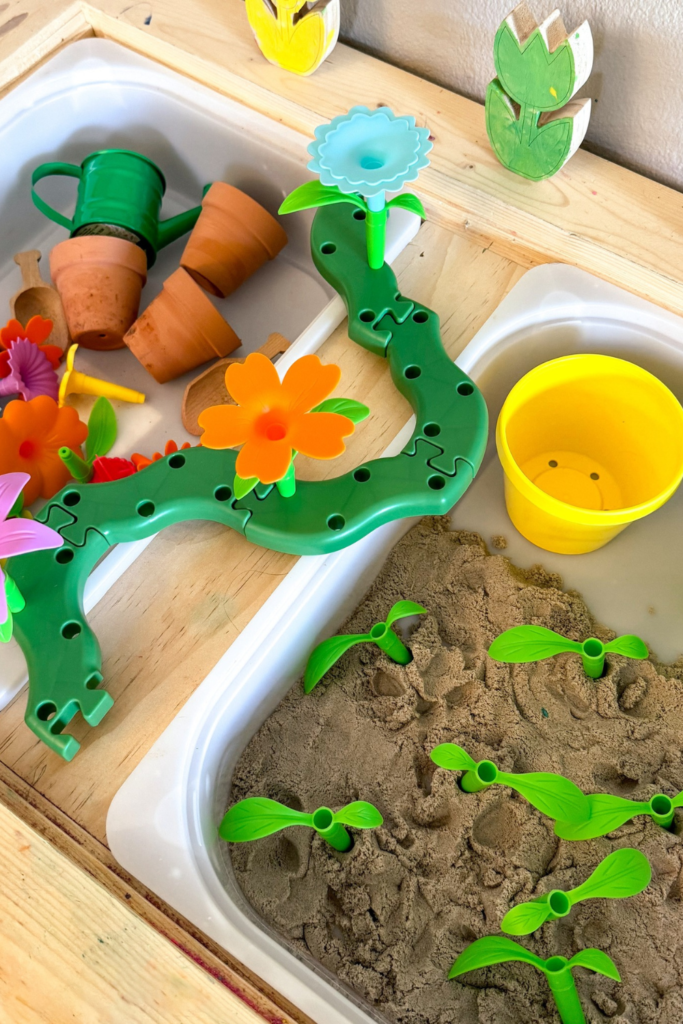
Garden-themed sensory play feels real and keeps kids engaged longer. The bin can be divided into soil and tools using kinetic sand for digging.
Small pots, toy flowers, scoops, and watering pieces encourage filling, pressing, and rearranging. Children enjoy pretending to plant and care for a garden.
Fine motor skills, tactile input, and bright colors come together, making this setup perfect for calm morning play.
Ice Dig Rescue
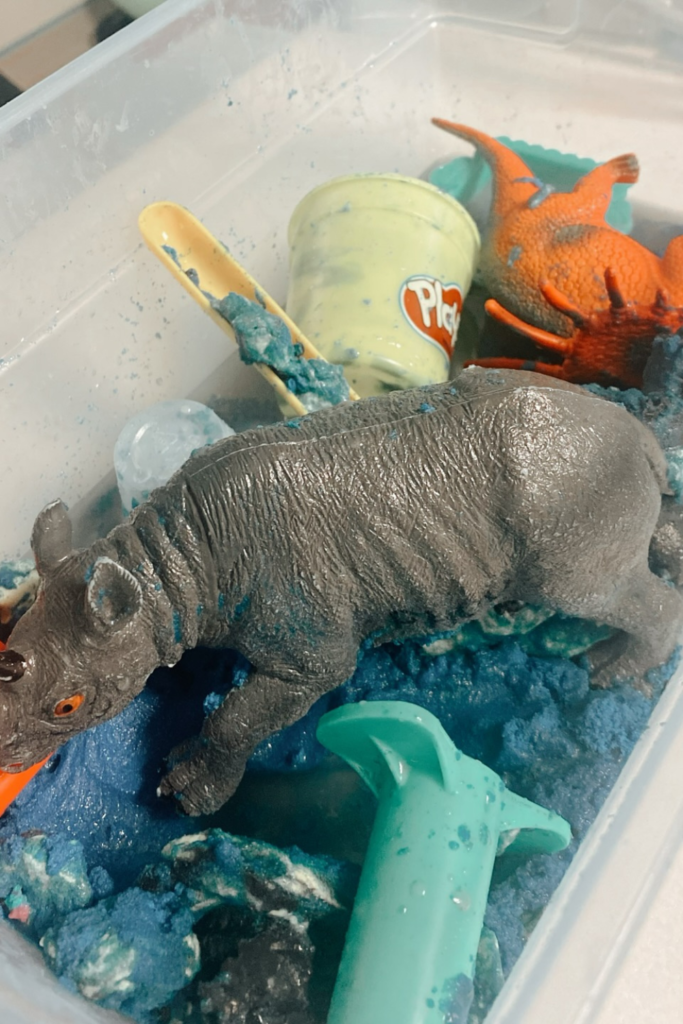
Cold textures change how children interact with sensory play. Frozen dough or ice chunks slow movements and increase focus.
Children scoop, scrape, and solve problems as they try to free animal figures trapped inside the ice.
Temperature contrast, resistance, and tool use make this activity ideal for hot days when kids need to calm down.
Construction Letter Dig
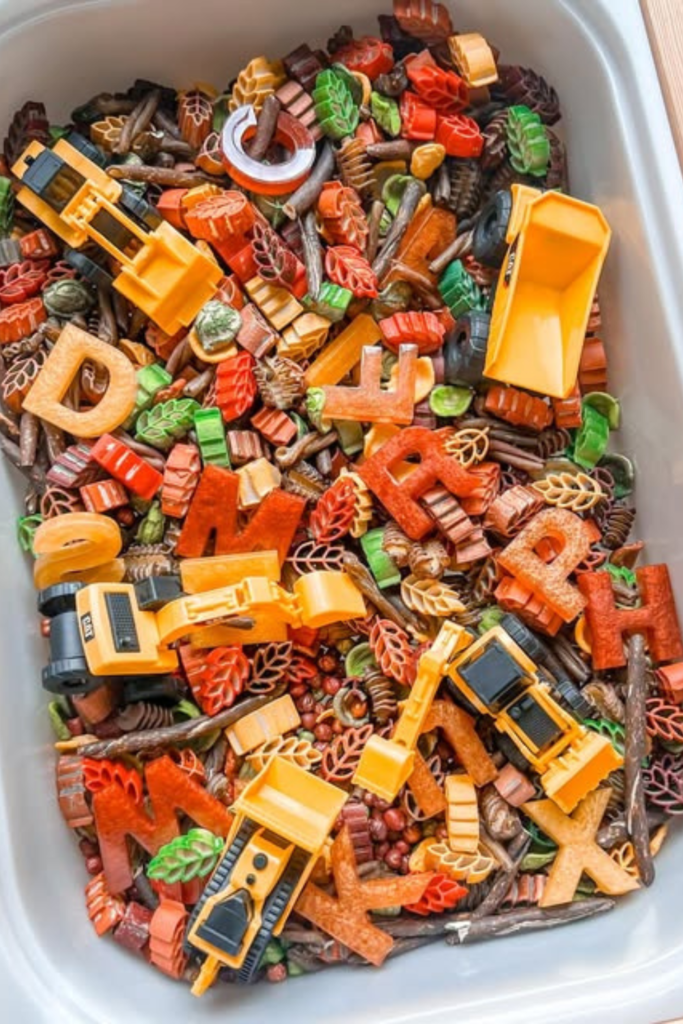
Dyed pasta or beans create a textured base for digging. Construction vehicles turn the activity into a fun mission.
Hidden letter pieces encourage scooping and dumping while helping with early letter recognition.
The weight, sound, and resistance of materials make this setup perfect for high-energy play that still keeps hands busy.
Scoop And Pour
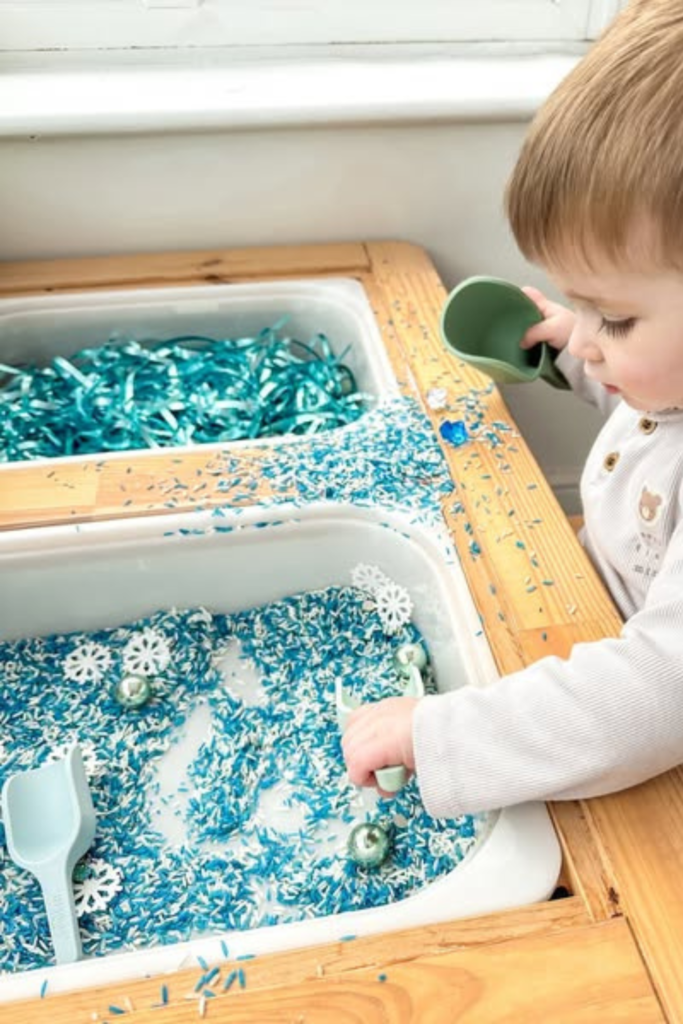
Blue rice or shredded paper creates gentle resistance. Cups and scoops invite filling, transferring, and controlled spilling.
Repetitive motion, soft sounds, and color contrast help toddlers stay calm and focused.
This setup works well for children who need movement but struggle to sit quietly during play.
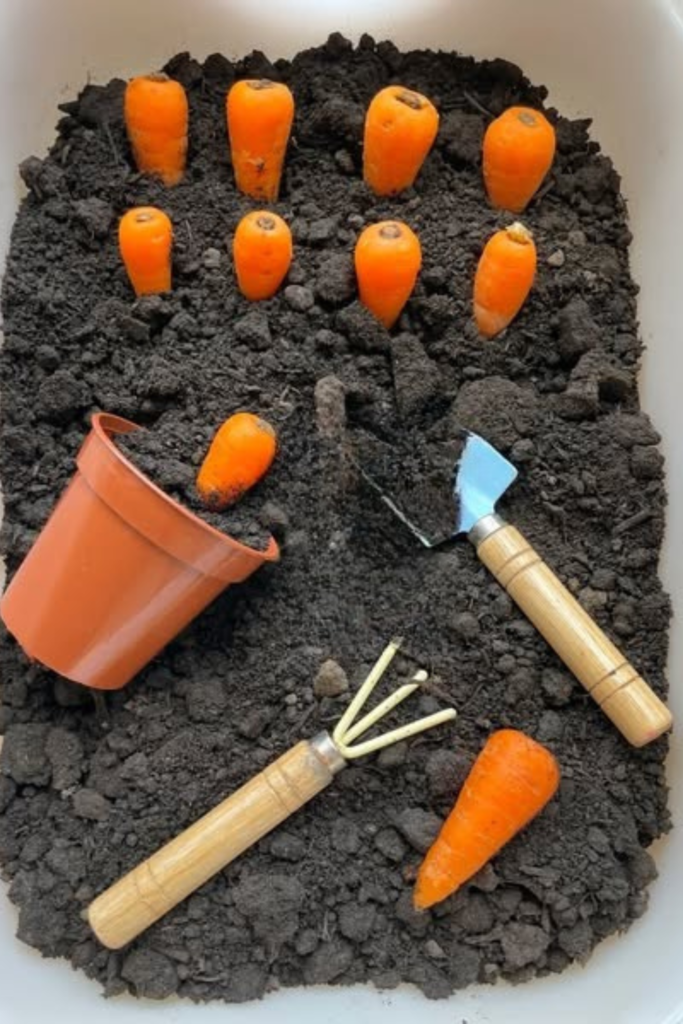
Carrot Patch Dig
Harvest-style play naturally slows children down. Dark kinetic sand or soil mix provides a strong texture contrast.
Small garden tools help with gripping, pulling, and twisting movements. Play carrots give children a clear goal while digging.
This setup is ideal for focused indoor play and fine motor skill development.
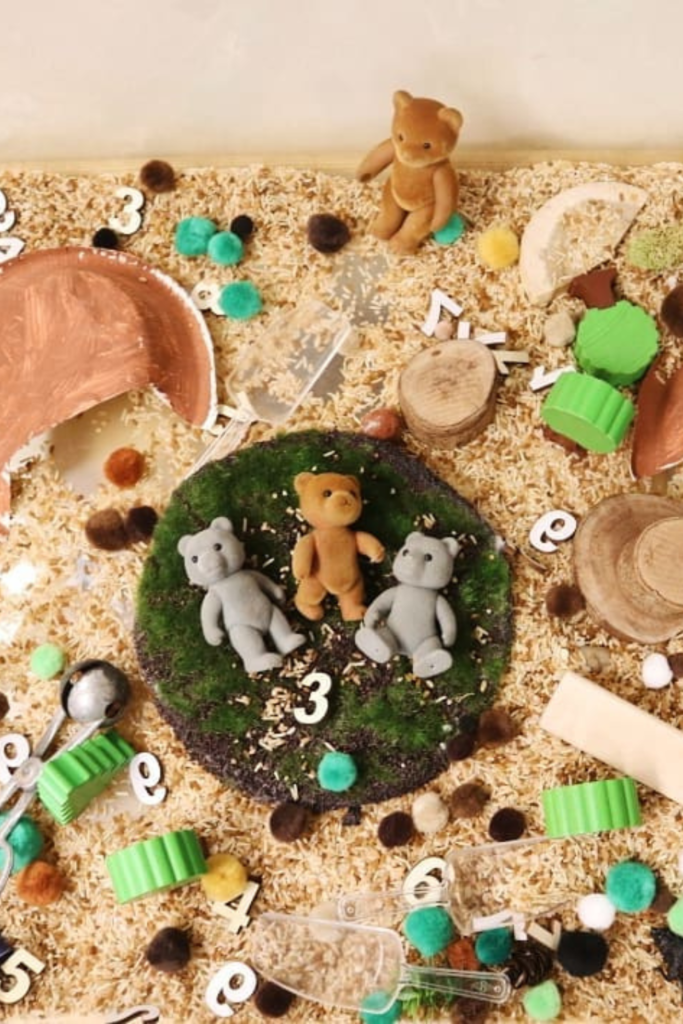
Woodland Counting Play
Shredded paper or sawdust creates a soft forest floor. Bears, loose parts, and number pieces invite counting through play.
Small bowls and scoops encourage sorting and grouping. Story-style setups help children stay engaged longer.
This activity blends tactile input and early math skills, making it great for quiet table work.
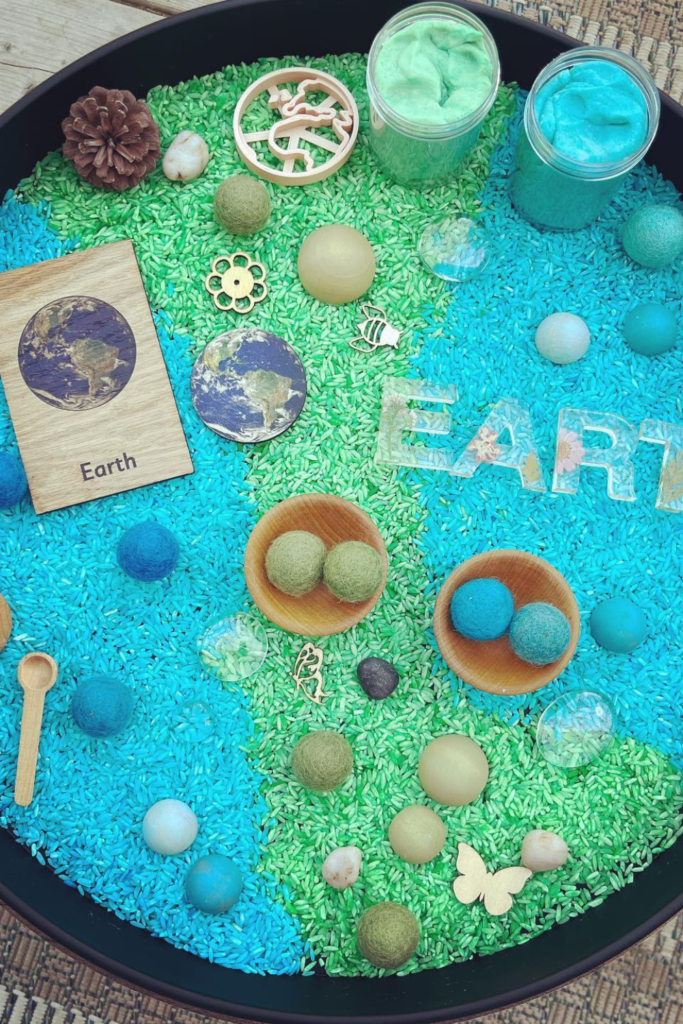
Earth Sensory Map
World-themed sensory play encourages calm focus without feeling like a lesson. Blue and green rice represent land and water.
Wooden bowls, felt balls, and loose parts invite gentle sorting and movement. Geography elements spark curiosity naturally.
Soft textures and slow motion make this setup perfect for quiet afternoons or mindful breaks.
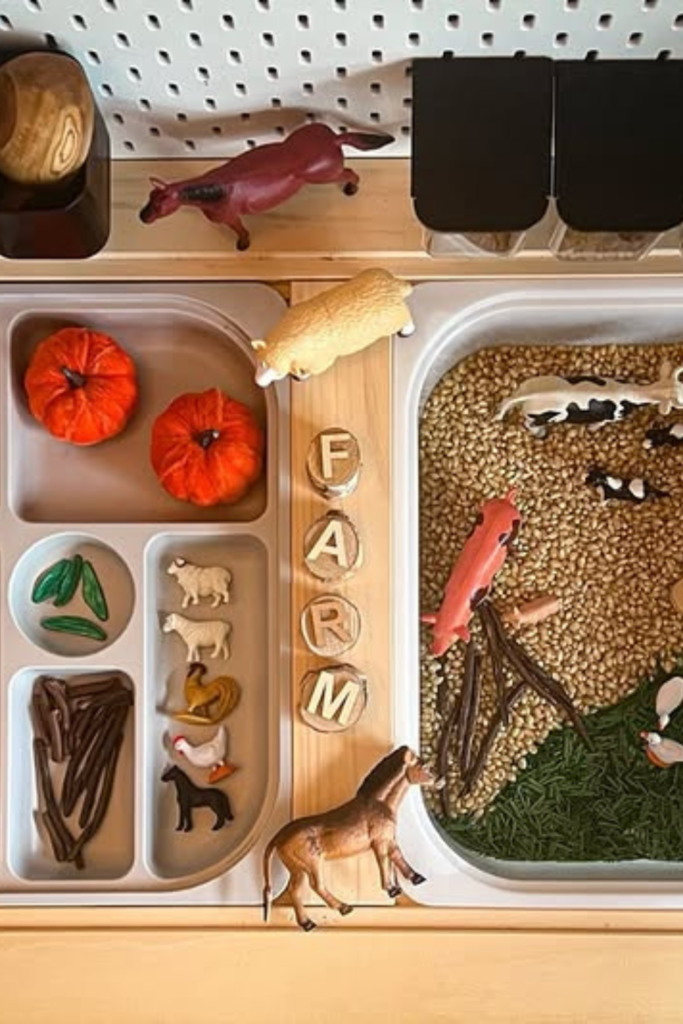
Farm Sorting Station
Farm-themed play feels familiar and grounding. Grains, green rice, and small farm animals create simple field sections.
Sticks, seeds, and wooden pieces allow sorting and matching with purpose. Children enjoy moving items into place.
Texture variety and pretend play make this setup ideal for focused learning time.
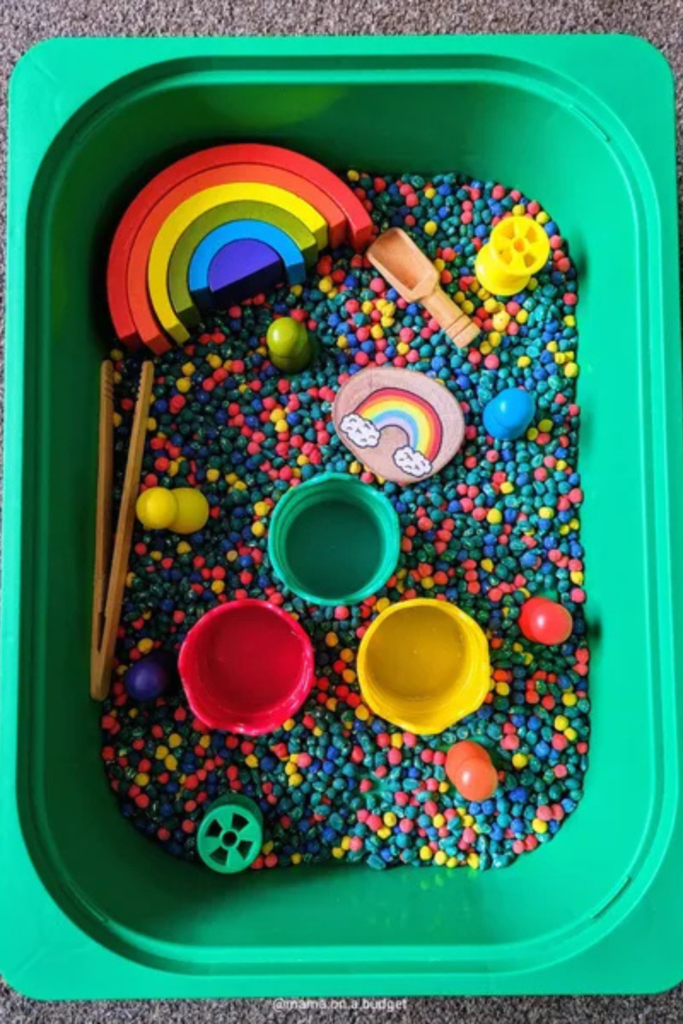
Rainbow Texture Mix
Colorful sensory beads form a playful base. Cups and scoops support pouring and sorting.
Bright colors attract attention quickly. Soft tapping sounds and repeated motion enhance the sensory experience.
This setup works well for free play, color exploration, and gentle creative moments.
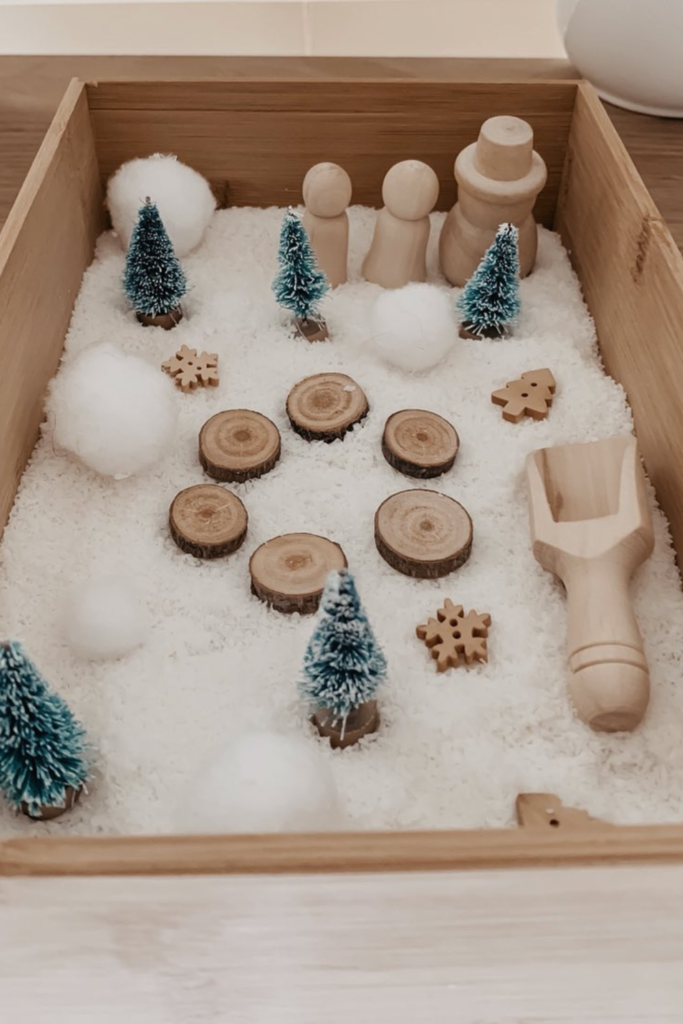
Winter Snow Scene
Faux snow or salt creates a quiet base for play. Wooden figures and trees encourage slow arranging and storytelling.
Neutral colors and soft textures invite calm, focused movement.
This activity helps settle overstimulated children during winter afternoons or quiet time.
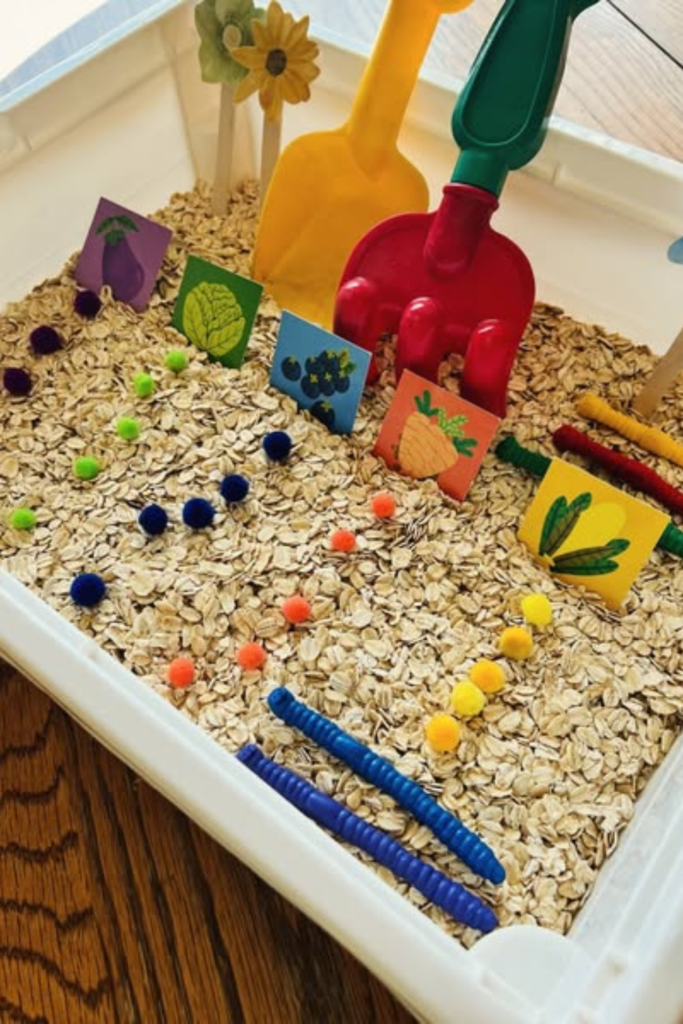
Garden Pattern Rows
Pattern play adds learning through hands-on digging. Rolled oats form a soft base while pom-poms act as pretend seeds.
Color cards guide planting rows without pressure. Children explore patterns naturally.
This setup supports early math skills and focused independent play.
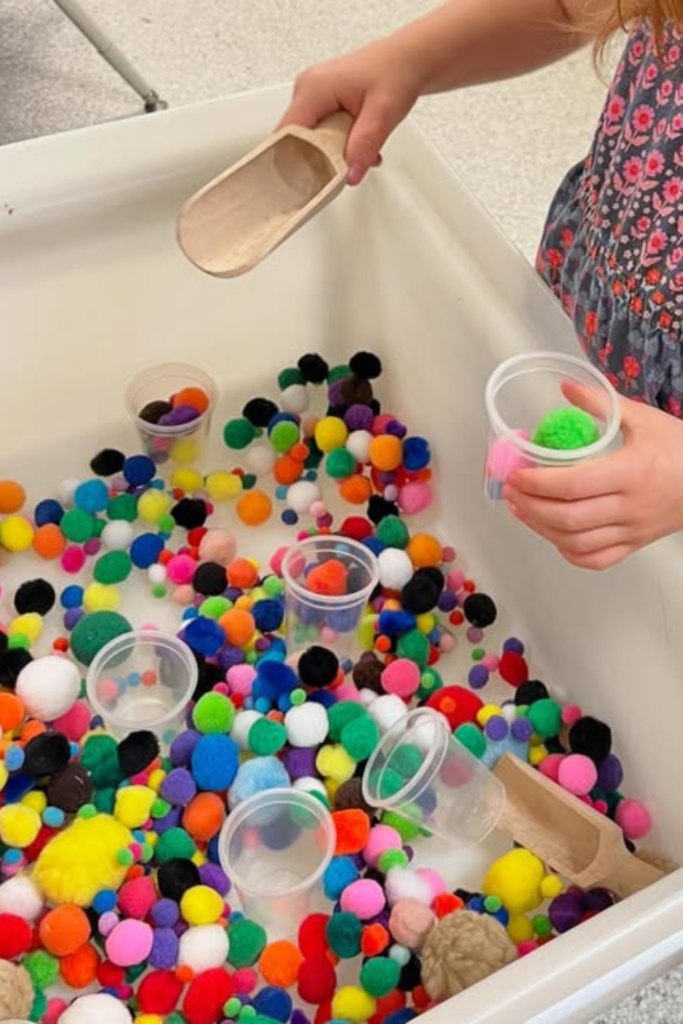
Pom Pom Transfer
Soft pom-poms make a lightweight base. Scoops and small cups turn transferring into focused work.
Children naturally sort by size or color while controlling the pace of play.
Gentle sound and repeated motion help build hand strength during calm play.
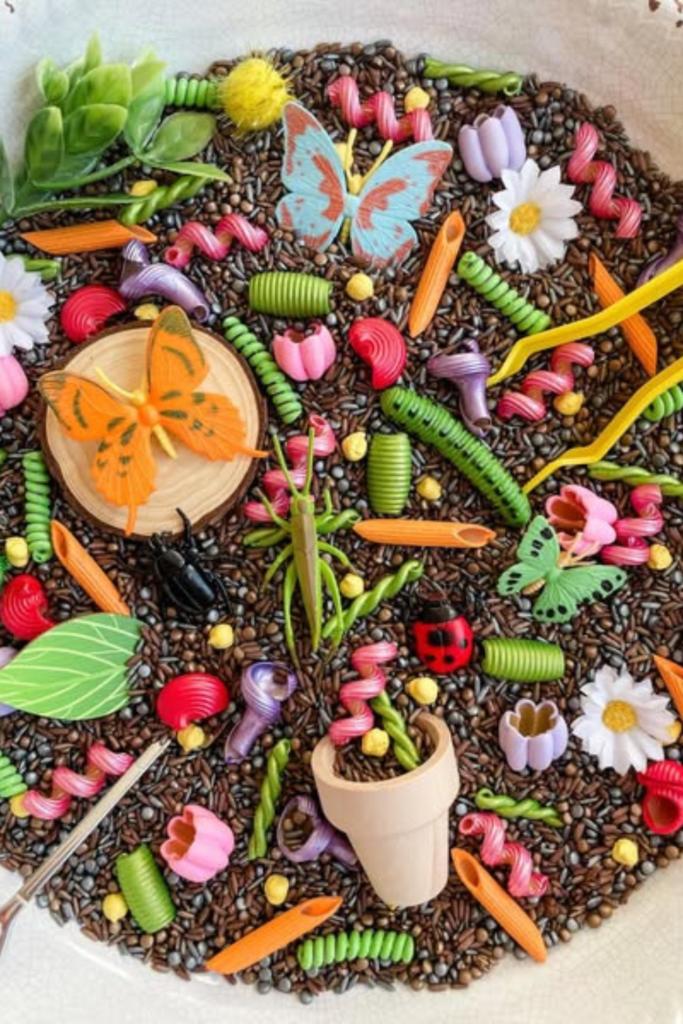
Bug Garden Dig
Dark beans or lentils create a rich sensory base. Insects, flowers, and textured pasta invite searching and sorting.
Tweezers or small tools add challenge without stress. Nature themes work well for detail-focused kids.
Texture contrast and discovery make this activity ideal for focused sensory play.
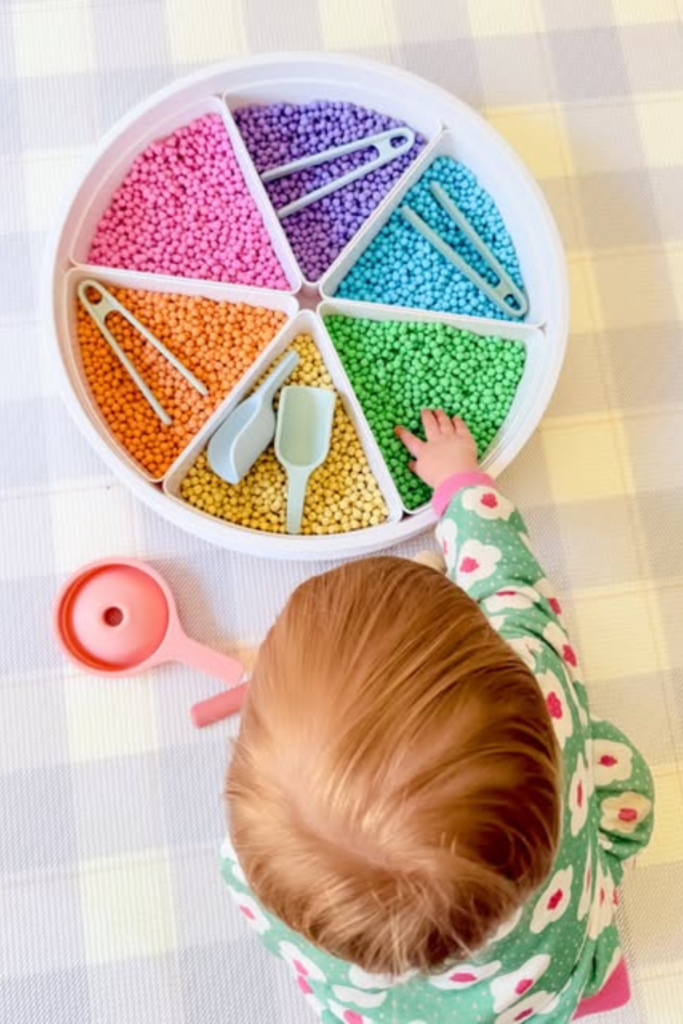
Color Sorting Wheel
Sectioned trays help children focus easily. Dyed peas or pellets turn sorting into a clear task.
Scoops support controlled movement between sections.
Visual order and repetitive motion make this setup great for toddlers learning control.
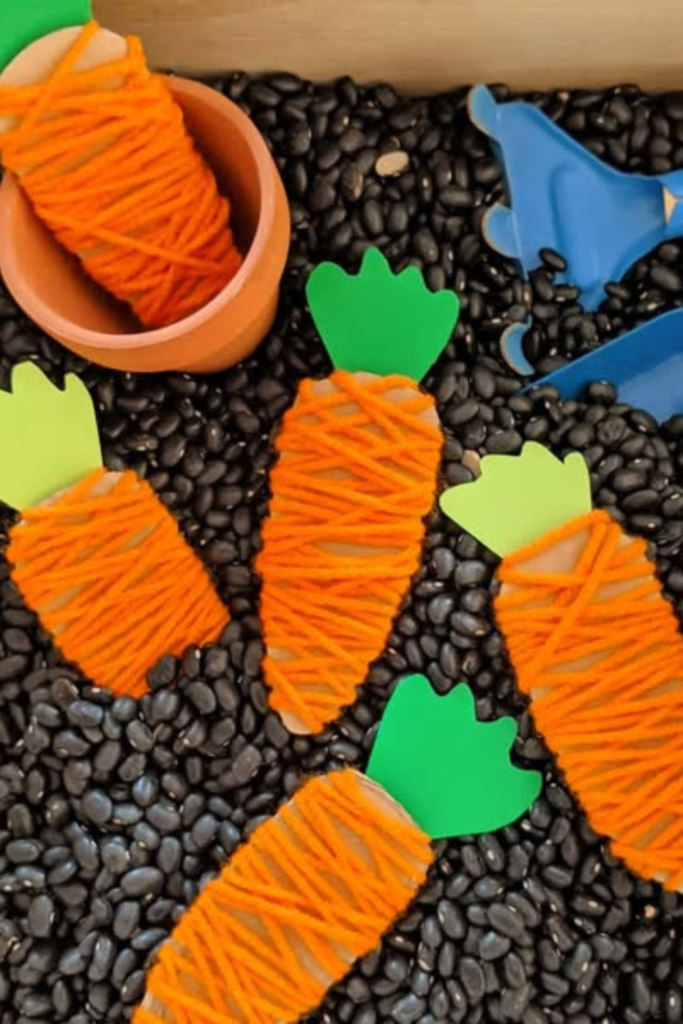
Carrot Wrap Station
Wrapping play adds a slow and satisfying challenge. Children focus on tension and direction while wrapping yarn.
Black beans provide weight and contrast. Wrapped carrots encourage twisting and unwrapping.
This activity builds patience, coordination, and fine motor control.
FAQs
How do I keep sensory play from turning into a mess?
Use a wide tray or shallow bin and keep filler levels low. Start with only a few tools to reduce dumping.
Place the bin on a mat or towel and set one simple rule, such as keeping tools inside the bin. Clear limits help calm play.
Which sensory bin fillers work best for toddlers?
Large, taste-safe fillers work best for toddlers. Rolled oats, cooked pasta, water, and soapy foam are good options.
Avoid small beads or items that expand in water. Simple fillers are safer and help play last longer.