30 Ice Breaker Games for Adults for 2026
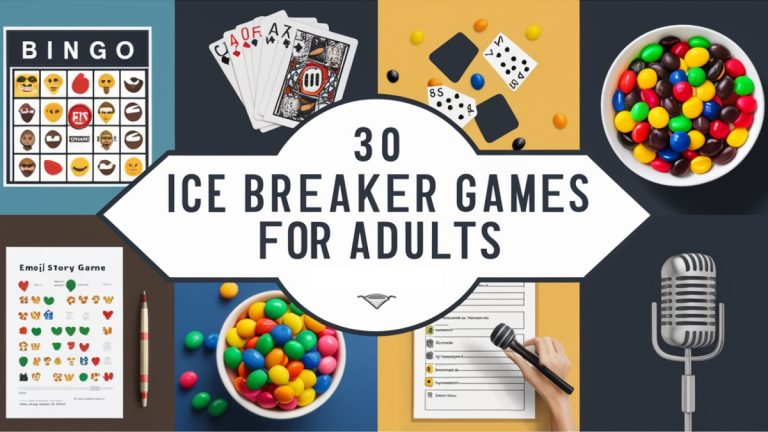
30 Ice Breaker Games for Adults
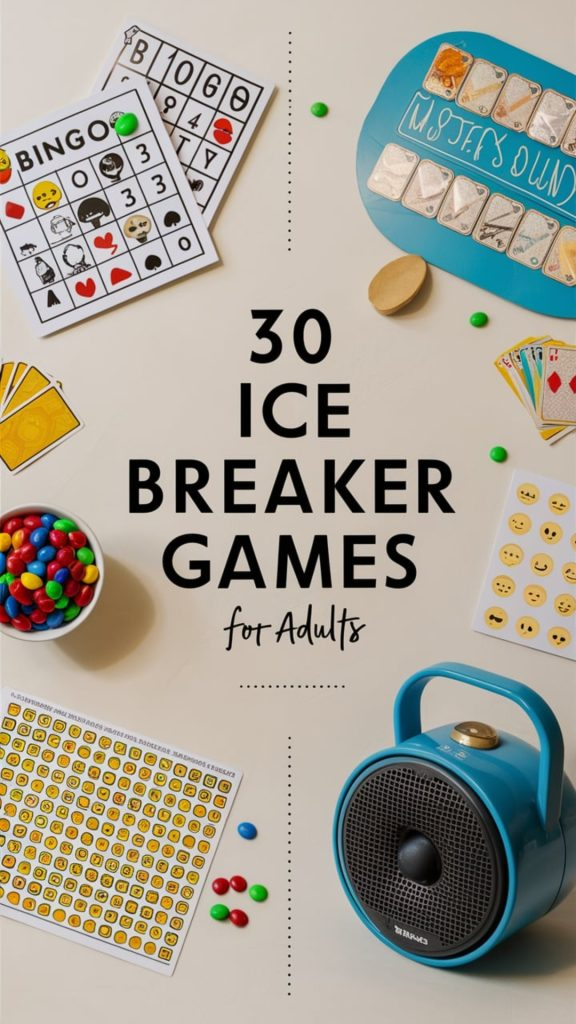
Ice breaker games are great for bringing people together at gatherings or team events. They help start conversations, make people laugh, and build connections. Here is a list of 30 fun and engaging ice breaker games for adults.
Two Truths and a Lie
This is a classic game where each person says two true things and one lie about themselves. The rest of the group talks and tries to guess which statement is the lie. It helps create a relaxed atmosphere where people share unique details about their lives.
Human Knot
This is a team-building activity. Participants stand in a circle, reach across, and hold hands with two different people. The group must work together to untangle themselves without letting go of each other’s hands. It promotes communication and problem-solving.
Would You Rather
This is a conversation starter. Participants answer a series of “Would you rather” questions, like choosing between flying or breathing underwater. The questions can be funny or serious. It helps people share their preferences and reasons, sparking discussions.
Sweet Stories
In this game, participants take a piece of candy from a bag. Each candy color matches a different question or topic. For example, blue might mean sharing a story about a respected boss. It encourages storytelling and helps people learn about each other’s experiences.
The Marshmallow Challenge
This is a team-building exercise. Groups use spaghetti, tape, string, and a marshmallow to build the tallest free-standing structure in 20 minutes. The marshmallow must be on top. It fosters innovation, teamwork, and problem-solving.
Bucket List Bingo
Each person gets a bingo card filled with bucket list goals, like visiting a new country. As they achieve these goals in real life, they mark off the squares. This game motivates people to pursue their dreams and share their progress.
Gossip Time
In this game, participants write a nice piece of gossip about a chosen team member. That person stands outside the room and must guess who wrote each compliment. It creates a positive atmosphere and strengthens personal connections.
Pictionary Relay
This is a competitive drawing game. Participants take turns drawing words or phrases for their team to guess. Teams compete to guess the most drawings correctly. It encourages creativity, quick thinking, and teamwork.
Common Ground
This game helps participants discover shared interests. They are divided into small groups and discuss a list of statements to find as many commonalities as possible. It promotes conversation and connection.
M&M Game
Each color of M&M candy matches a specific question or topic, like a favorite movie. Participants take an M&M and answer the question for that color. It is a simple and fun way to spark conversation.
Hometown Map
A large world map is pinned to a wall. Participants mark their birthplace or hometown on the map and write a short note about growing up there. This sparks conversations based on shared stories.
Memory Lane
Each person takes a turn telling a personal story that is special to them. This activity helps build empathy and deepens connections as people learn about each other’s life experiences.
Skill Share
Participants take turns demonstrating a skill or talent they have. Each person teaches something they are good at, like a hobby or professional skill. It builds appreciation for each other’s talents.
Snapshot Throwback
Participants bring in childhood photos. The photos are randomly handed out, and each person must find the owner of the photo they received. They then share stories about the childhood memory in the photo.
Emoji Story
Each person creates a story using only emojis. Others have to guess what the story is. This game stimulates creativity and brings laughter to the group.
Act and React
Players act out scenarios written on paper without speaking. The rest of the group must guess the scenario. It promotes creativity and non-verbal communication, leading to light-hearted fun.
Psychology Masks
Participants decorate masks. The outside represents their public persona, and the inside represents their true self. This encourages self-expression and introspection, sparking discussions about identity.
Ha, Ha
Participants sit in a circle and take turns saying “Ha” with increasing repetitions. The goal is to keep a straight face without laughing. Anyone who laughs when it’s not their turn is out. It tests self-control and causes laughter.
Beach Ball Toss
A beach ball with questions written on it is tossed around. When someone catches it, they answer the question under their right thumb. This helps people share fun facts and personal stories.
Three-Question Mingle
Each person writes three open-ended questions on a sticky note. They mingle with the group, asking these questions to others. Afterward, they share interesting facts they learned about each other. It promotes active listening and meaningful interactions.
Mystery Sound
Participants listen to sound clips and try to identify the source of each sound, like a dog barking. They write down their guesses. The person or team with the most correct answers wins. It enhances listening skills.
Zoom In, Zoom Out
Participants guess what an image is as it slowly zooms in or out on a screen. They write down their guess as soon as they think they know it. The first person to guess correctly wins. It encourages quick thinking.
Simply Fun Icebreaker Games
In the Hodge Podge Word Game, participants sit in a circle and build sentences one word at a time to a rhythm. The leader starts, and each person adds a word. If someone breaks the rhythm, they start a new sentence. It encourages creativity and cooperation.
Similarities and Differences
Each person gets a paper with columns for Name, Similar, and Different. They mingle to find one similarity and one difference with each person they meet. The person with the most names wins. It helps people discover connections.
Cultural Share
Participants take turns sharing something about their culture, like traditional food or customs. They explain its significance. This fosters inclusivity and broadens everyone’s perspectives.
10 Things in Common
Participants pair up and try to find ten things they have in common within a set time. They then share their commonalities with the group. This encourages meaningful conversations and creates camaraderie.
Who Did It?
Each person writes down something unique they did on a piece of paper. The papers are placed in a bowl. Slips are drawn one by one, and the group tries to guess who did each action. It reveals surprising facts and sparks laughter.
Special Snowflakes
Participants receive paper snowflakes. Throughout the event, they write compliments on each other’s snowflakes. At the end, everyone reads the compliments they received. This boosts morale and fosters a positive atmosphere.
Group Playlist
Participants contribute their favorite songs to create a shared playlist. This playlist can be played during the event. It sparks conversations about music preferences and personal stories related to the songs.
Telephone Game
Participants stand in a line or circle. One person whispers a sentence to the next, and it is passed along. The last person says the sentence out loud. The fun is in seeing how the sentence changes. It is a simple and entertaining classic.