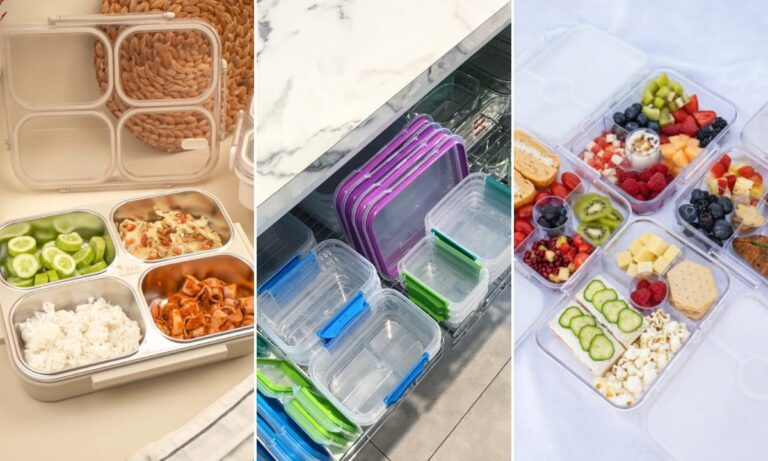
17 Lunch Box Organization Ideas for 2026
You open your lunch box and everything is mixed together.
Sauce spreads into other food, fruit turns soft, and bread gets crushed.
Even when you try to pack carefully, it still feels messy.
This is usually not a food problem.
It is a container problem that makes packing harder than it should be.
When containers do not fit well or seal tightly, organization fails.
In this article, you will find 17 lunch box organization ideas that work in 2026.
These ideas help stop leaks, save space, and make packing faster.
Let’s make lunch prep simple and stress-free.
What are the Best Containers for Lunch Box Organization?
The best containers are the ones that seal properly.
If a lid does not close tightly, food will leak no matter how careful you are.
Strong seals protect every part of the meal.
Good containers also use space wisely.
Bulky or odd shapes waste room and crowd other items.
A smart shape helps everything fit neatly inside the lunch bag.
They should also be easy to open and clean.
If washing feels difficult, you will avoid using them.
When containers match your routine, packing becomes automatic instead of frustrating.
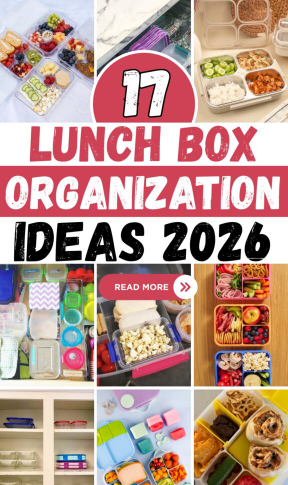
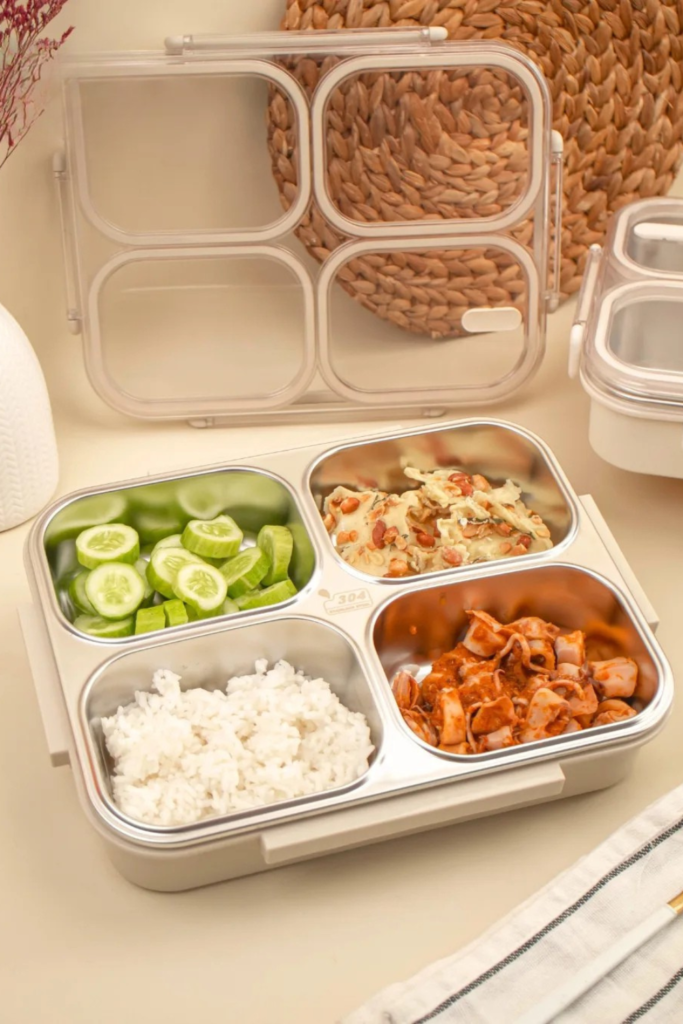
Built-In Meal Zones
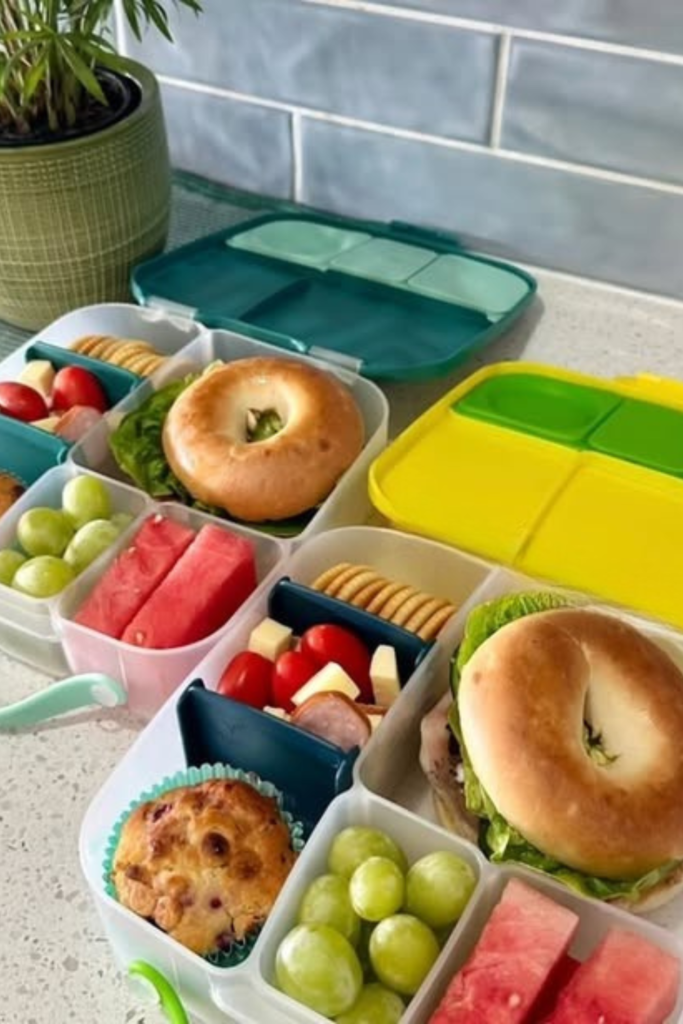
Containers with fixed sections help keep foods apart.
Each part holds a different item without mixing flavors.
This works well for meals with sauce or rice.
Choose boxes with solid compartments.
Strong dividers prevent leaks between sections.
Everything stays in its place until lunchtime.
Size-Sorted Storage
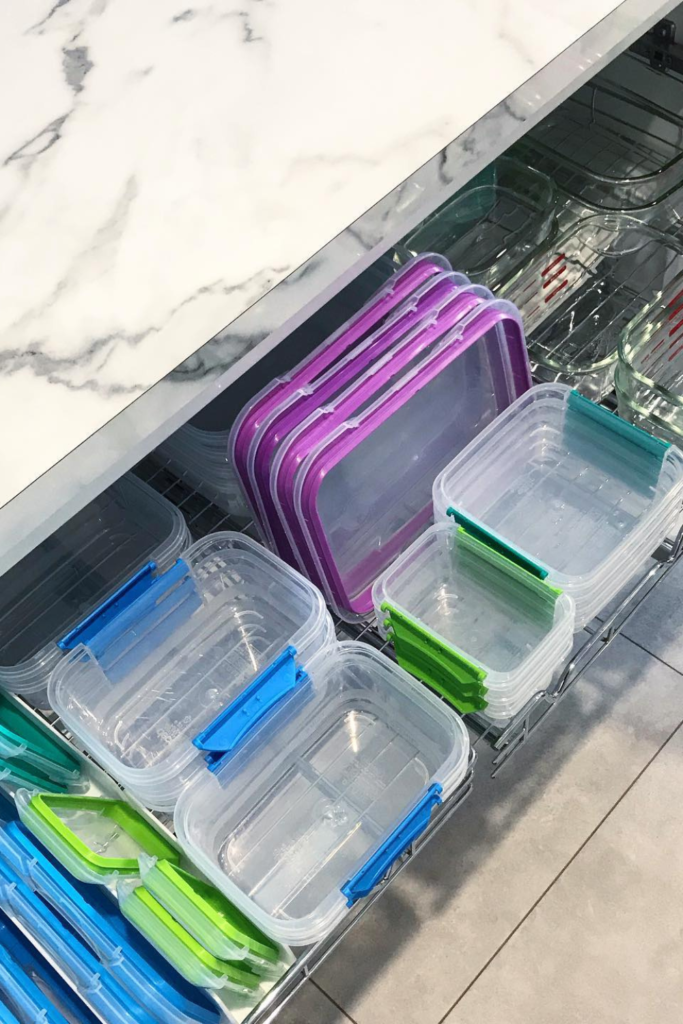
Storing containers by size makes mornings easier.
Keep small, medium, and large boxes grouped together.
This prevents searching through piles.
Store lids upright so they stay visible.
Matching pieces become easy to find.
Packing feels faster and smoother.
Modular Snack Layers
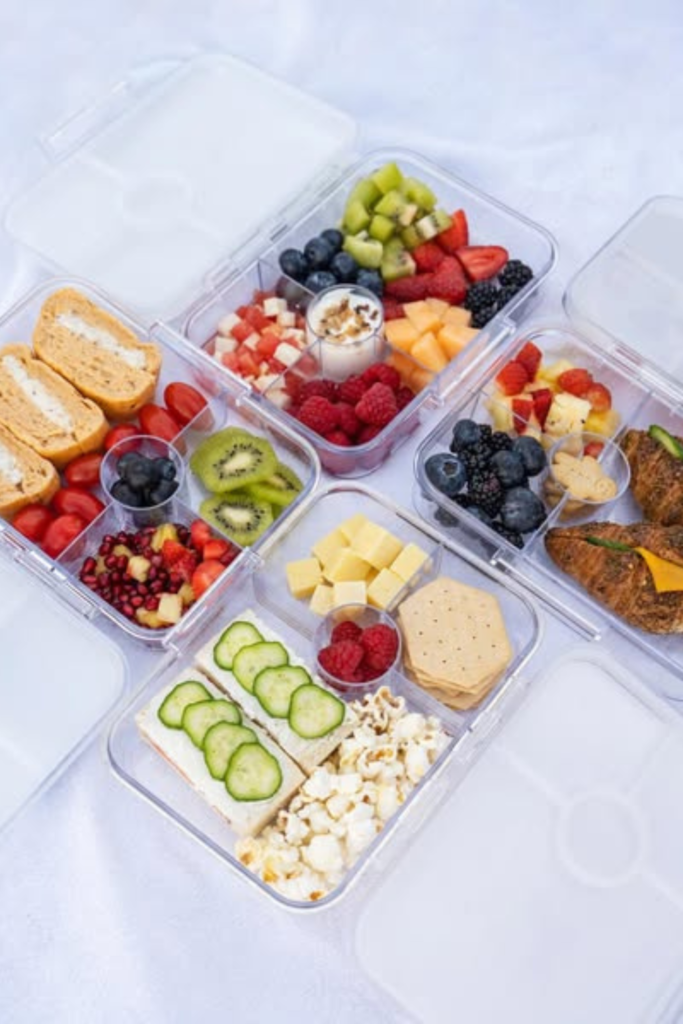
Small containers work well for flexible meals.
You can stack snacks in layers.
Mini cups hold dips or toppings neatly.
Separate food groups instead of mixing them.
Stack pieces in a way that saves space.
This system works well for busy days.
Color-Coded Sections
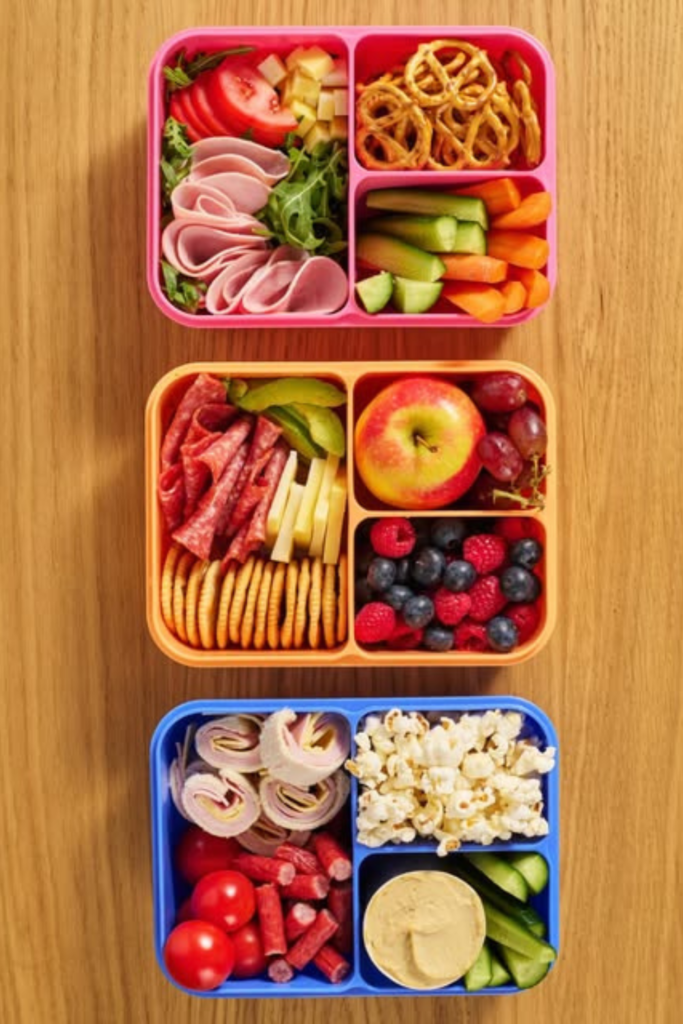
Clear visual sections help with portion control.
Each space can hold a different type of food.
This makes eating simple and organized.
Bright colors make it easy to see what goes where.
Even picky eaters like separated foods.
Packing feels more controlled.
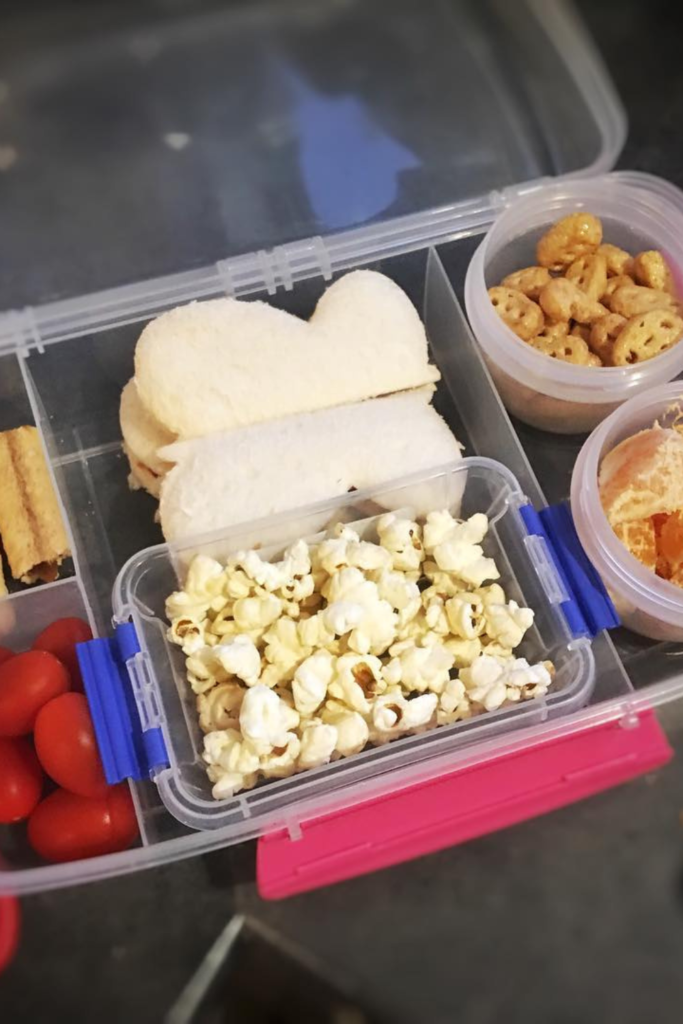
Mini Cup Control
Small foods stay neat inside mini cups.
Place them inside a larger box for extra separation.
This works well for snacks and treats.
Dry items and soft items stay apart.
You avoid mixing textures.
Everything stays clean and easy to grab.
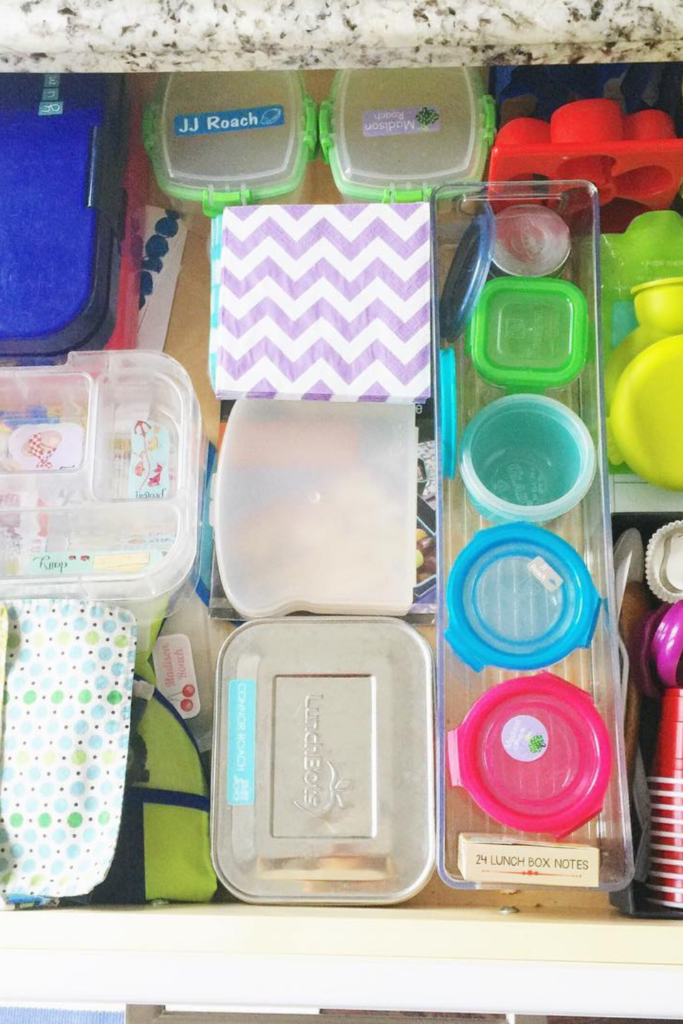
Grab-And-Go Drawer
Keeping all lunch tools in one drawer saves time.
Store containers, napkins, and accessories together.
This makes packing quicker.
Use shallow dividers to separate items.
Everyone knows where things belong.
Morning stress becomes lighter.
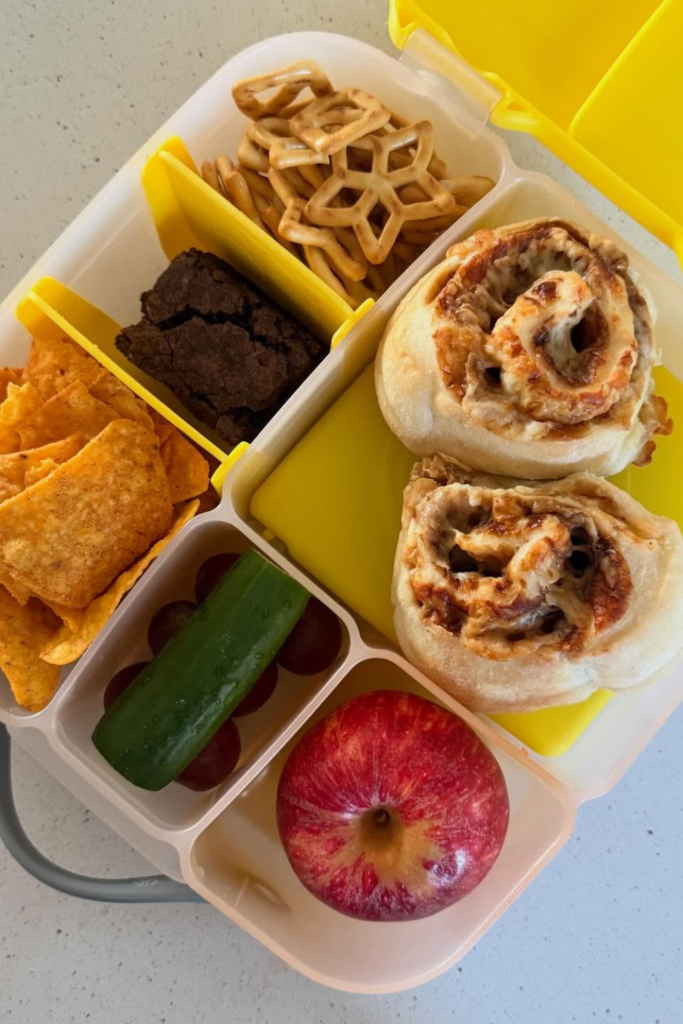
One-Box Balance
One well-designed box can hold a full meal.
Choose one with different section sizes.
This keeps snacks and main food balanced.
Fill each space carefully.
Avoid overstuffing or leaving gaps.
The result looks neat and organized.
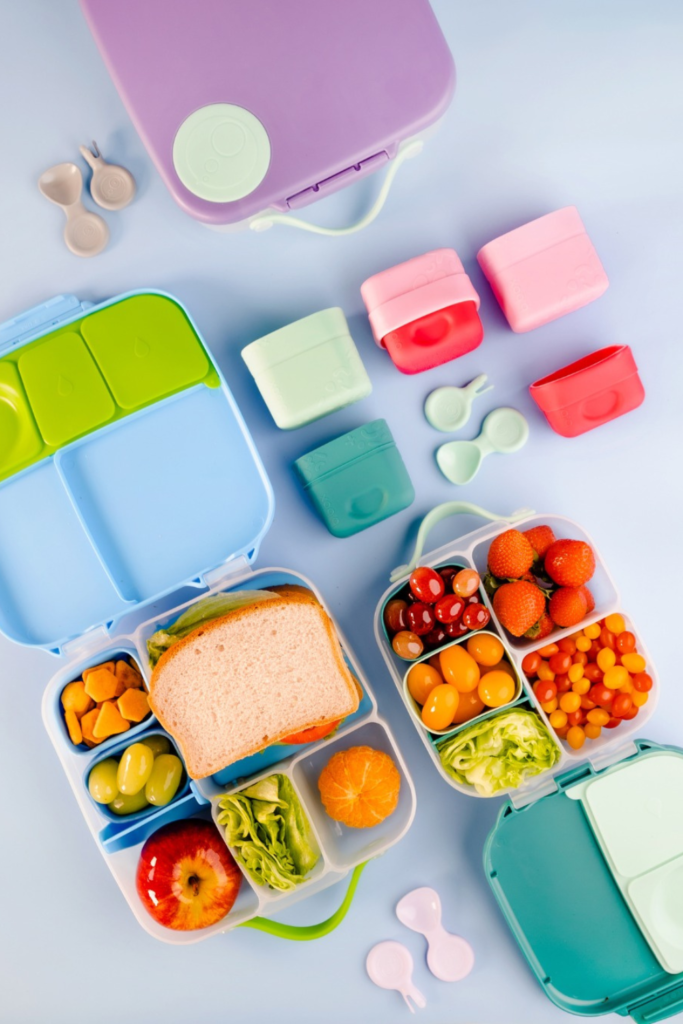
Mix-And-Match System
Flexible systems work for changing menus.
Use one main box and add small inserts when needed.
Switch pieces based on the meal.
Make sure pieces fit together properly.
Matching shapes prevent wasted space.
Packing becomes adaptable but controlled.
Shelf-Based Grouping
Assign each shelf a container type.
Keep similar boxes stacked together.
Place lids flat on top.
This prevents random piles.
You can grab the right size quickly.
The cabinet stays calm and tidy.
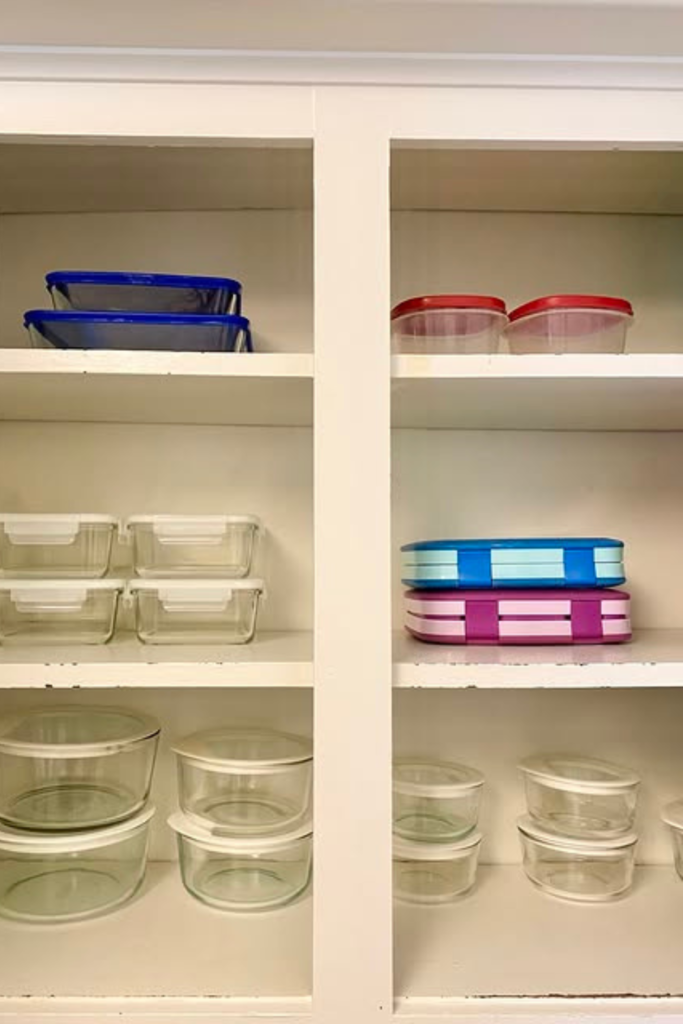
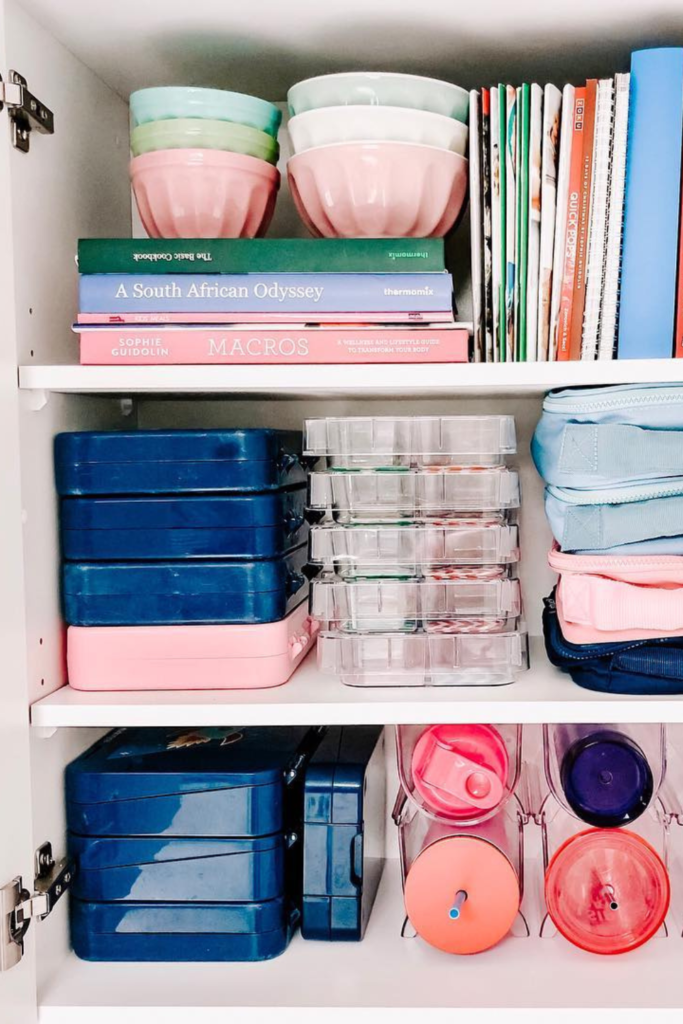
Stacked By Purpose
Give each container a clear role.
Some for school, some for work, some for travel.
Stack them by purpose.
Limit shapes to reduce clutter.
Repeating colors also helps.
The system feels simple and intentional.
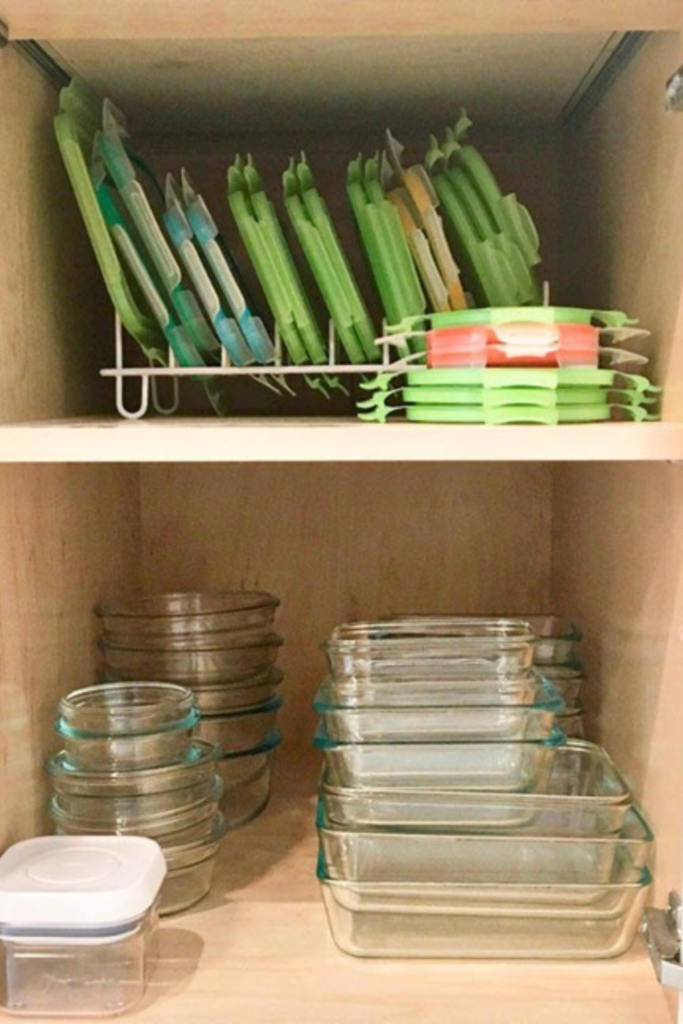
Vertical Lid Control
Lids often create the biggest mess.
Stand them upright in a rack.
This keeps each size visible.
Matching bases and lids becomes easier.
Nothing gets lost at the bottom of a drawer.
Packing starts without frustration.
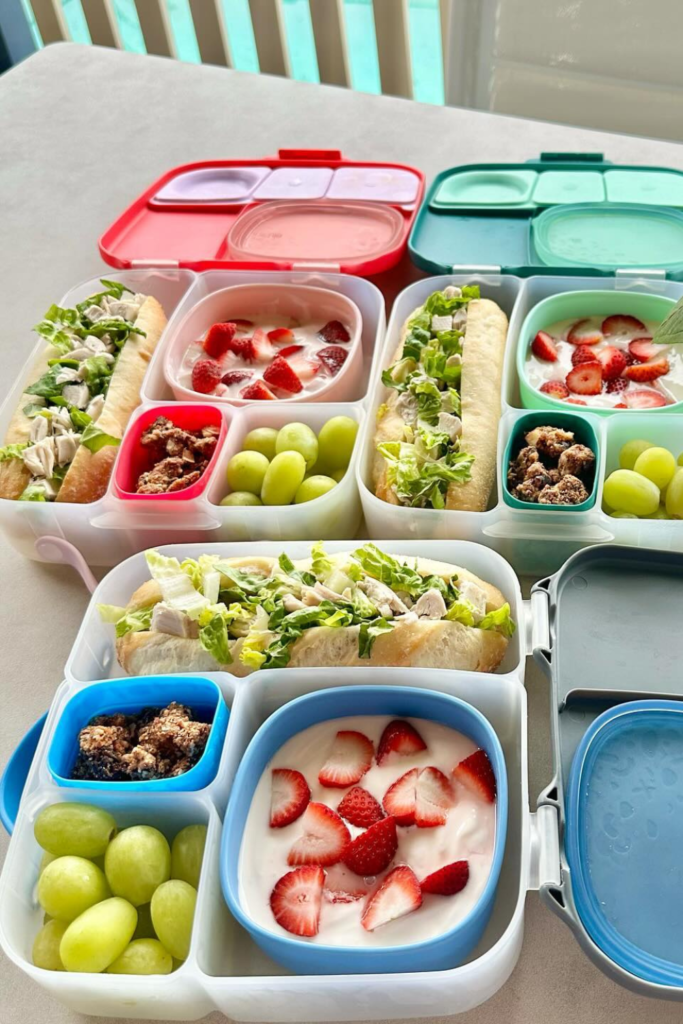
Repeatable Lunch Formula
Using identical boxes saves time.
Keep the layout the same each day.
Only change the food inside.
This builds a habit.
Packing feels like a routine instead of a task.
Consistency reduces stress.
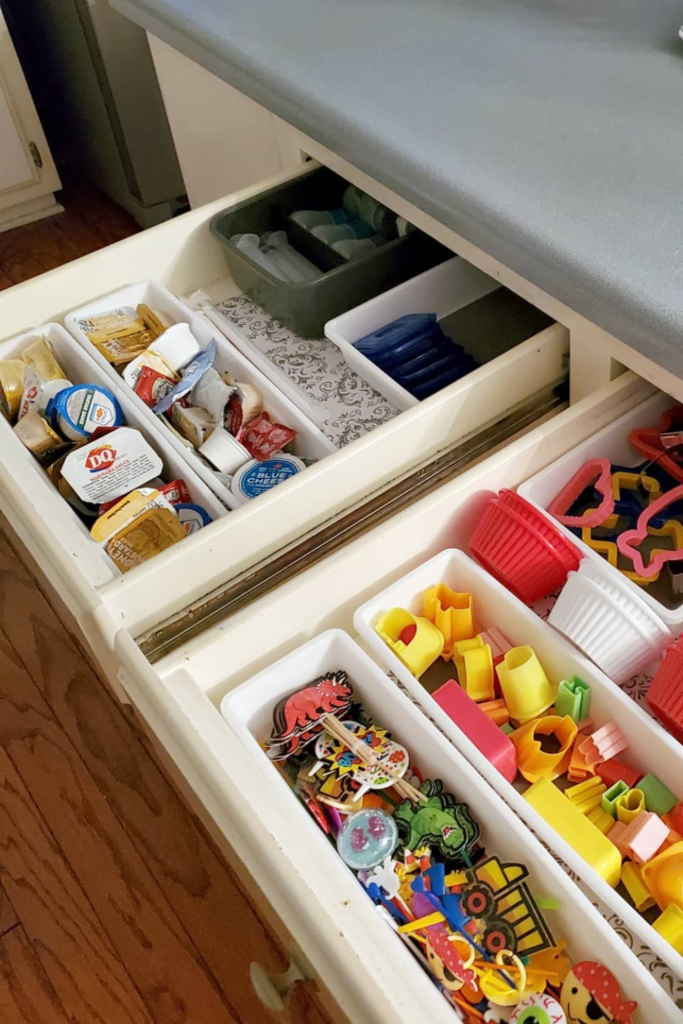
Accessory Sorting
Small tools need a proper home.
Sort cutters, picks, and cups by type.
Keep them in divided sections.
When tools are organized, prep is faster.
You avoid digging through clutter.
Small order makes a big difference.
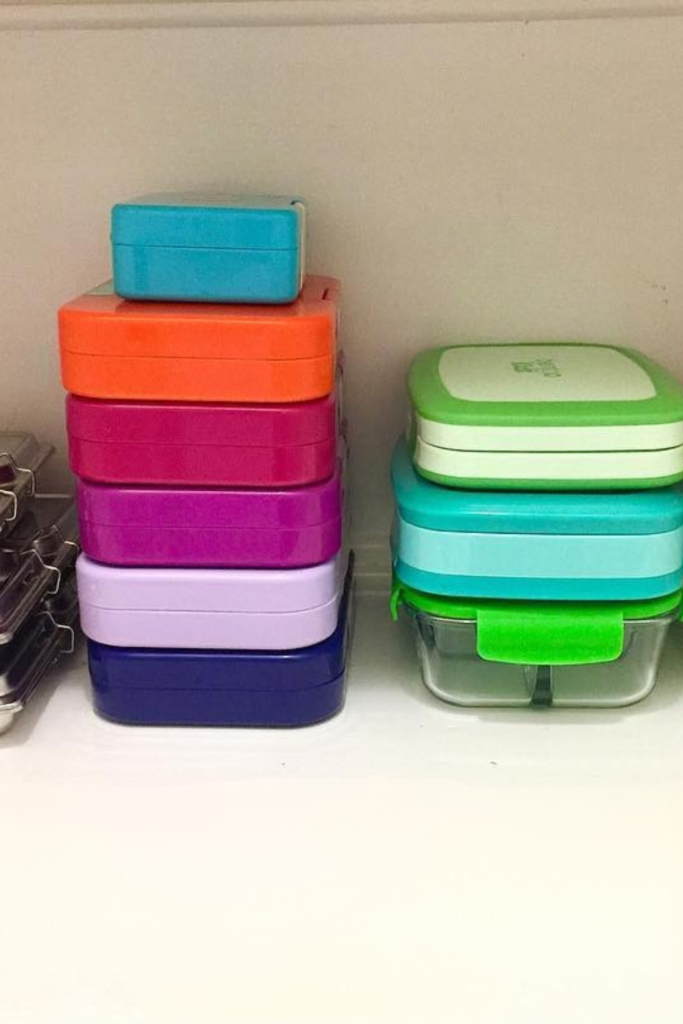
Brand-Based Stacks
If you use different lunch box types, stack each kind together.
Keep identical boxes in one group.
This keeps inserts and lids matching.
Avoid mixing random pieces.
Matching shapes save space.
Choosing the right box becomes easy.
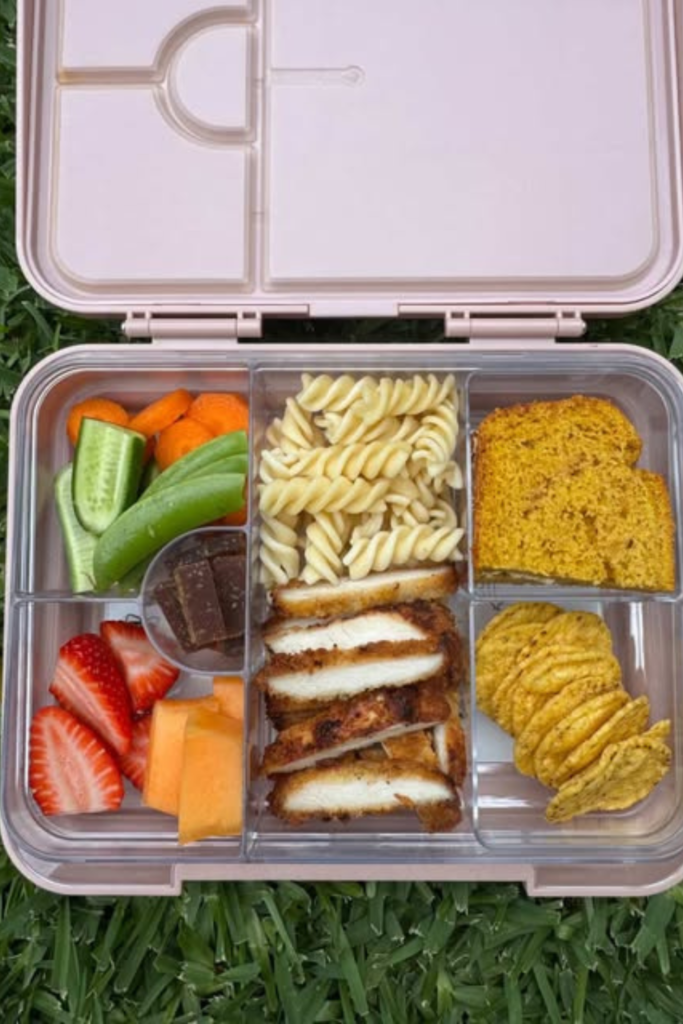
Portion-Smart Layout
Choose containers with varied section sizes.
Use larger spaces for main items.
Smaller ones can hold fruit or snacks.
Balanced portions prevent waste.
Meals stay neat and separated.
The layout supports healthy eating.
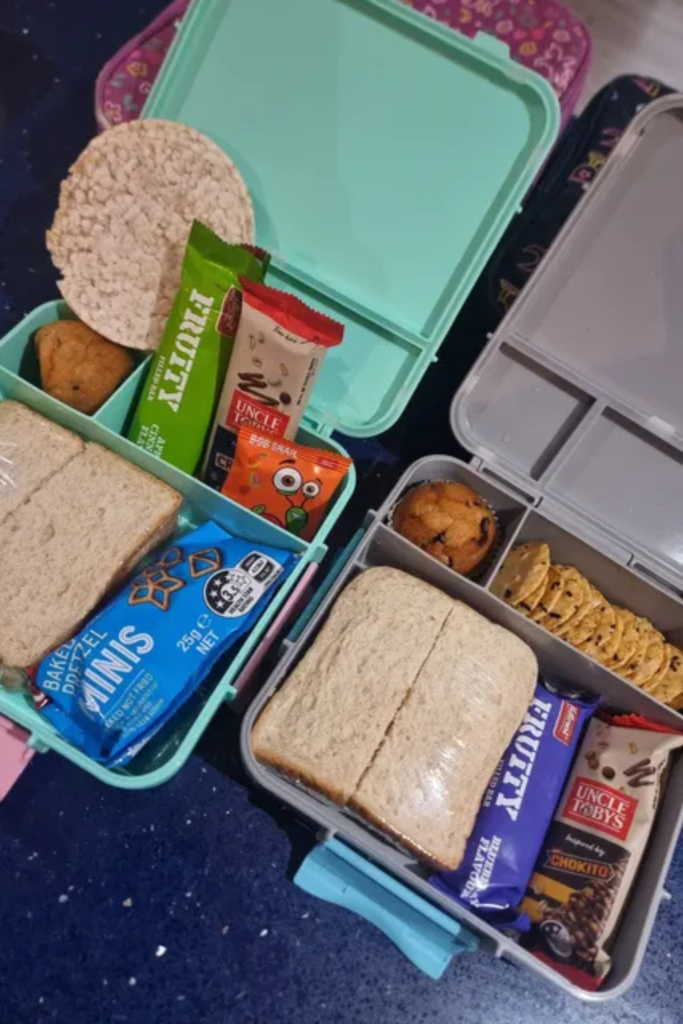
Pre-Packaged Pairing
Some days need quick solutions.
Pair one homemade item with sealed snacks.
This saves time on busy mornings.
Leave enough space for a sandwich.
Line packaged items neatly beside it.
The box stays organized without extra effort.
Balanced Bento Routine
Give each section a clear job.
Place the main item in the largest space.
Build around it with color and texture.
Follow the same formula daily.
Keep portions even and controlled.
Lunch looks organized and stays fresh.
FAQs
How many containers do you actually need?
Most people own more containers than necessary.
Two or three reliable boxes usually handle daily lunches.
A few small inserts are enough.
Too many containers create clutter.
Stick to pieces that stack well and clean easily.
A small core set works best.
Should you mix container brands or stick to one system?
Mixing works only if sizes match properly.
Random shapes cause lid confusion.
Storage becomes harder to manage.
One main system keeps things simple.
If you mix, choose pieces that nest together.
Matching shapes keep everything organized.