20 Nail and Screw Organization Ideas for 2026
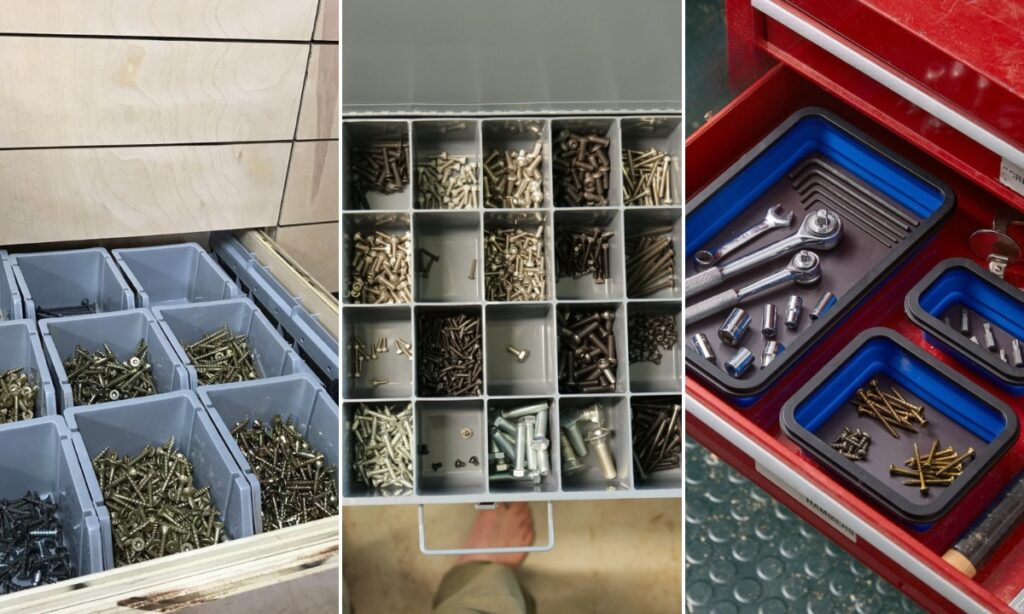
How Do You Organize Nails and Screws at Home?
Organizing nails and screws at home becomes simple when you give each type and size its own space.
If everything is thrown into one container, it becomes a mess. Sorting by type and size first prevents confusion.
Start by using clear containers or jars, so you can see what you need immediately and avoid buying duplicates unnecessarily.
The right system makes projects faster because each screw has a dedicated spot.
Label each container clearly and place them where you usually work. This habit saves time and keeps your hardware under control.
Once everything has its place, you’ll stop losing small screws and nails and finish projects more efficiently.
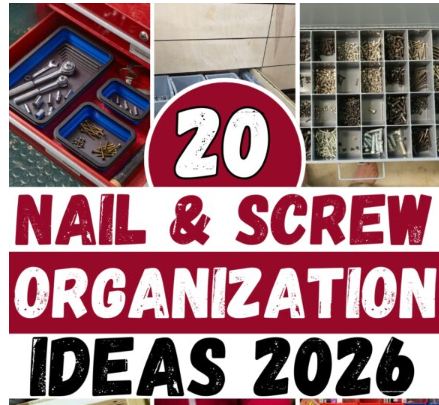
Compartment Tool Box
A compartment toolbox helps separate screws instantly and keeps them from mixing during transport.
Adjustable dividers let you organize by size and type, while clear lids show contents at a glance.
This setup works well in garages, workshops, or for anyone moving hardware between projects frequently.
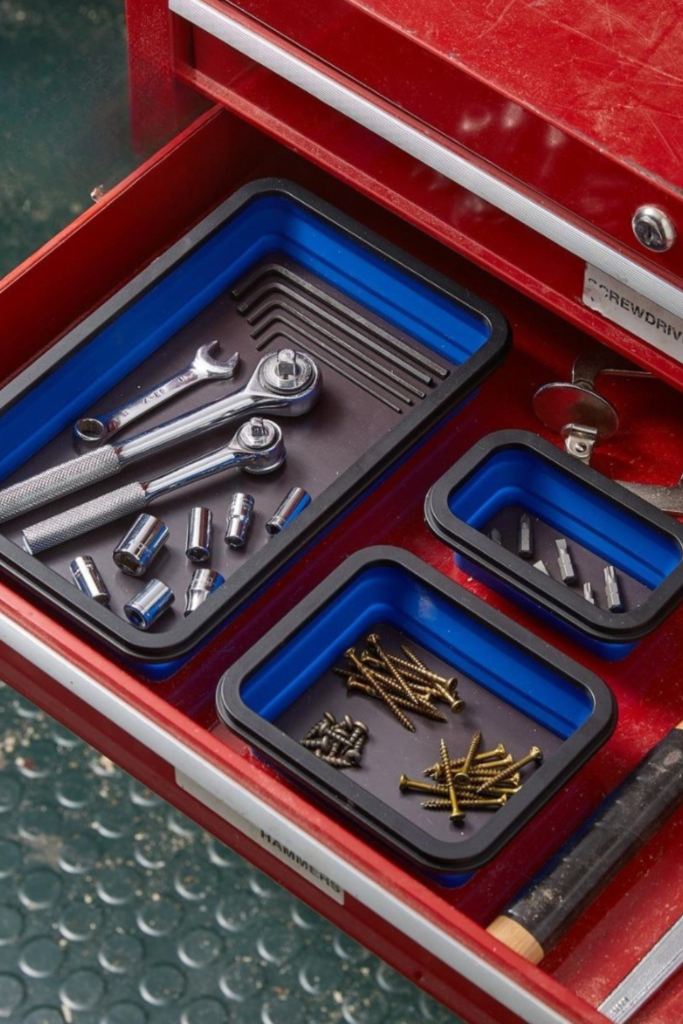
Drawer Zone Sorting
Drawer trays with rubber or silicone inserts prevent screws from sliding around.
Grouping screws by size or task keeps them near the tools you use most, reducing trips back and forth.
This idea is best for workshops or areas where small fasteners need to stay close to the workbench.
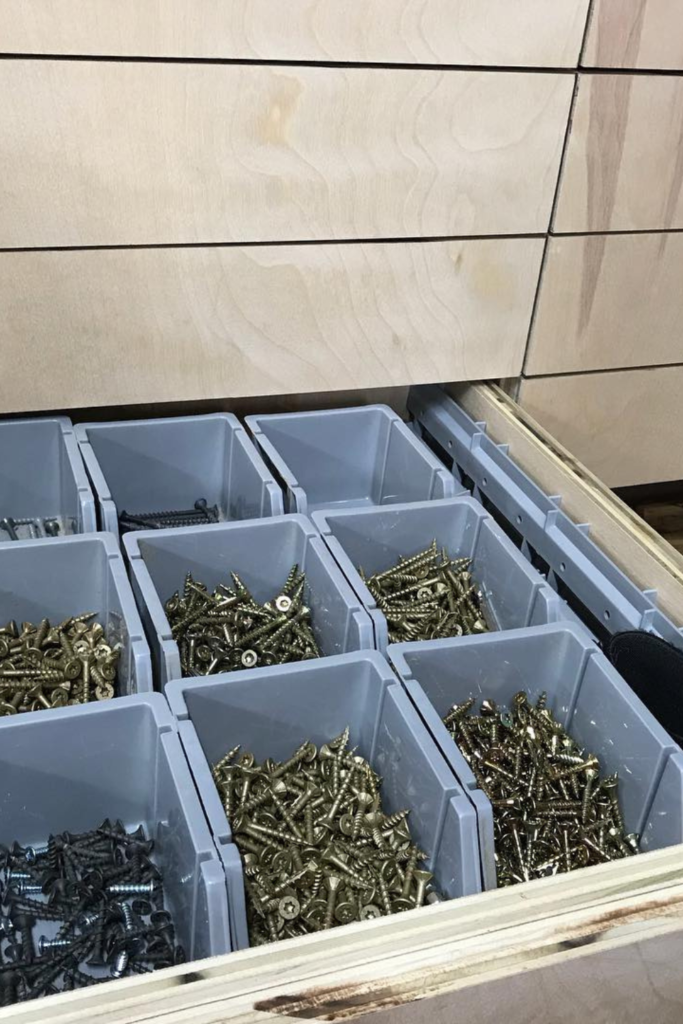
Deep Drawer Bins
Wide drawers can be converted into hardware stations with modular bins.
Each bin holds one size or type, and soft-close slides prevent shifting.
Adding LED strips inside drawers improves visibility, making refilling and returning pieces easier.
Color-Coded Grid
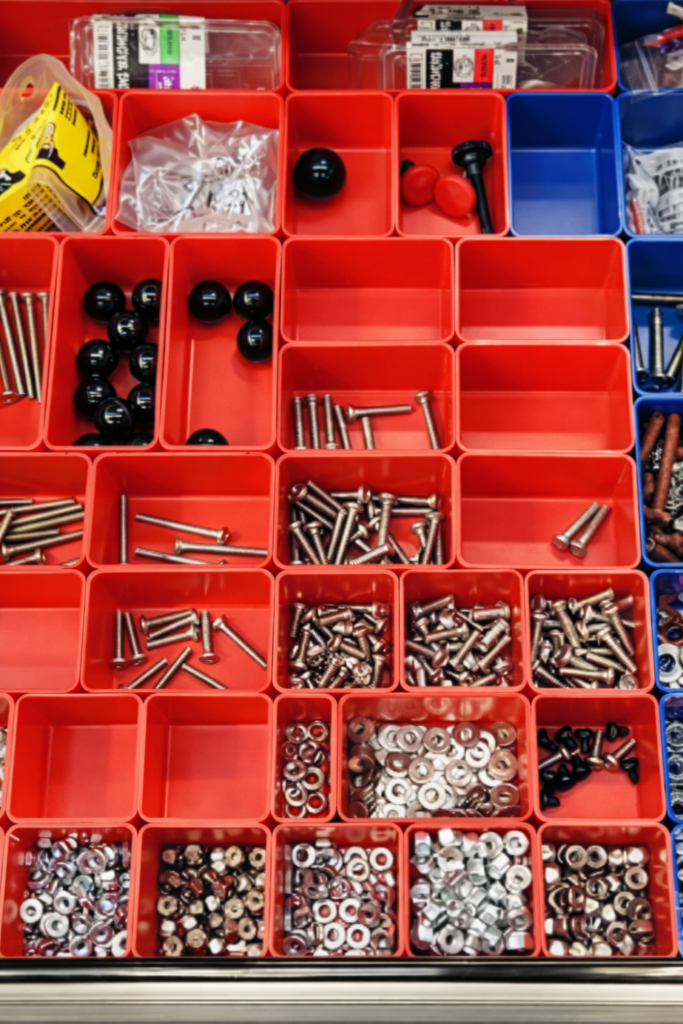
Assign colors to different types of hardware, like screws, bolts, and washers.
Color coding speeds up finding the right fastener and works well in full-width drawers or cabinets.
Bright lighting inside the drawer ensures that even small pieces are easy to see.
Pocket Pill Storage
Small screws can be stored in clean pill bottles, one size per bottle.
Label the lid clearly and keep the bottles on shelves or in drawers for easy access.
This method is perfect for apartment tool kits or small spaces where portability matters.

Wall Drawer Cabinet
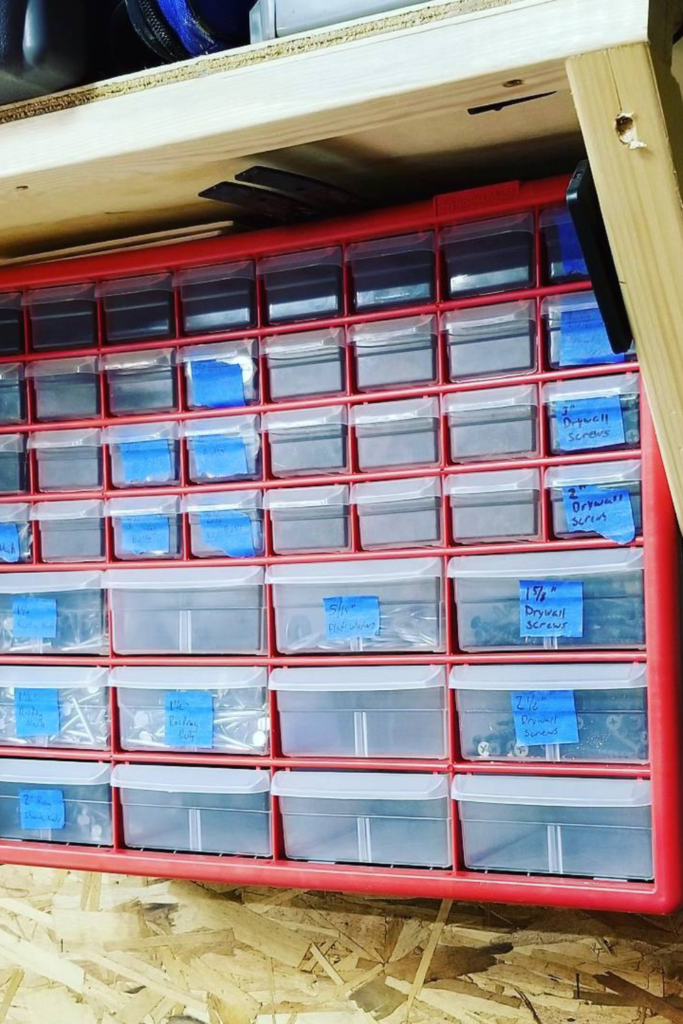
Mount a small-parts cabinet on the wall to save drawer space.
Dedicate each drawer to one size or type and use clear fronts to see inventory quickly.
Handwritten labels keep it flexible, and proper lighting helps identify tiny screws easily.
Custom Drawer Grid
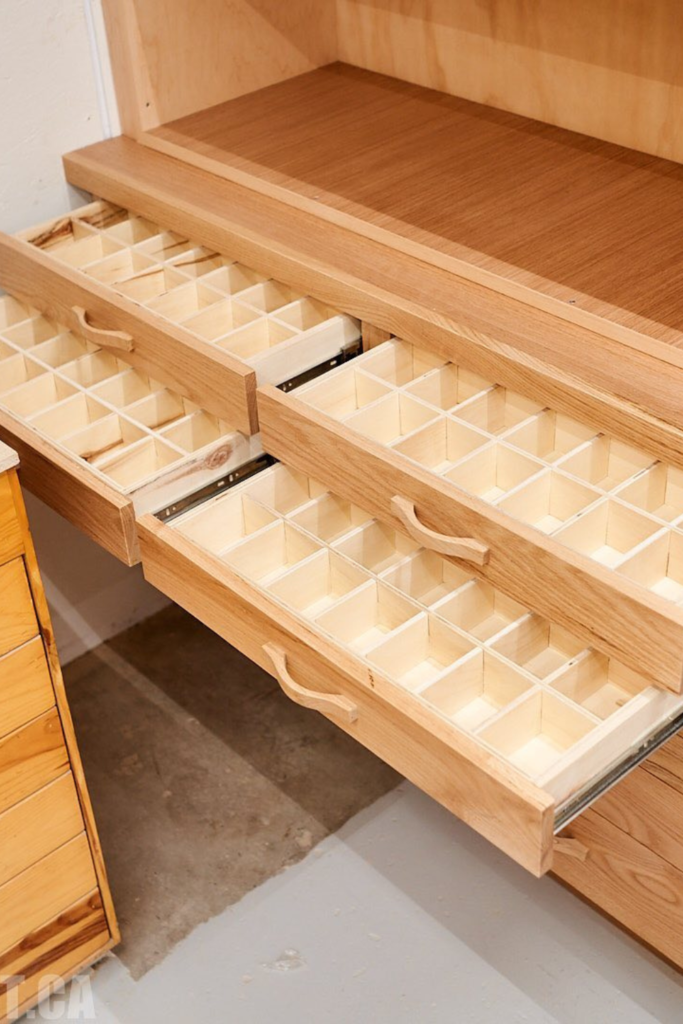
Shallow drawers with wooden dividers create permanent hardware storage.
Each compartment is sized for your most-used screws and nails to prevent shifting.
This method works best in dedicated workshops with good overhead lighting.
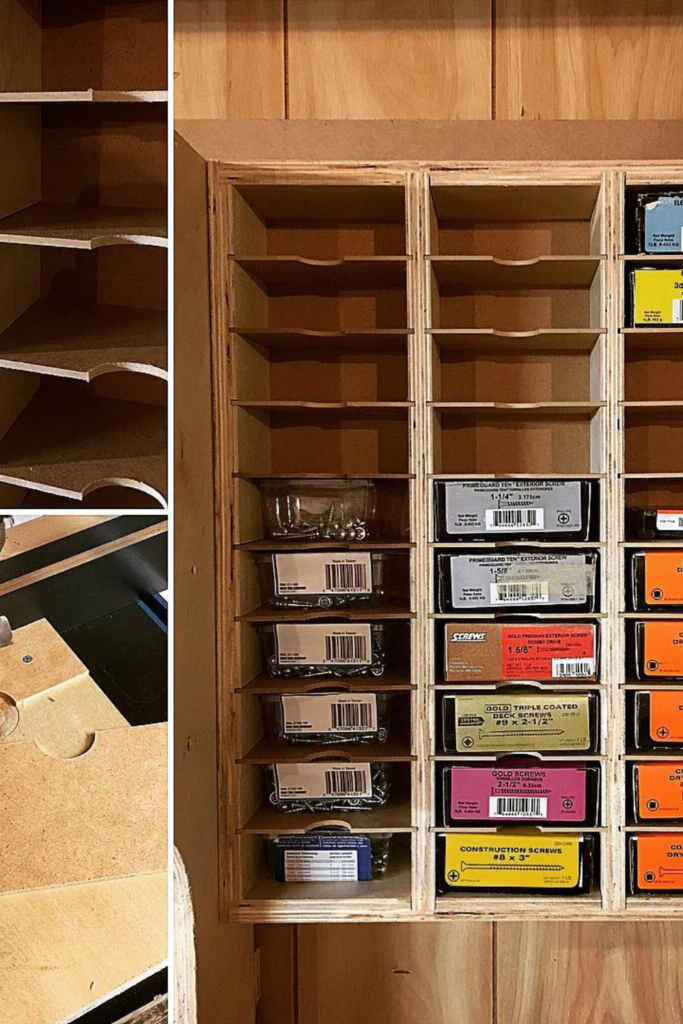
Box Shelf Storage
Store screws in their factory boxes on slim shelves that fit each box perfectly.
Keep labels facing forward for easy identification.
This setup works well when overhead lighting or vertical LEDs make scanning fast.
Cabinet Jar Rack
Use clear jars with metal lids in pull-out racks to organize screws in cabinets.
Vertical spacing keeps sizes separate, and soft cabinet lighting helps read labels even in low light.
This setup is useful for garages or storage areas where space is limited.
Bench-Top Organizer
Keep screws within arm’s reach on the workbench.
Low-profile organizers with fixed compartments protect hardware from dust.
Arrange screws by length and use focused lighting for quick identification.
Label-First Drawers
Small drawer units with bold labels make it easy to know where every screw goes.
Assign a single purpose to each drawer and avoid overloading.
Proper lighting ensures labels are readable without glare, even in dim rooms.
Job Site Carry Case
Rugged cases with deep compartments are perfect for moving hardware between projects.
Locking lids prevent mixing, and sorting by size keeps screws organized.
Bright ambient lighting or daylight helps identify lengths quickly on busy sites.
Size-Sorted Inserts
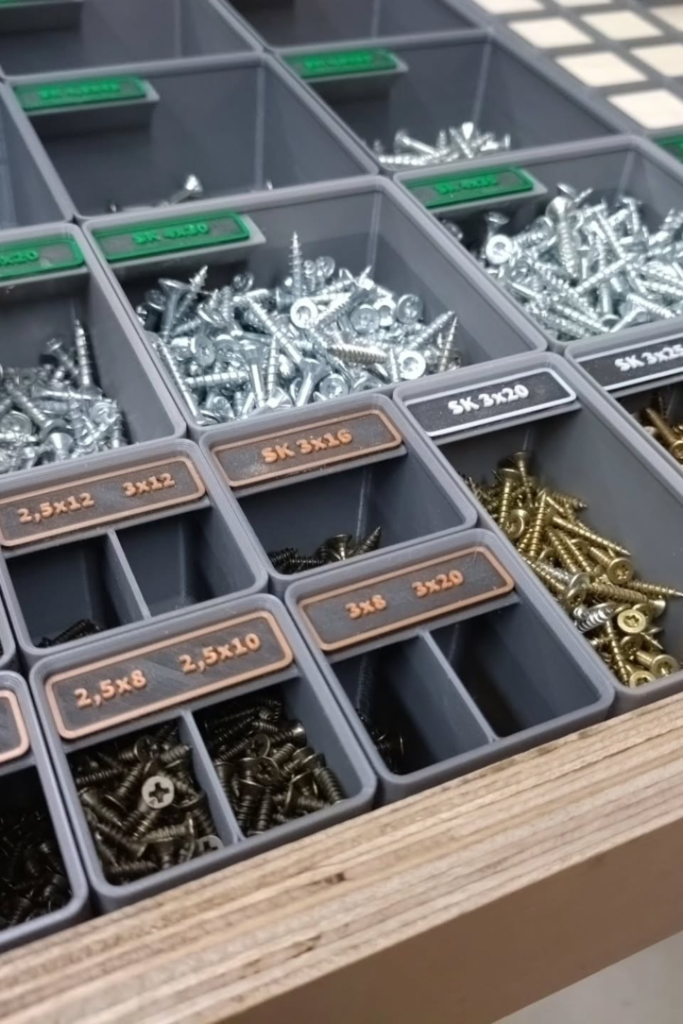
Modular inserts allow automatic sorting by size and type.
Label each pocket clearly and separate finishes to avoid mix-ups.
This works well inside wide cabinets where precision matters.
Vertical Slot Rack
Floor-to-ceiling racks keep hardware visible without cluttering the workspace.
Slide labeled boxes into slots sized for height, making identification instant.
Strong overhead lighting helps scan contents quickly.
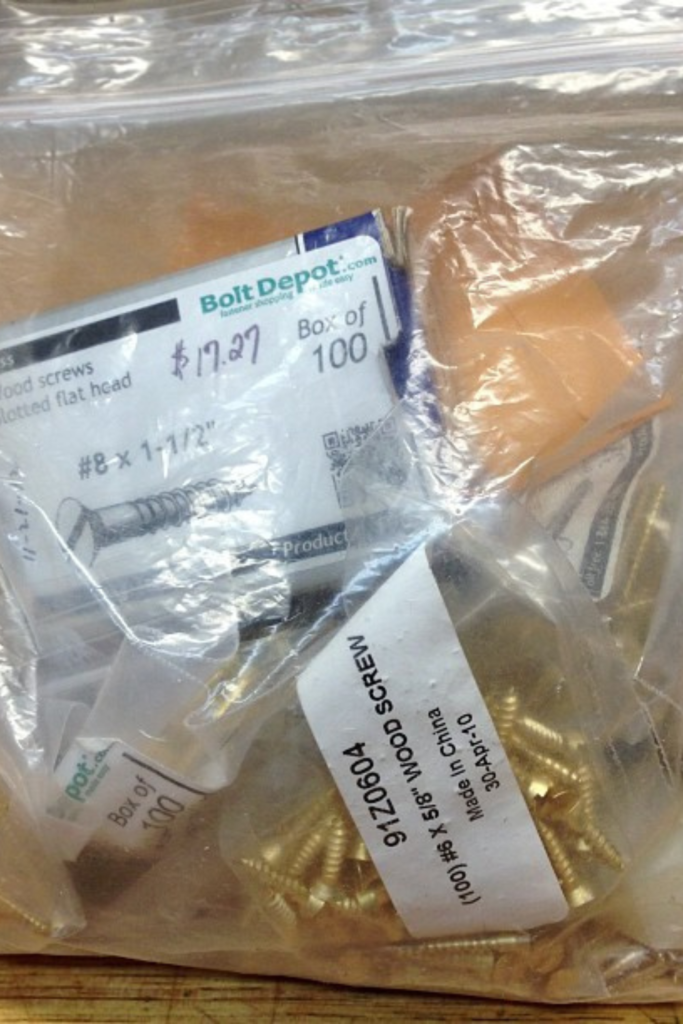
Zip Bag Sorting
Heavy-duty zip bags keep small screws flexible for storage.
Include original labels inside, then store bags upright in a bin.
Room lighting is enough since clear bags make sizes visible.
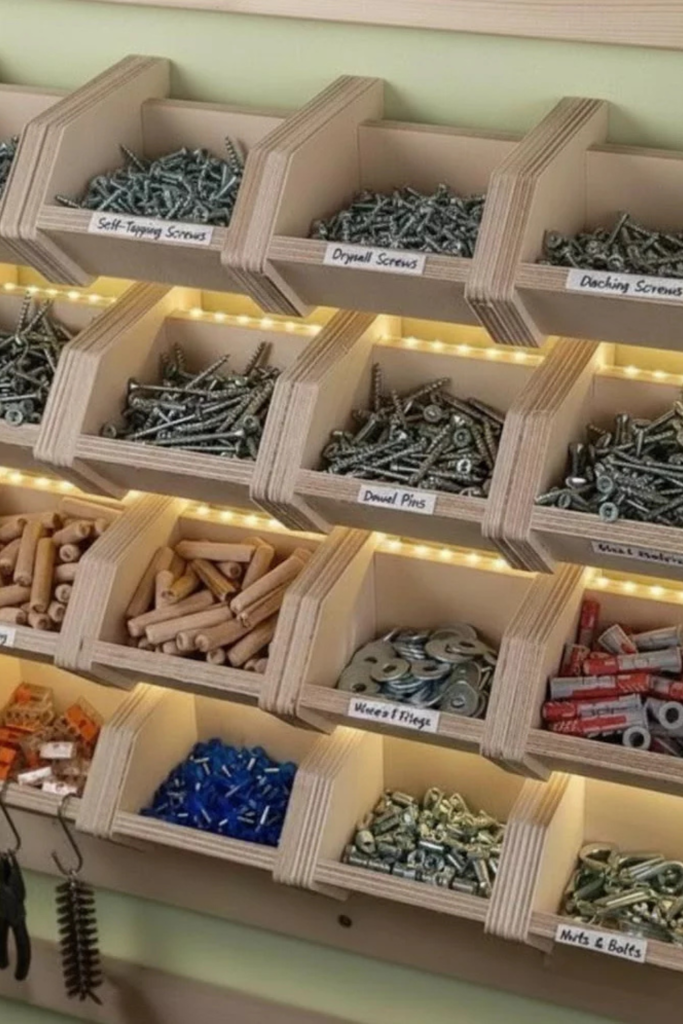
Open Bin Wall
Angled wooden bins mounted on walls allow screws to slide forward naturally.
Label each pocket clearly and leave space for easy grabbing.
LED strip lighting reduces shadows and makes hardware easy to see instantly.
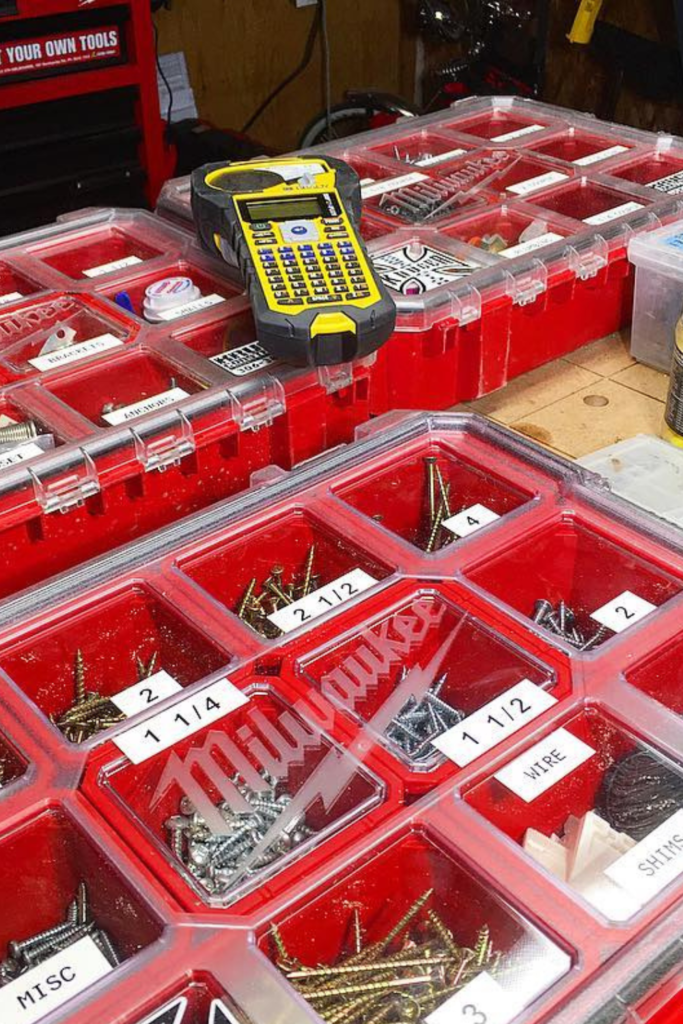
Stackable Case System
Cases with the same footprint can be stacked neatly to save space.
Sort screws by length in the most-used case and overflow to secondary cases.
Clear lids and proper lighting allow fast access without opening each box.
Mixed Fastener Tray
Shallow trays keep related hardware together, like bolts, hooks, and specialty screws.
Grouping prevents confusion and makes projects run smoothly.
Neutral lighting helps distinguish different finishes quickly.
Clear Grid Layout
Clear containers in drawers or shallow cabinets show all hardware instantly.
Line containers tightly to prevent shifting and separate by type or size.
Diffused overhead lighting reduces glare and keeps small pieces easy to see.
Adjustable Divider Case
Cases with movable dividers give flexibility for changing hardware collections.
Larger slots hold frequently used screws, while smaller slots store rare pieces.
Clear lids and neutral lighting make quick sorting easy without opening every compartment.
FAQs
How many screws should you keep at home?
Keep only the sizes you use often, like wood screws, drywall screws, and wall anchors.
Stock extra for common projects and place rare items in labeled overflow storage.
Should nails and screws be stored together?
Only if they remain separated in compartments or containers.
Clear labeling is more important than storage style to avoid confusion.